
Description
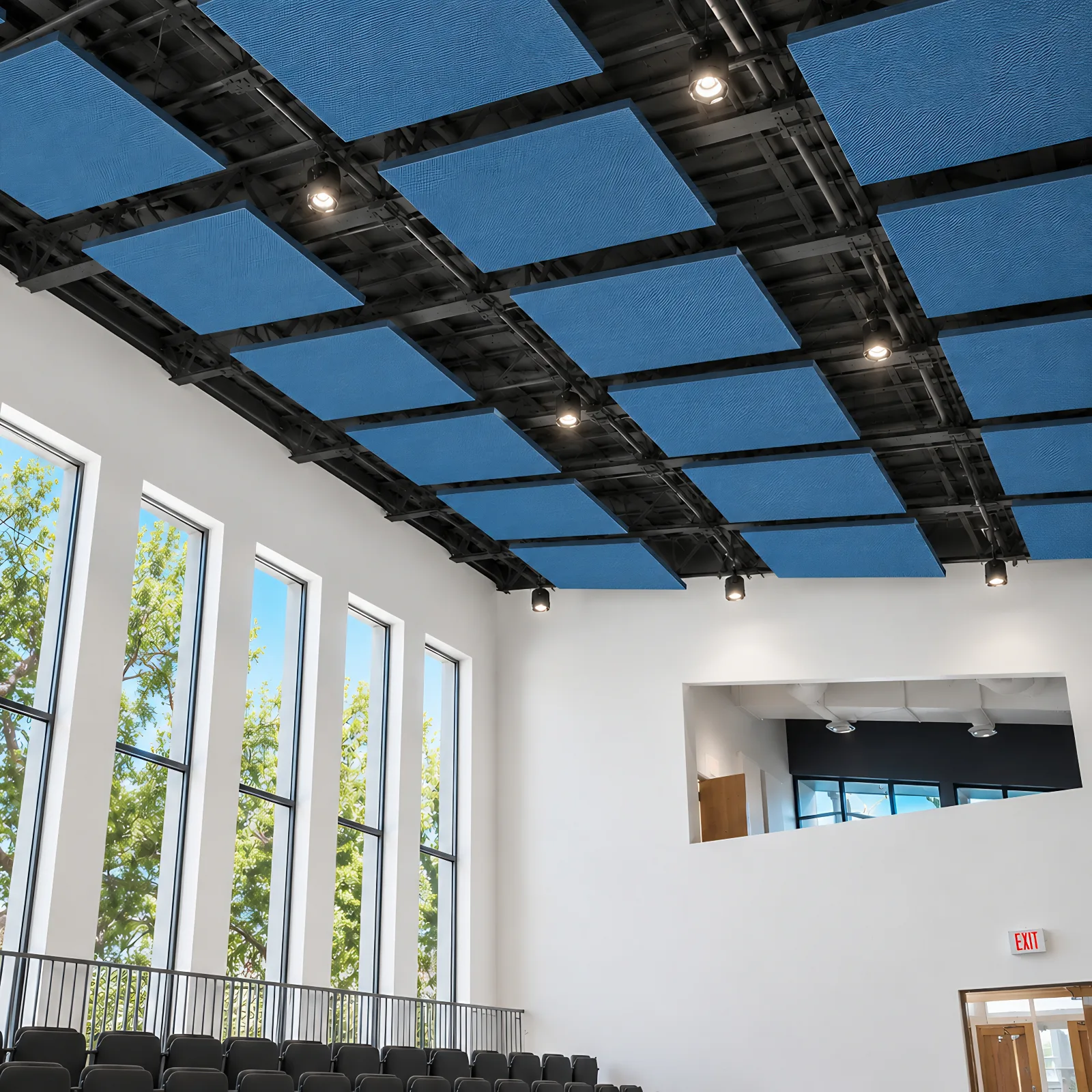
How Acoustic Ceiling Panels Control Echo
Echo is the same sound reaching you twice – once straight from the talker, then again a fraction of a second later off a hard surface. Enough of those late arrivals and speech stops being intelligible, which is what makes a hard room tiring to work in.
- The ceiling is the biggest hard surface in the room – usually larger than any single wall, and rarely broken up by windows, doors or furniture.
- It sits between every talker and every listener. Sound reaches it from anywhere in the room and comes back down to everywhere in the room, which is why treating it does more than treating one wall.
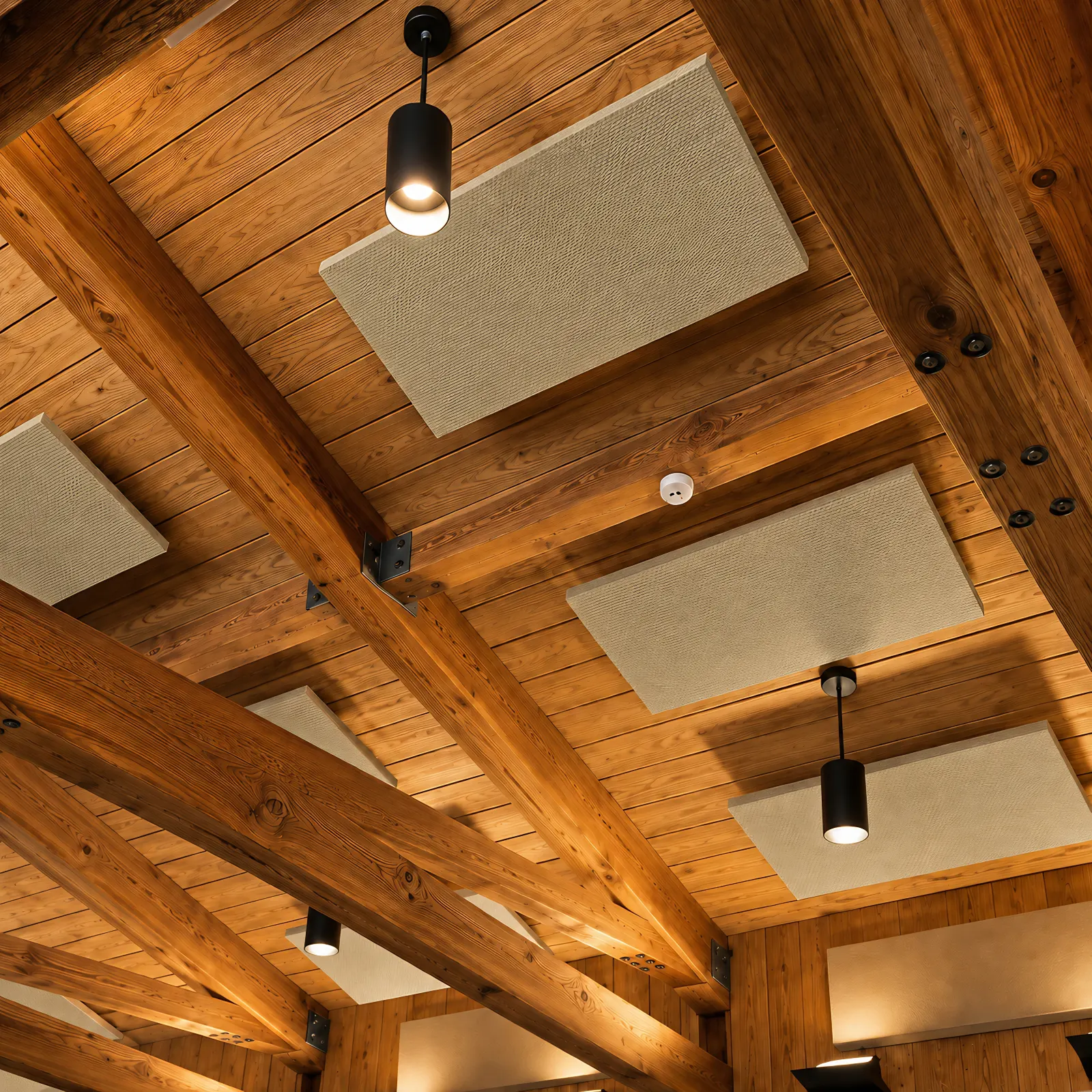
- A cloud hangs below the structure, so it works on the back face and the edges as well as the front – roughly twice the absorbing surface of the same panel screwed flat to the deck.
- It needs no free wall. Glass, whiteboards, shelving and cabinets take up the walls in most rooms; none of them are in the way of the ceiling.
Where Acoustic Ceiling Clouds Work Best
Wherever there is plenty of reflective ceiling and almost no free wall:
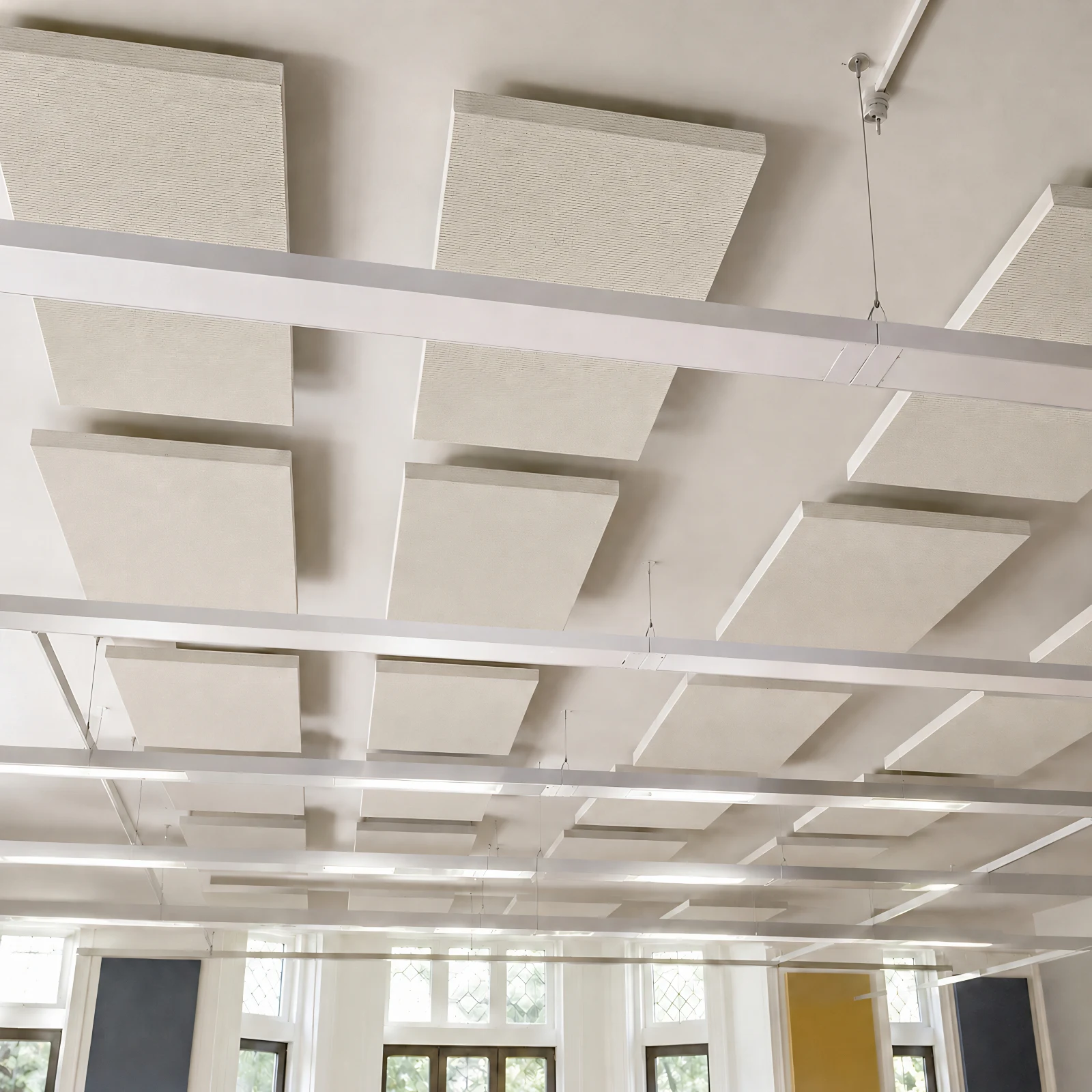
- Classrooms – whiteboards, windows and hard floors leave nowhere for wall panels.
- Open-plan offices – glass partitions reflect everything and cannot be treated.
- Worship centers – tall hard ceilings, long reverberation, speech that has to carry.
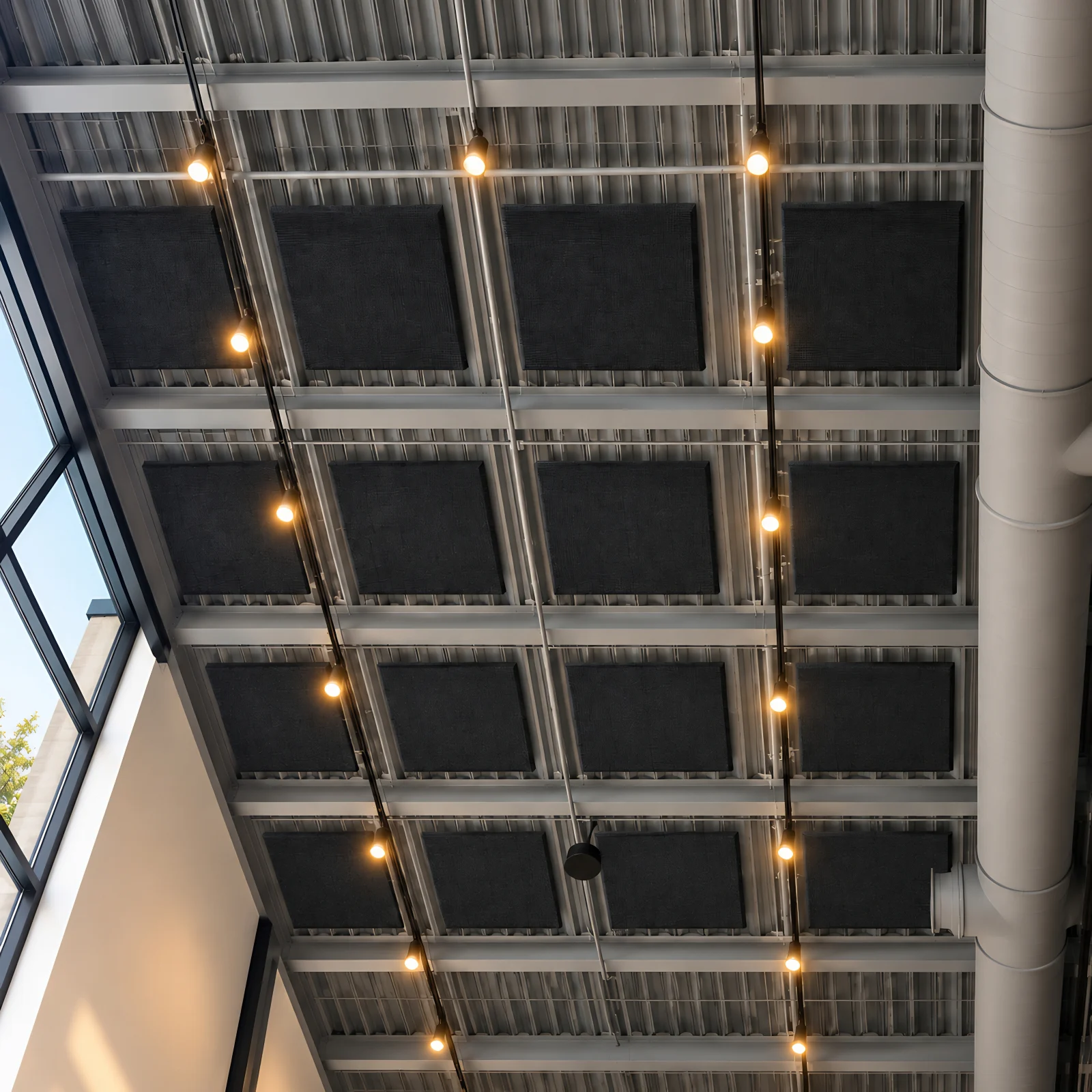
- Restaurants and bars – exposed ductwork, and every table talking over the last.
- Gyms and multipurpose rooms – the loudest rooms in most buildings.
- Home theaters and studios – kill the first reflection off the ceiling.
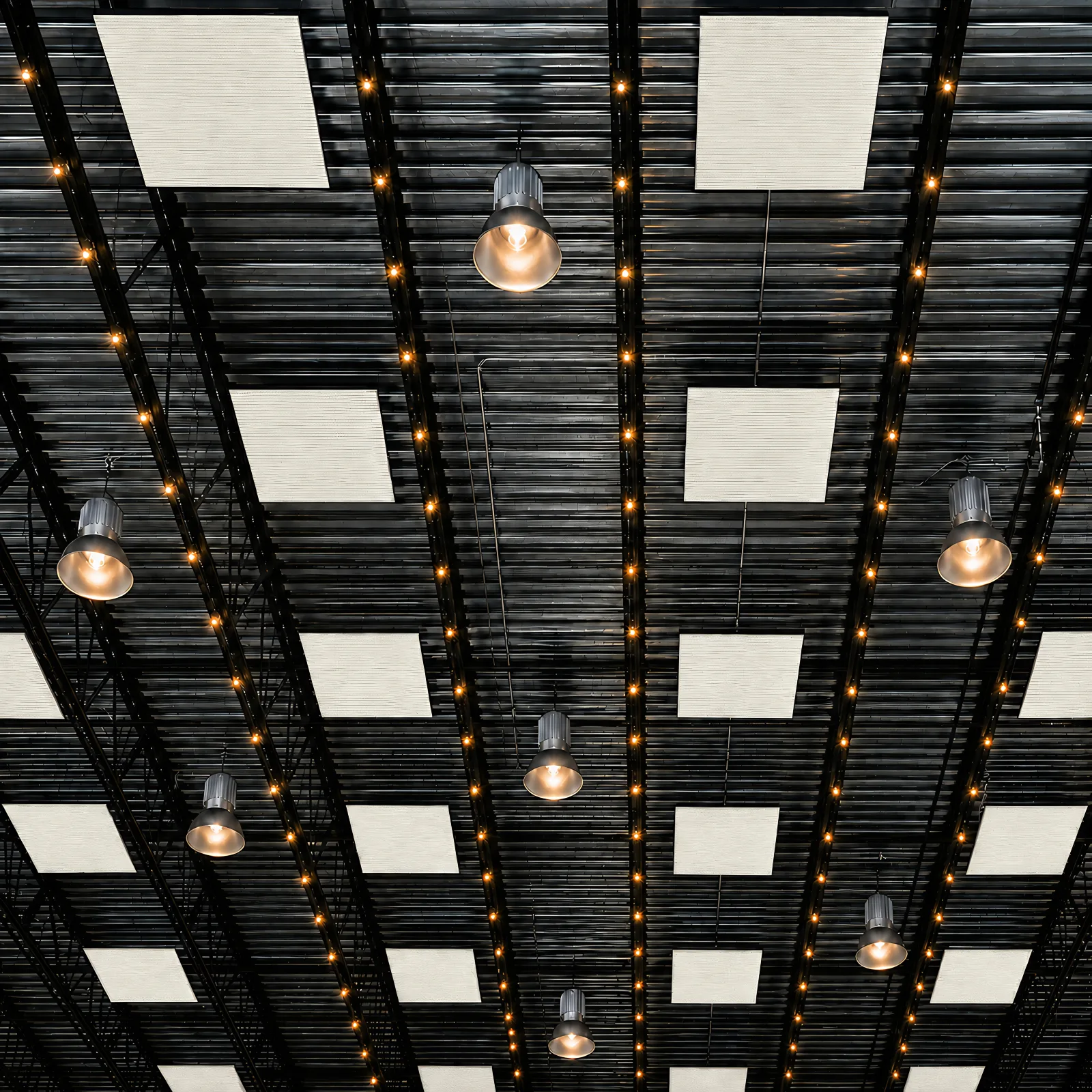
- Open structure and warehouse conversions – nothing to mount to, but always a joist to hang from.
Treat the ceiling first, then add wall panels if the room still rings.

How Many Ceiling Clouds Do You Need?
- Speech spaces – classrooms, offices, restaurants: cover 15 to 25% of the floor area.
- Music, high ceilings or a lot of glass: 25 to 35%.
- Worked example: a 1,200 sq ft classroom wants 180 to 300 sq ft of panel – twelve to nineteen 4′ x 4′ clouds.
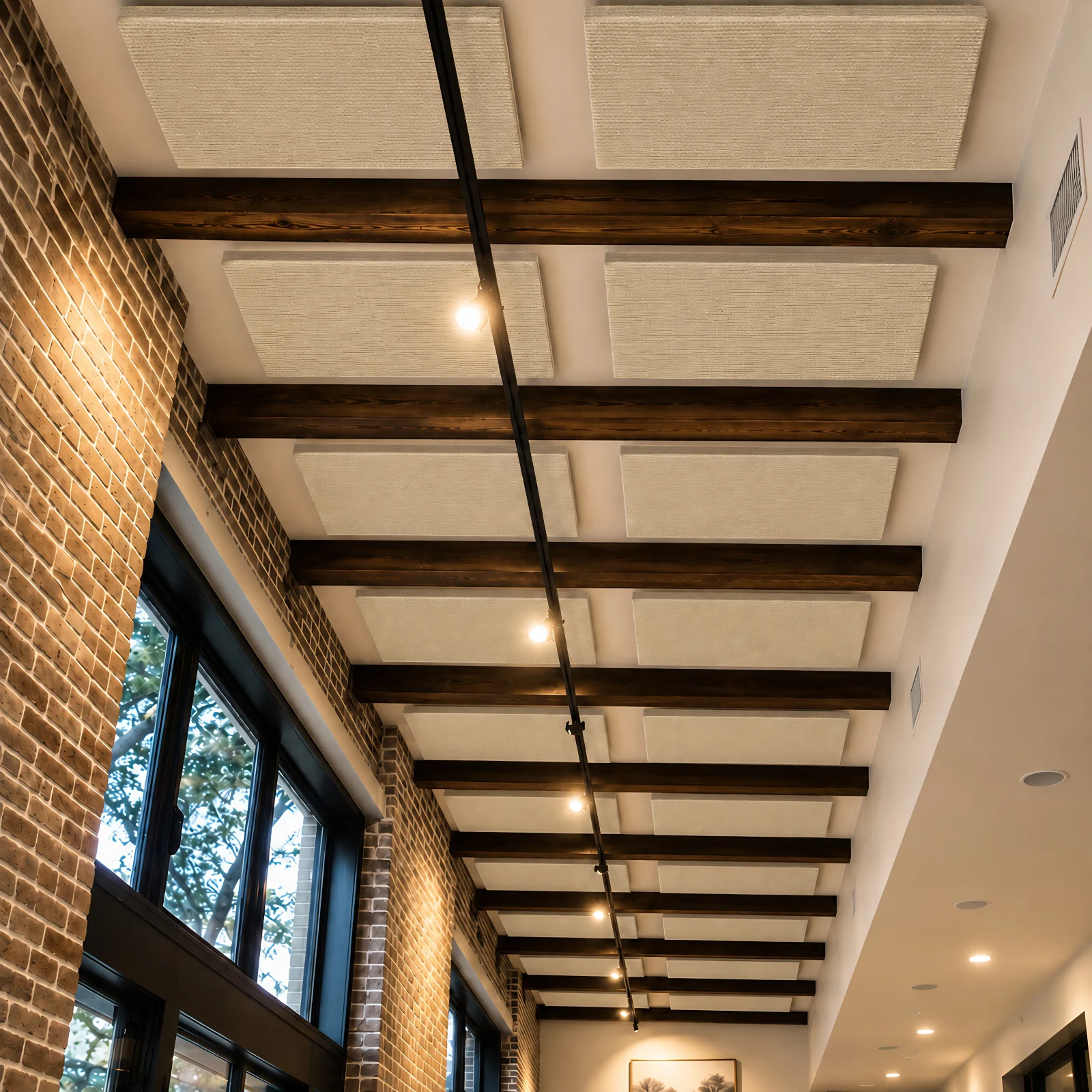
- Spread them out. Sound has to reach a panel to be absorbed, and gaps expose the edges, which absorb too.
Send us your dimensions and what the room is used for and we will work it out with you.
What Makes Our Sound Dampening Ceiling Panels Different
- 2″ of 6 pcf fiberglass, NRC 1.05 – against 1.2″ polyester felt at NRC 0.85. Thickness is what keeps a panel working down where a room booms.
- No wood frame. Rotofast anchors twist straight into the core, so a 4′ x 4′ weighs 16 lb instead of 22.
- Dense enough to hold a mount. A 3 pcf drop-in tile is not.
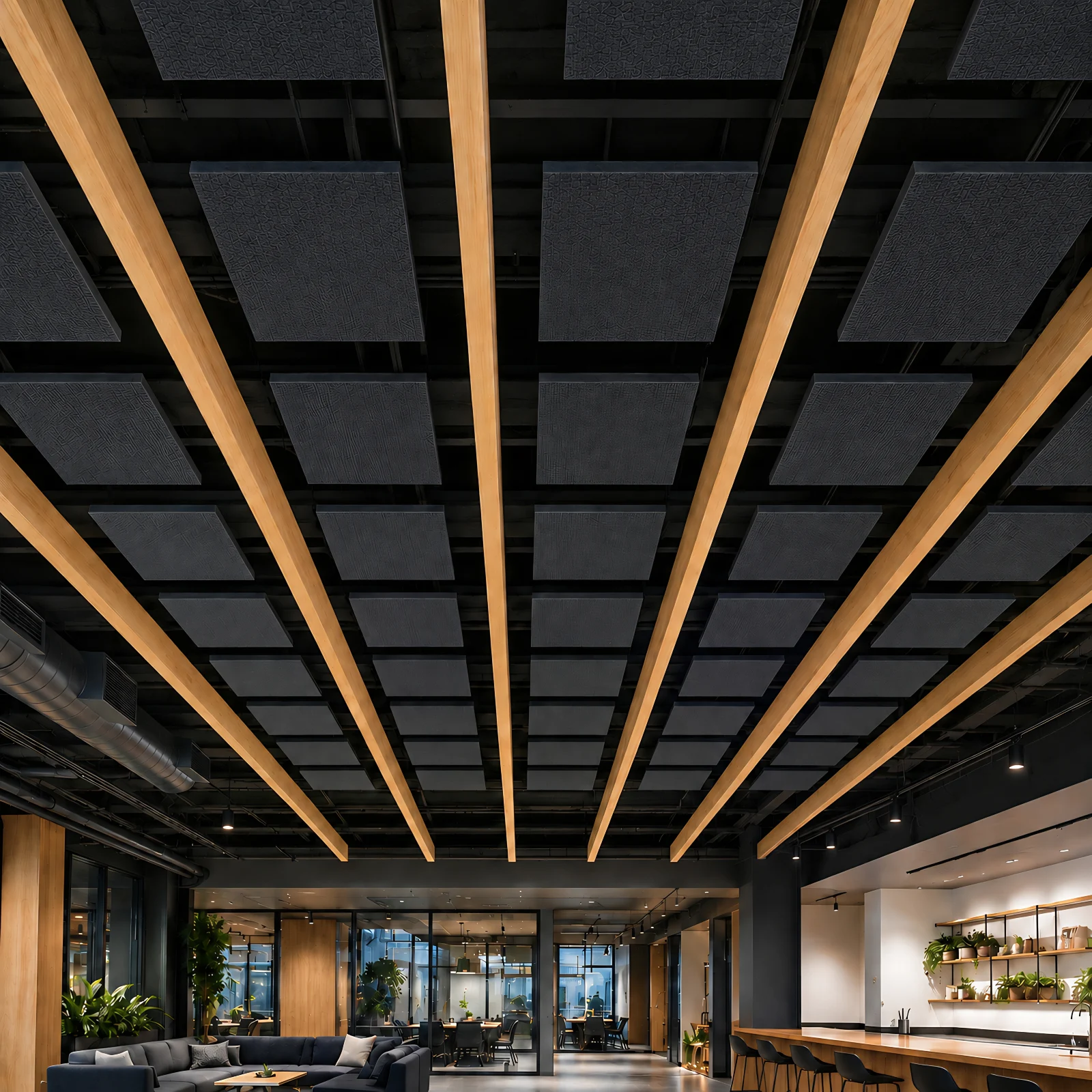
- 24 fabric colors, not five, wrapped on every face with no fiberglass exposed.
- Handmade in the USA with recycled content in the core.
Frequently Asked Questions
- What sizes do acoustic ceiling clouds come in?
- Five, all 2″ thick: 2′ x 2′ (4 lb), 2′ x 4′ (8 lb), 2′ x 6′ (12 lb), 4′ x 4′ (16 lb) and 4′ x 6′ (24 lb). Weights are the fiberglass core.
- How many ceiling clouds do I need?
- Cover 15 to 25% of the room’s floor area for speech spaces, 25 to 35% for music, high ceilings or a lot of glass. A 1,200 sq ft classroom wants roughly 180 to 300 sq ft of panel.
- What colors can I get?
- 24 acoustically transparent fabrics, from off-whites and greys through to blues, greens and reds. Not sure how one will look overhead? Try it on a real installation photo with the ceiling cloud color visualizer.
- How do ceiling clouds hang?
- Rotofast mounts are supplied with every cloud and twist straight into the fiberglass core – no frame and no backing board. You attach them to an eyebolt or other structural member above; the eyebolt, cable and structural fixing are not included, because what you need depends on whether you are hanging from a wood joist, a bar joist, a concrete deck or a strut.
- Are these panels fire rated?
- Yes. Class A, tested to ASTM E84 – the highest rating the standard awards.
- Can I use ceiling clouds on a wall?
- These are built to hang. For a wall, use a panel made to mount flat against one; it will absorb from its front face rather than from both faces and its edges.
- Are acoustic ceiling panels and ceiling clouds the same thing?
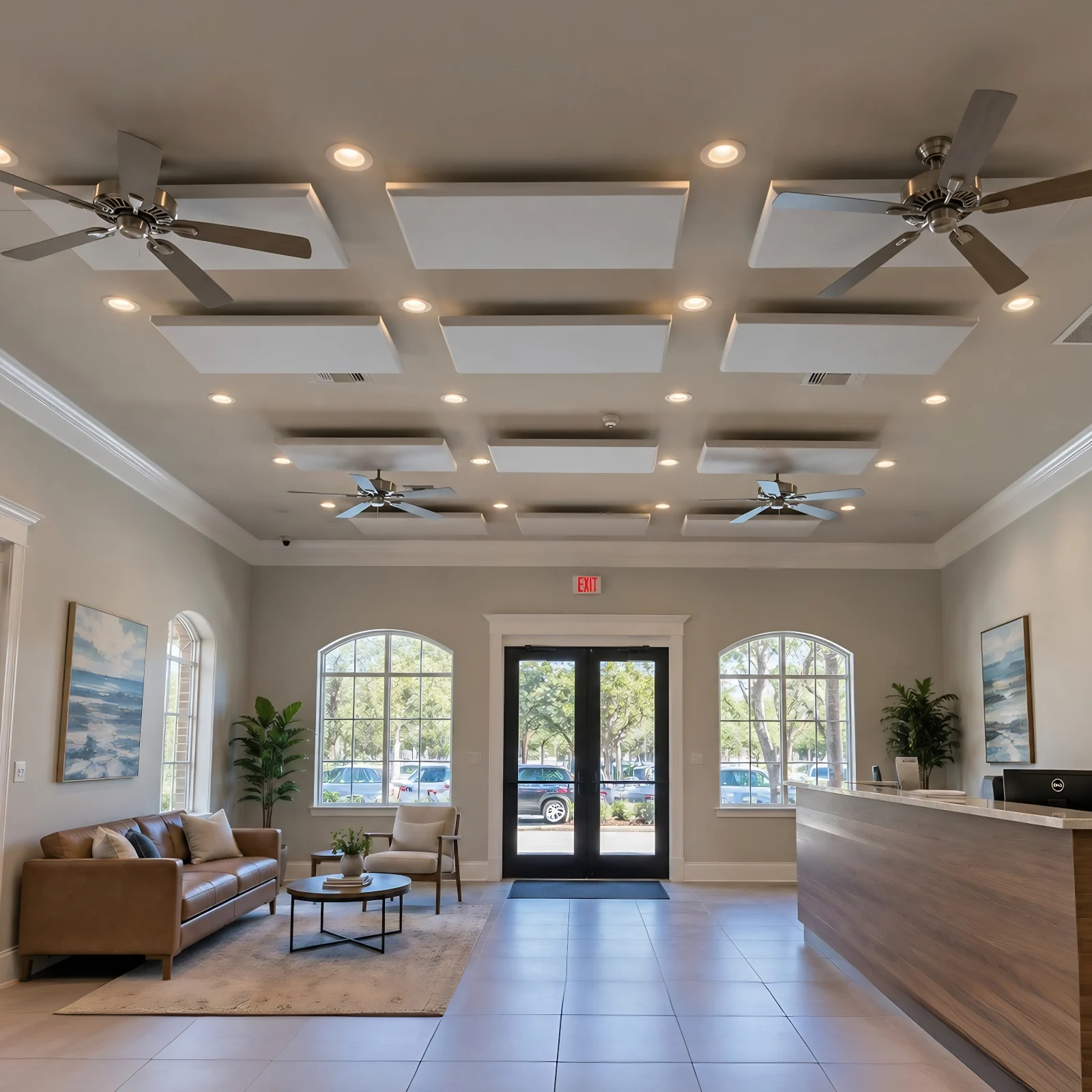
- Not quite. “Acoustic ceiling panel” is the general term for anything that absorbs sound overhead, including tiles that drop into a grid and panels screwed flat to the deck. A cloud is a panel hung below the structure, so it works on the back face and the edges as well as the front – roughly twice the absorbing surface of the same panel mounted flat. These are clouds. Hanging them below the structure is what they are designed for, what the included Rotofast mounts are for, and what gets you the back face and the edges working as well as the front. Screwed flat to the deck they still absorb, but only from the front face – roughly half the panel doing the work, using your own fixings rather than the supplied mounts.
- Do sound dampening panels for ceiling stop noise between floors?
- No. These absorb sound inside the room they hang in, which shortens reverberation and makes speech clearer. They do not stop footsteps or voices coming through the floor above – that is a mass and isolation problem, not an absorption one. For a drop ceiling, the Drop Ceiling Noise Blokker is the right product.
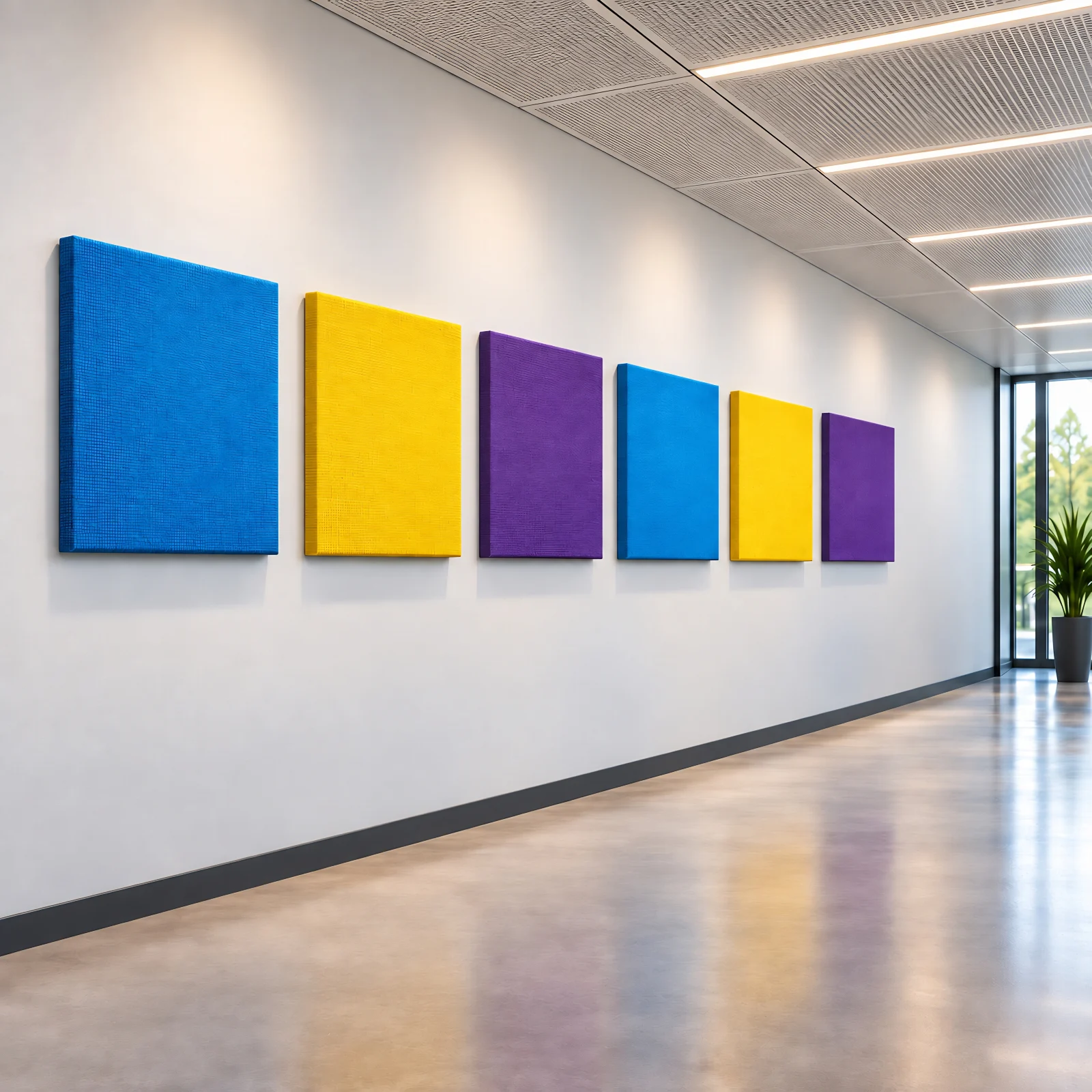
 24 Ceiling Cloud Colors to Choose From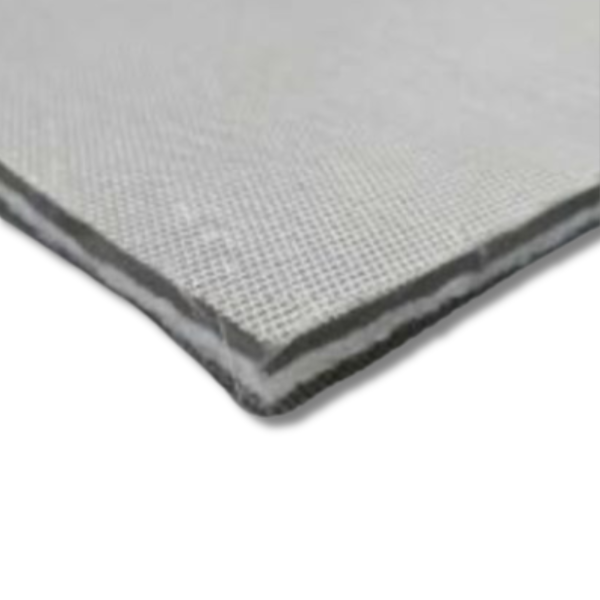
Reviews
There are no reviews yet.