
Description
What Acoustical Caulk Does
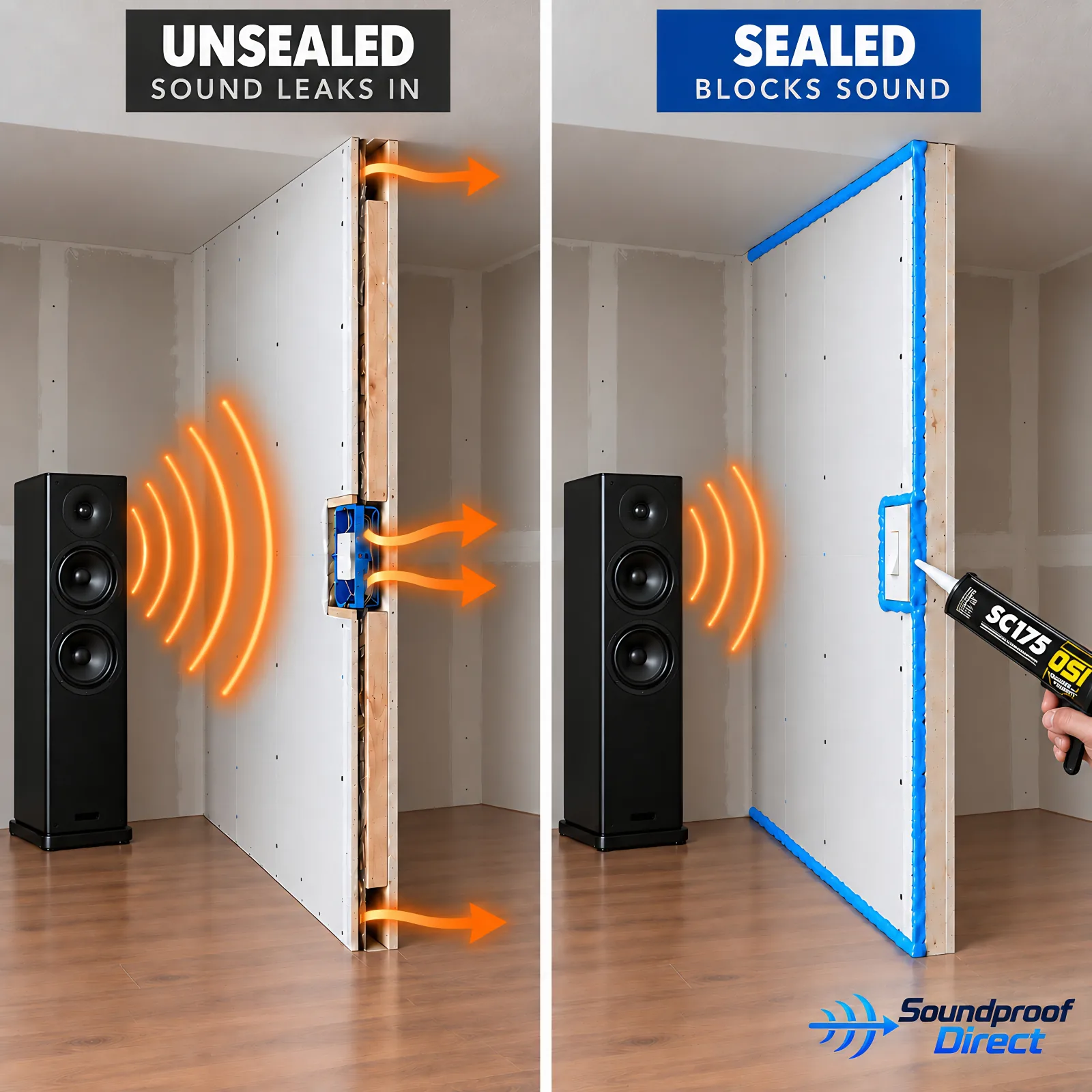
A sound-rated wall only performs to its STC rating if it is sealed. Sound is air pressure, and it takes the easiest path: the gap where drywall meets the floor, the cutout around an outlet box, the space around a duct or pipe. A 1/8″ crack along a wall can undo much of what the extra drywall, insulation or mass loaded vinyl in that wall was paid for.
Acoustical caulk closes those gaps with a seal that stays soft. That is the whole difference from ordinary caulk: it never hardens, so it does not crack as the building moves and it does not form a rigid bridge between parts of the wall that are meant to stay separate.
Acoustical Sealant vs. Regular Caulk
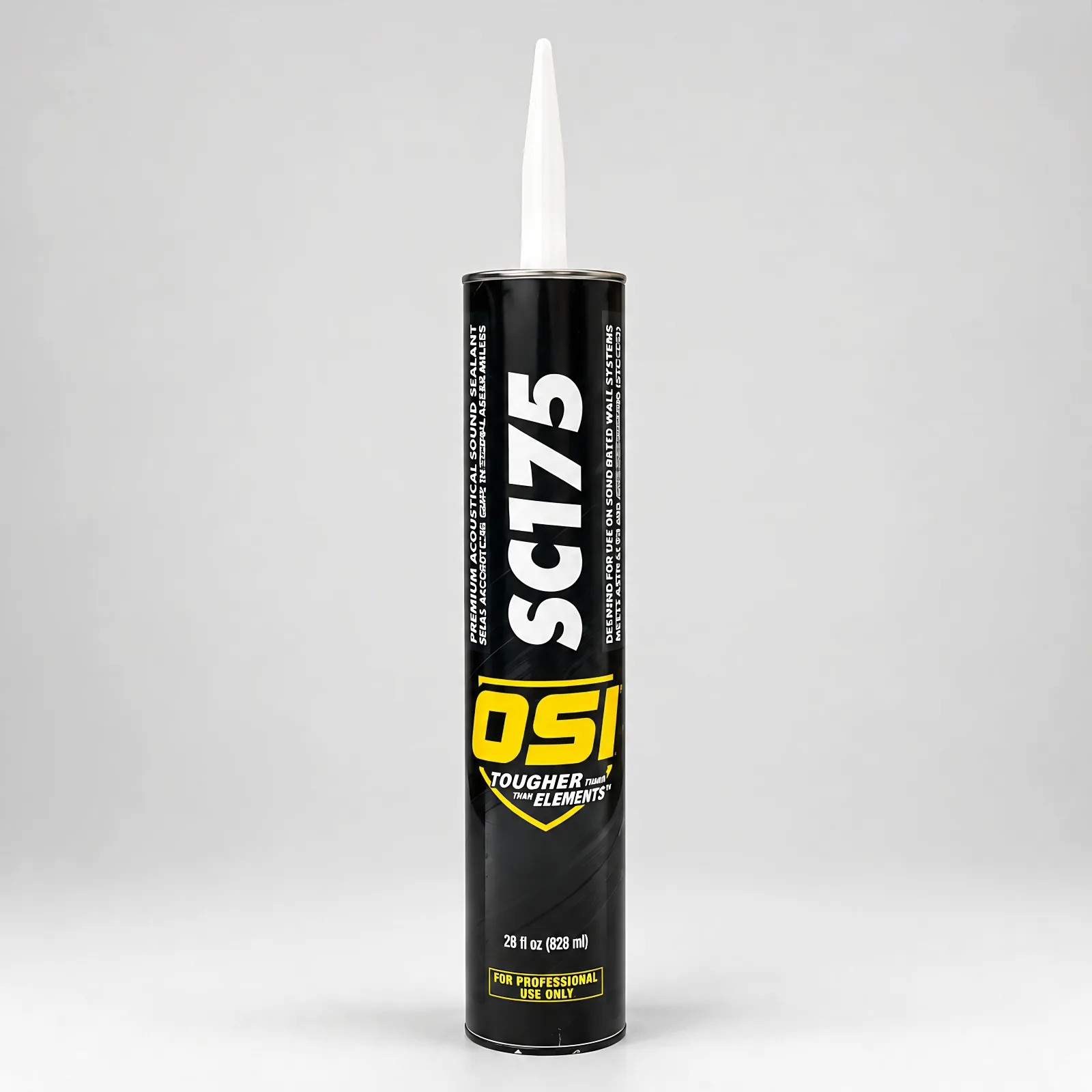
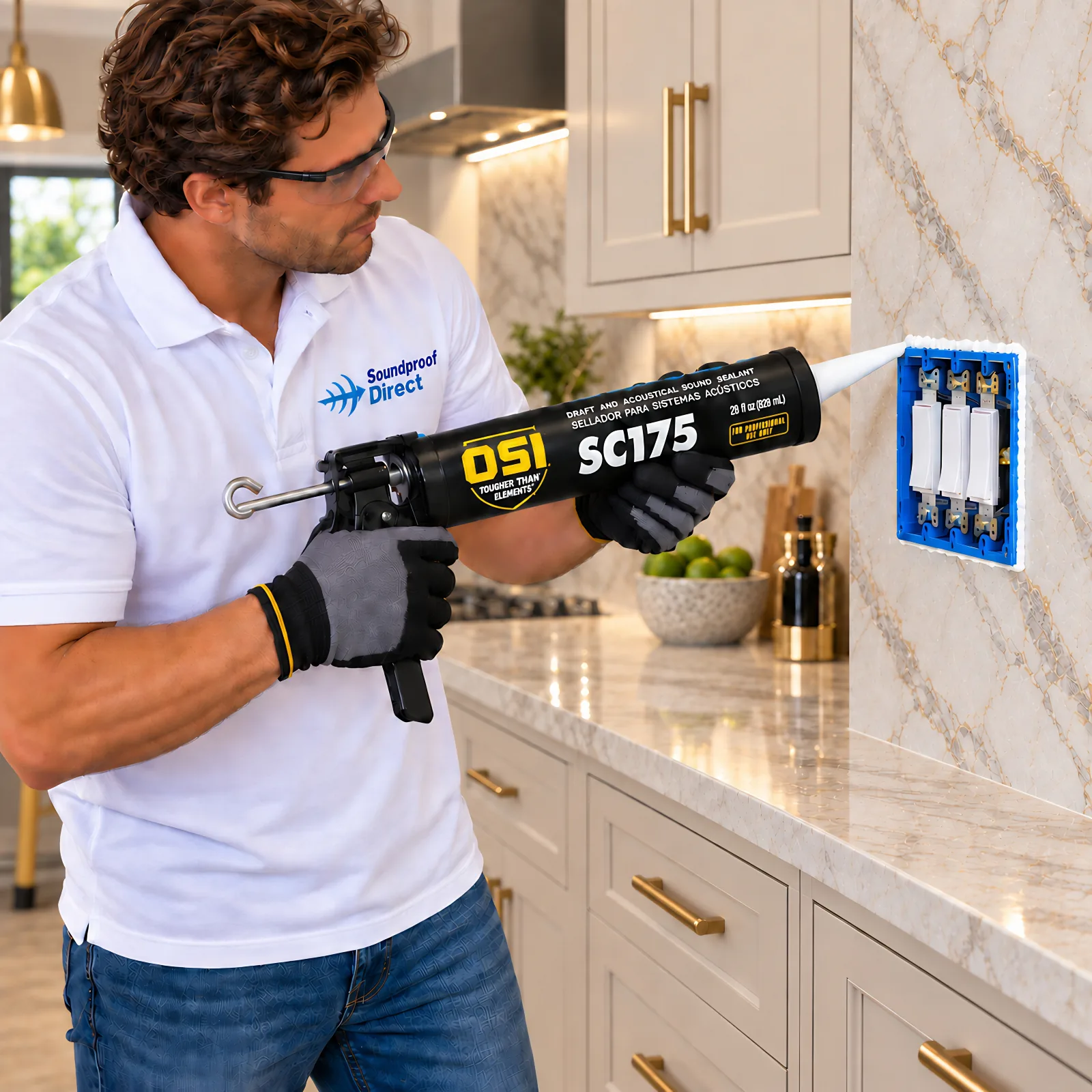
This is OSI SC175 Draft & Acoustical Sound Sealant, a non-flammable, latex-based acoustical sealant made for sound-rated wall and floor assemblies.
- Permanently flexible. It will not harden, crack or pull away from the joint, so the seal keeps working for the life of the wall. Silicone and painter’s caulk set hard and eventually open up.
- Keeps the rated STC. Made to achieve and maintain the STC (Sound Transmission Class) value of the assembly it is installed in.
- Sticks to what walls are made of – wood, metal studs, concrete, gypsum board and other common building materials.
- Paintable after 24 hours, and cleans up with soap and water.
- For fire-rated and non-fire-rated walls. Tested to UL 1479, UL 2079 and ASTM E84 (UL Fire Resistance Directory control no. R39255).
- Low odor. Ultra-low VOC, GREENGUARD Indoor Air Quality certified, and can contribute to LEED projects.
Where to Use Acoustical Caulk
Anywhere a sound-rated assembly has a joint, a cutout or something passing through it:
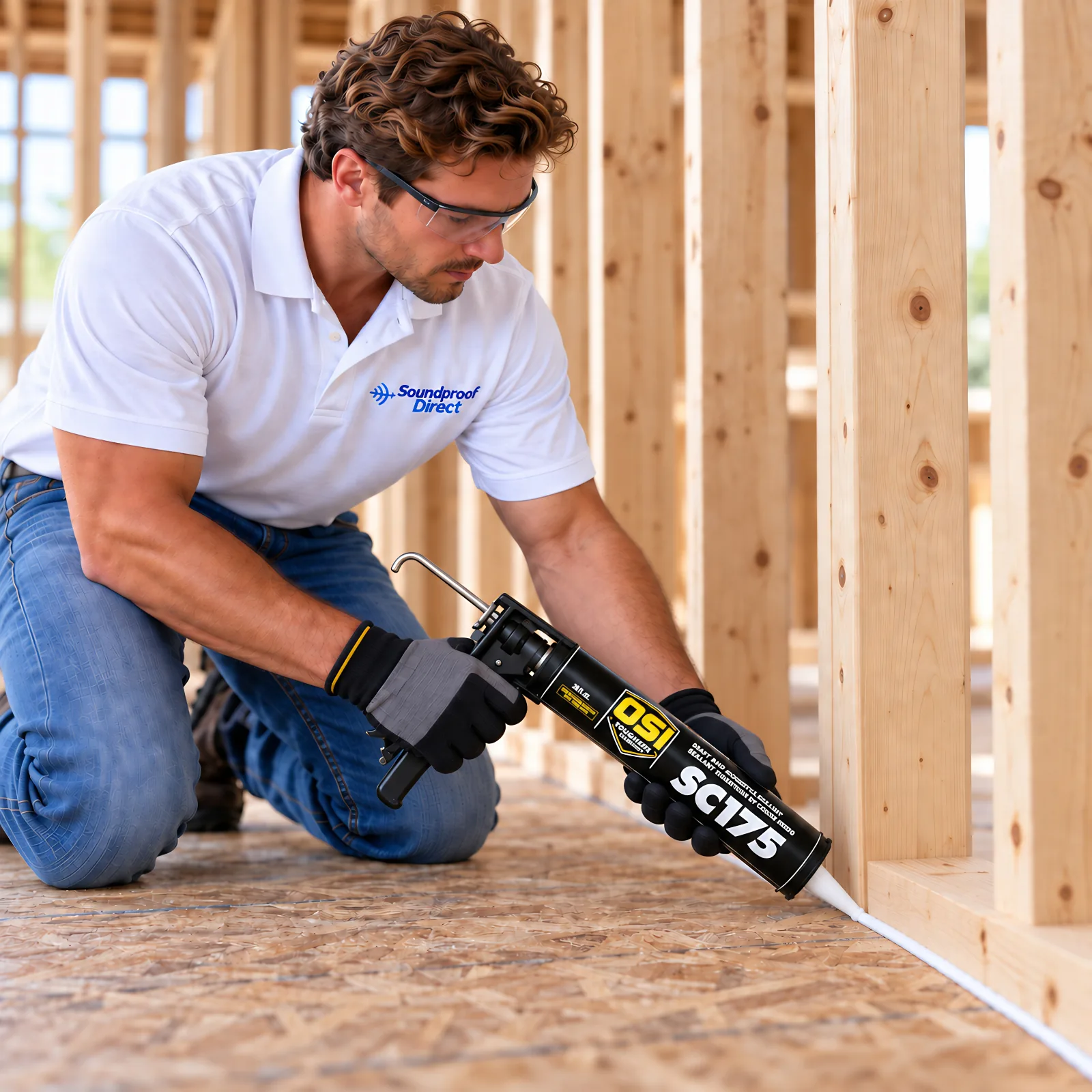
- Wall perimeters – where drywall meets the floor, the ceiling and adjoining walls, and the floor and ceiling runners.
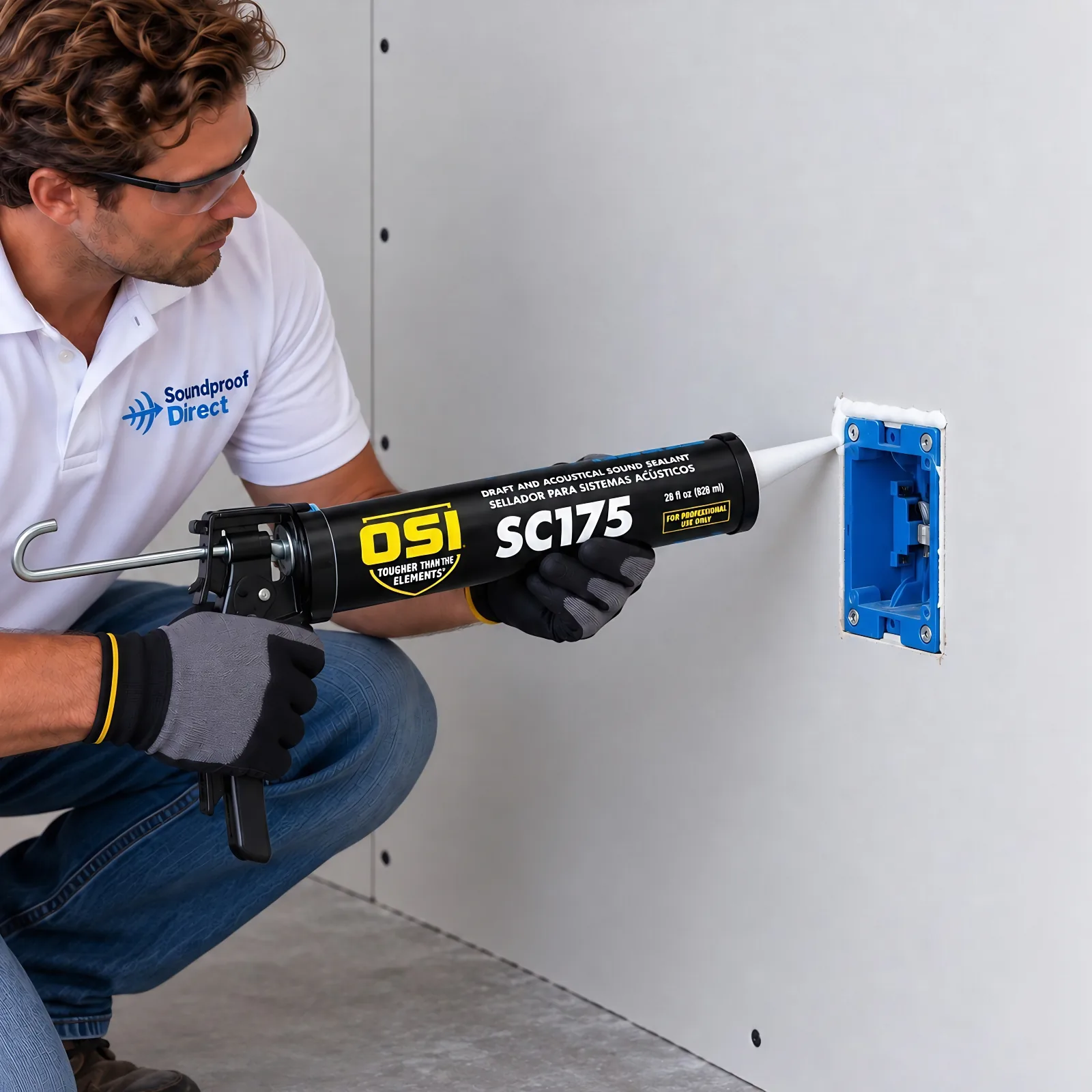
- Electrical boxes and outlets – bead or butter around every box. Back-to-back outlets are one of the biggest sound leaks in a party wall.
- Penetrations – cold air returns, heating and air conditioning ducts, pipes and other equipment coming through the wall.
- Cutouts in gypsum board and veneer plaster systems.
- Sill and base plates in residential framing.
It is used in homes, apartments and condos, hotels, offices and other commercial buildings – anywhere a wall or floor has an STC requirement. If you are adding Wall Blokker or other MLV to a wall, caulk the drywall perimeter and every box so the finished wall has no open joints. For seams in the MLV itself, use MLV seam tape.
How to Apply Acoustical Caulk
- Clean the joint. Remove dust and loose material; the surface should be clean and dry.
- Cut the nozzle to the bead size you need and load the tube in a quart-size (28 oz) caulk gun – a standard 10 oz gun will not take it.
- Run a continuous bead into the gap. Fill it; a thin surface skin over an open void does not seal anything.
- Tool it smooth while it is wet, and wipe any excess with a damp cloth.
- Let it cure. Dry to the touch in about 30 minutes; full cure takes 2 to 7 days depending on bead size, temperature and humidity. Paint it after 24 hours.
It is an interior product. Clean tools and hands with soap and water before it dries.
How Many Tubes of Acoustical Caulk You Need
A 28 oz tube runs roughly 86 linear feet at a 1/4″ bead, or about 38 feet at a 3/8″ bead. Wider or deeper gaps use more. To estimate, add up the room perimeter at the floor and ceiling, then allow a few feet per outlet, switch and penetration. A typical 12′ x 12′ room sealed at both perimeters with a 1/4″ bead uses about one to two tubes.
Frequently Asked Questions
- What is acoustical caulk?
- A sealant made for sound-rated walls and floors. It fills gaps the same way regular caulk does, but it stays permanently flexible, so it keeps sealing out sound instead of cracking as the building moves.
- Is acoustical caulk the same as acoustical sealant?
- Yes. Acoustical caulk, acoustical sealant, acoustic caulk and sound sealant are all names for the same kind of product. This one is OSI SC175 Draft & Acoustical Sound Sealant.
- Can I paint over acoustical caulk?
- Yes. It is paintable after 24 hours, and it stays flexible under the paint.
- Can it be used in fire-rated walls?
- It is designed for fire-rated and non-fire-rated wall systems and has been tested to UL 1479, UL 2079 and ASTM E84 (UL control no. R39255). Always follow the listing for your specific rated assembly.
- Can I use it outside?
- No. It is an interior sealant.
Reviews
There are no reviews yet.