
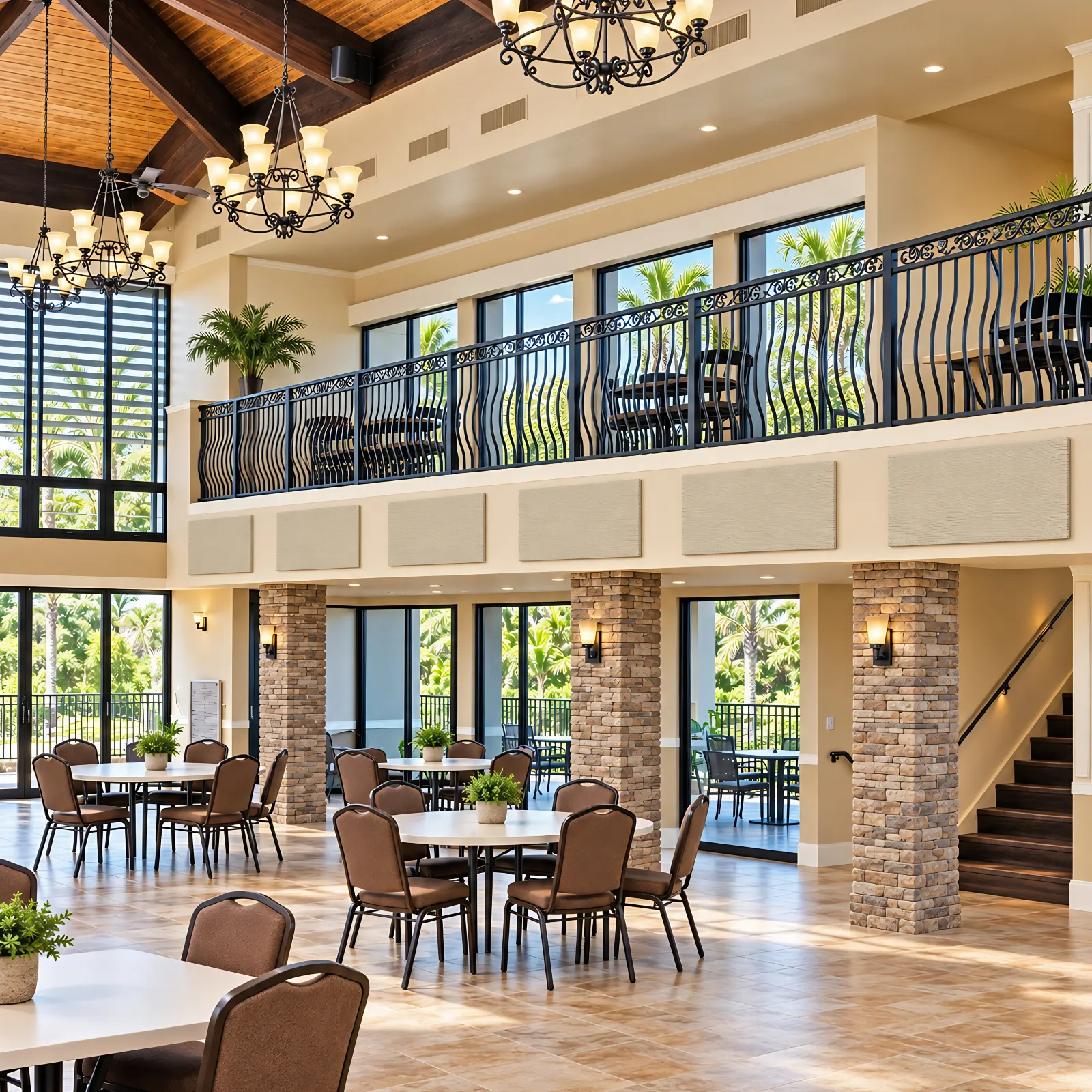
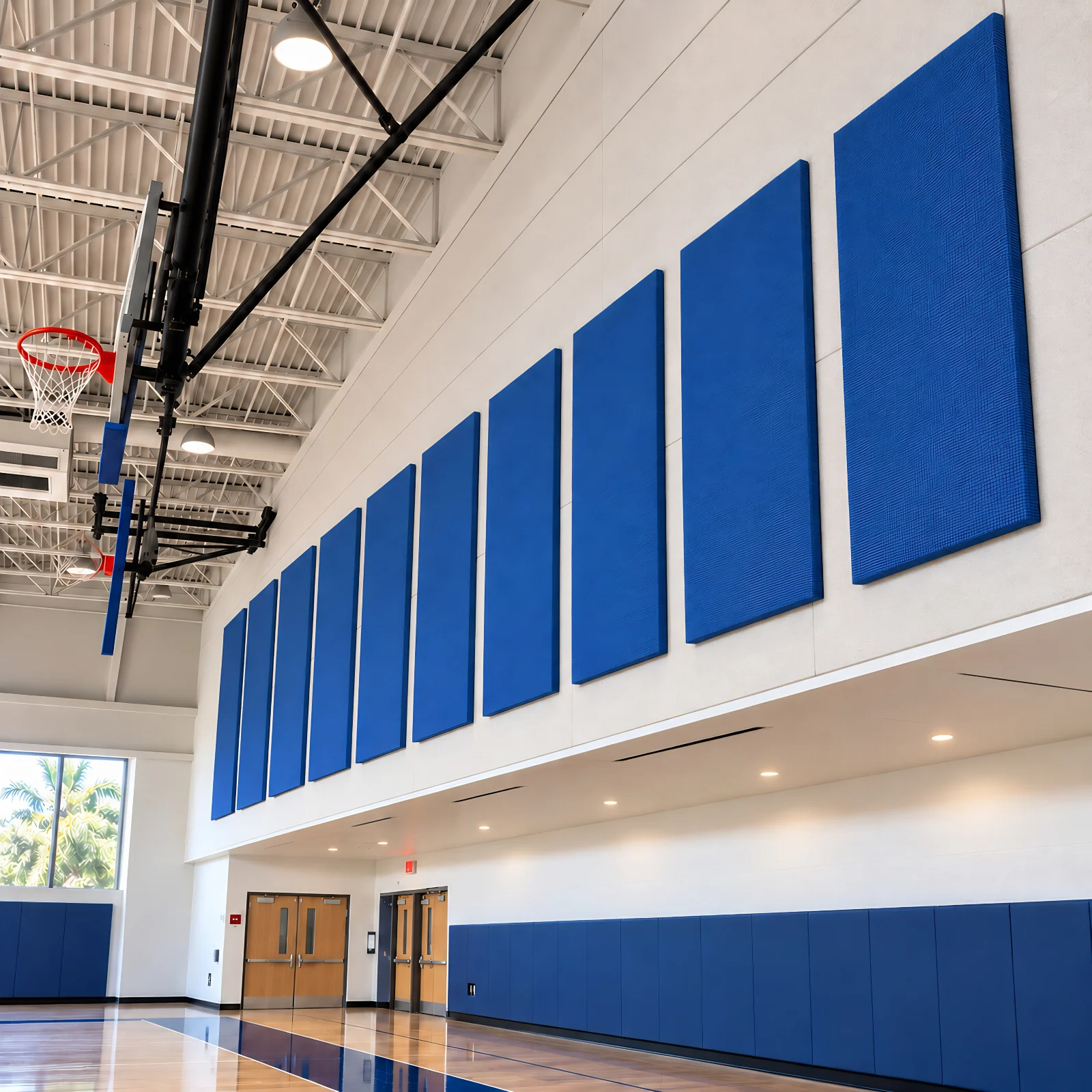
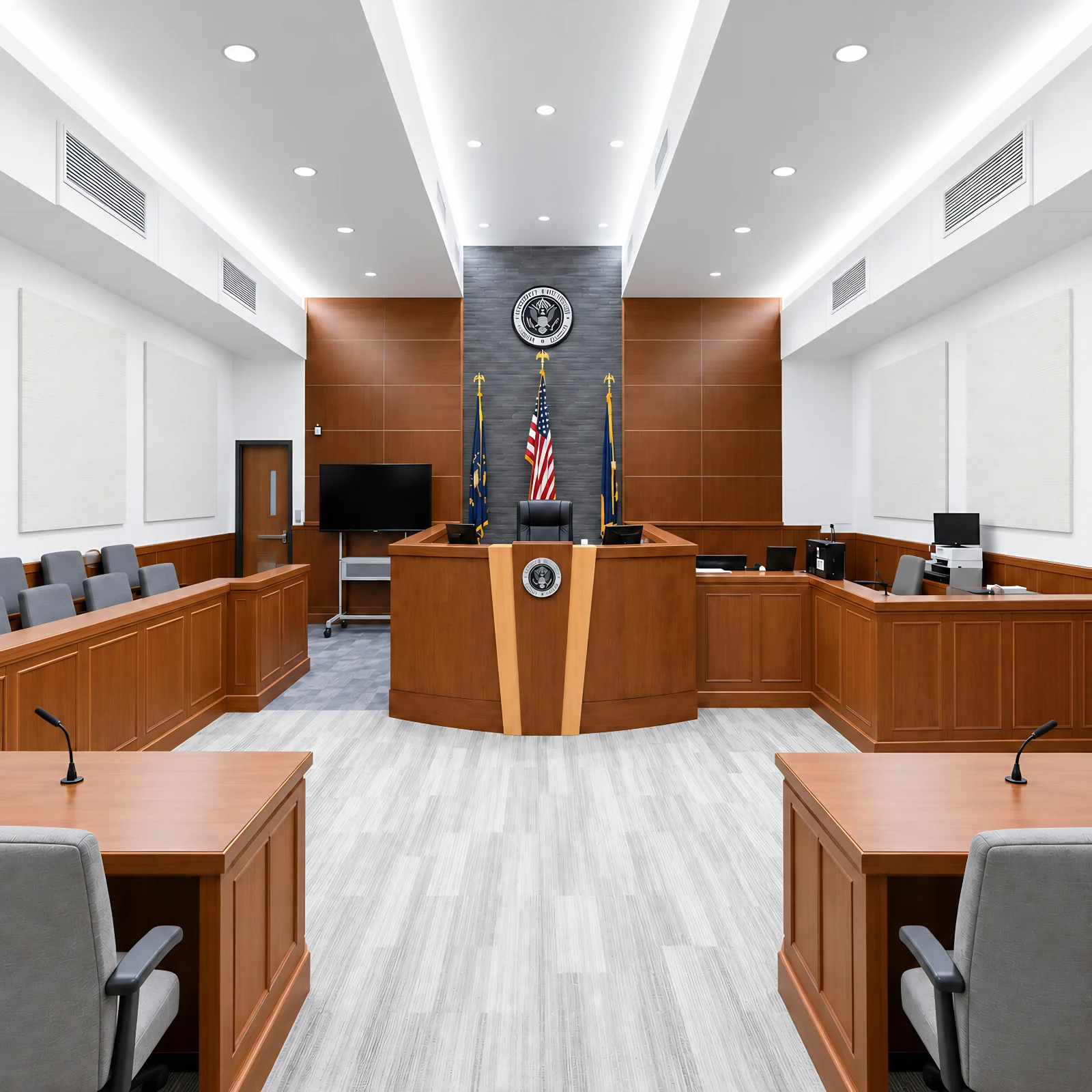
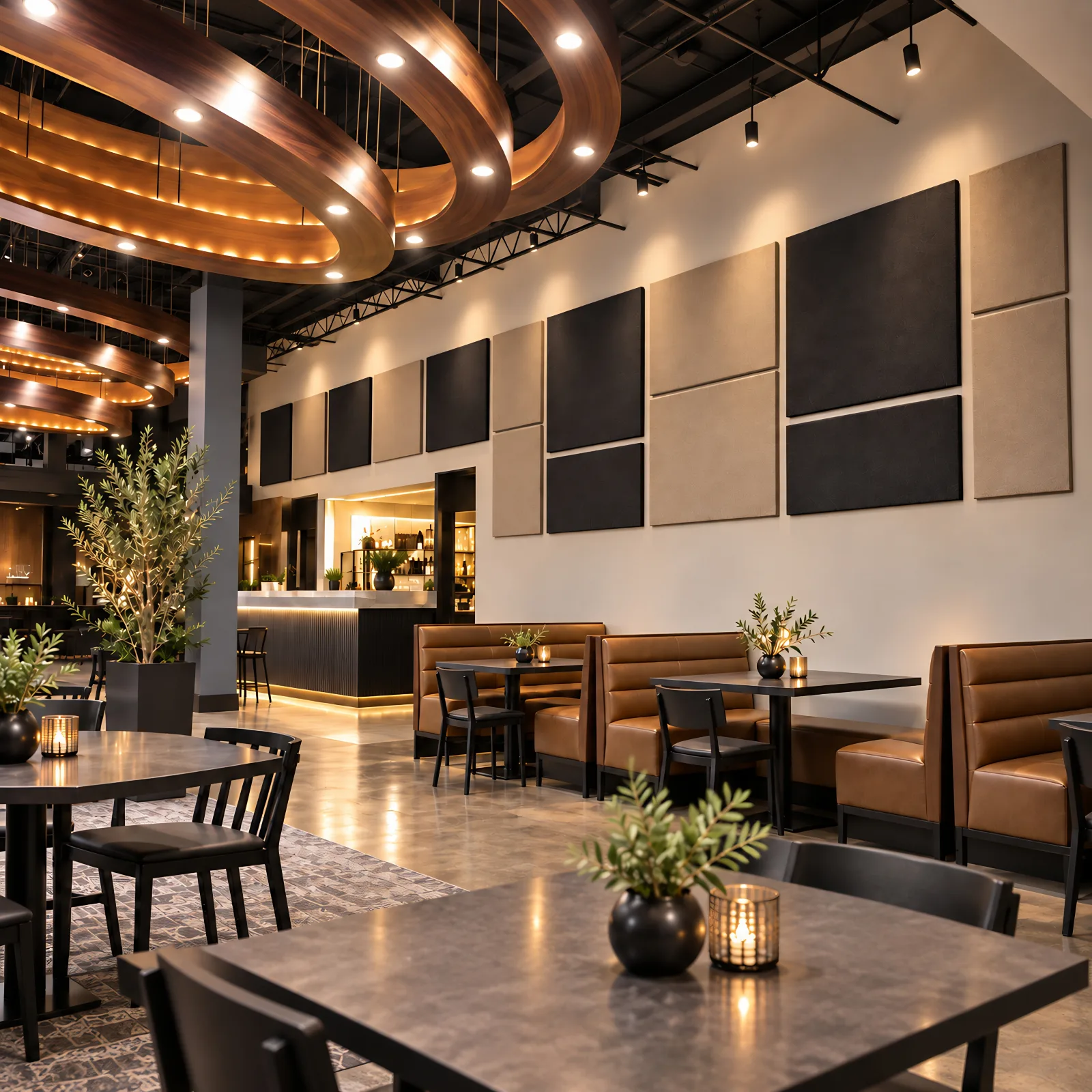
Description
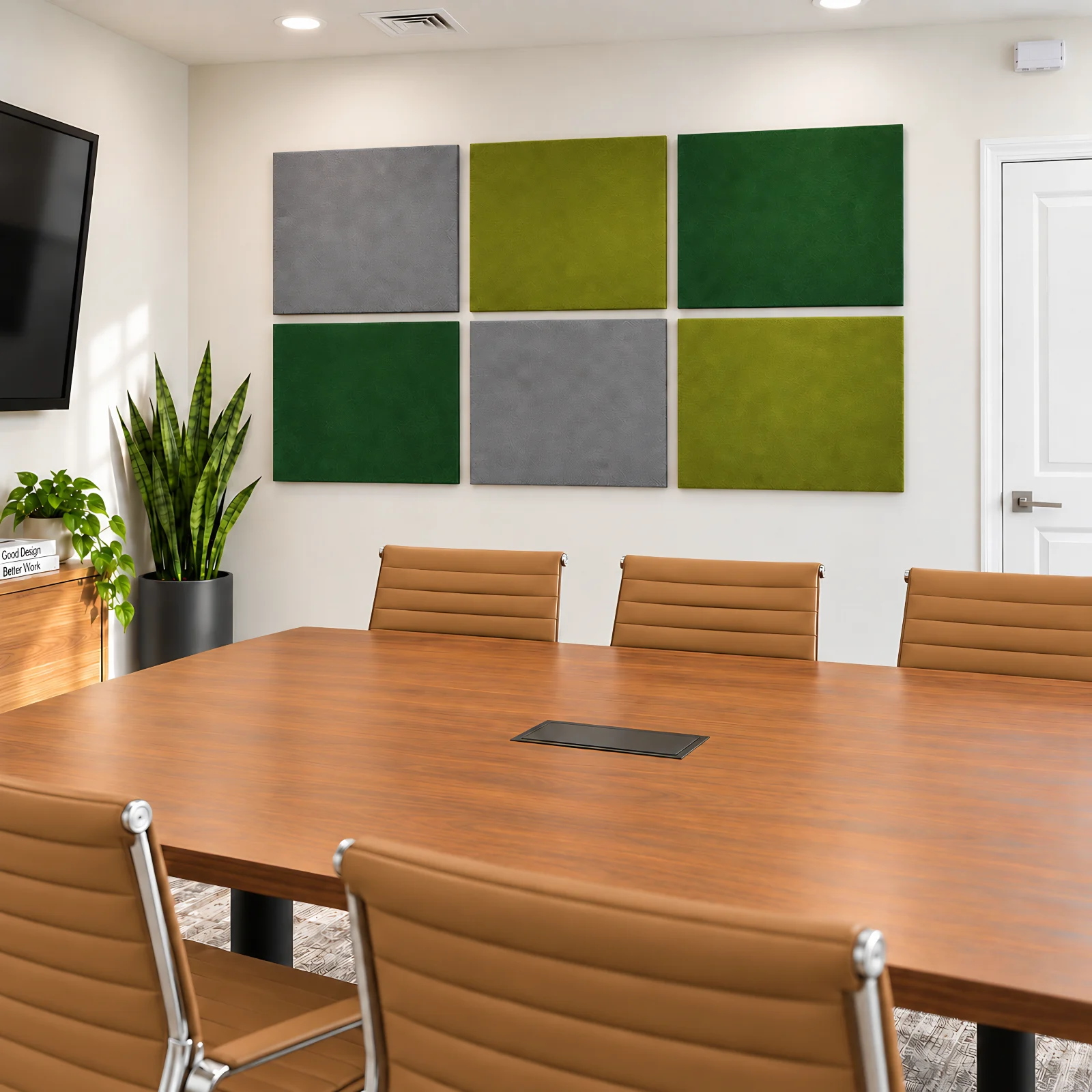
How Acoustic Wall Panels Control Echo
Echo is the same sound reaching you twice. A hard wall returns almost everything that hits it, so in a room finished in drywall, glass and tile every voice arrives once directly and again a fraction of a second later off the surfaces around it. That smearing is what makes a room tiring to talk in and a recording impossible to clean up.
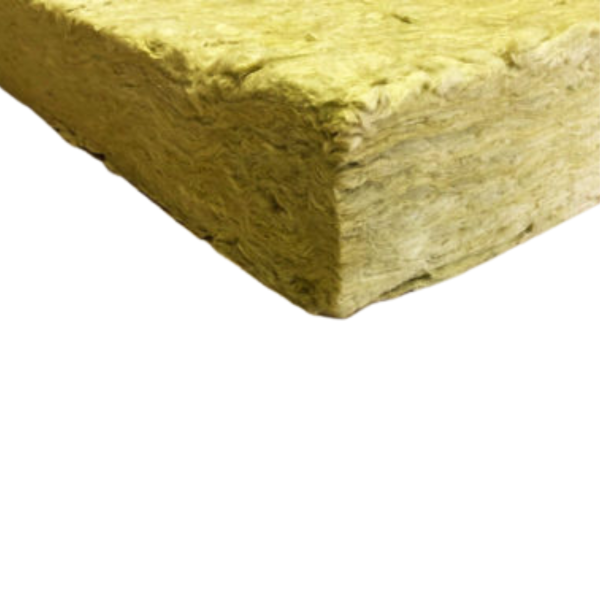
An absorption panel replaces a reflective surface with an absorptive one. Sound passes through the acoustically transparent fabric into a 6 pcf fiberglass core, where it is converted to heat inside the fibers instead of being sent back into the room. Two inches of that core is what gives these panels an NRC of 1.05 – and thickness is what keeps a panel working down where a room actually booms.
Where Sound Absorbing Wall Panels Work Best
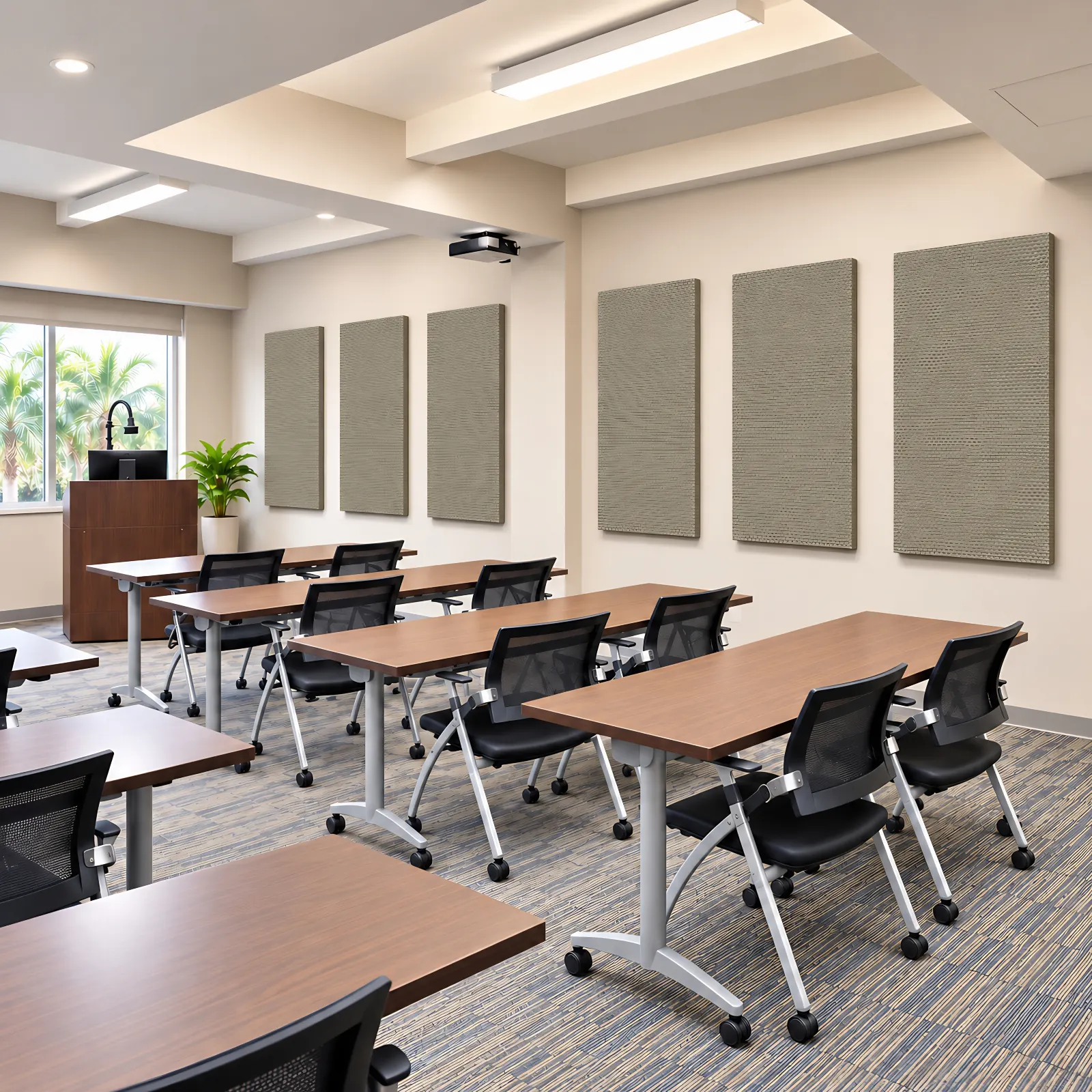
Anywhere there is hard wall to spare and a room that rings:
- Recording studios and home theaters – kill the first reflection off the side walls before it reaches the mic or the listening position.
- Classrooms and lecture halls – speech intelligibility is the whole job; reverberation is what destroys it.
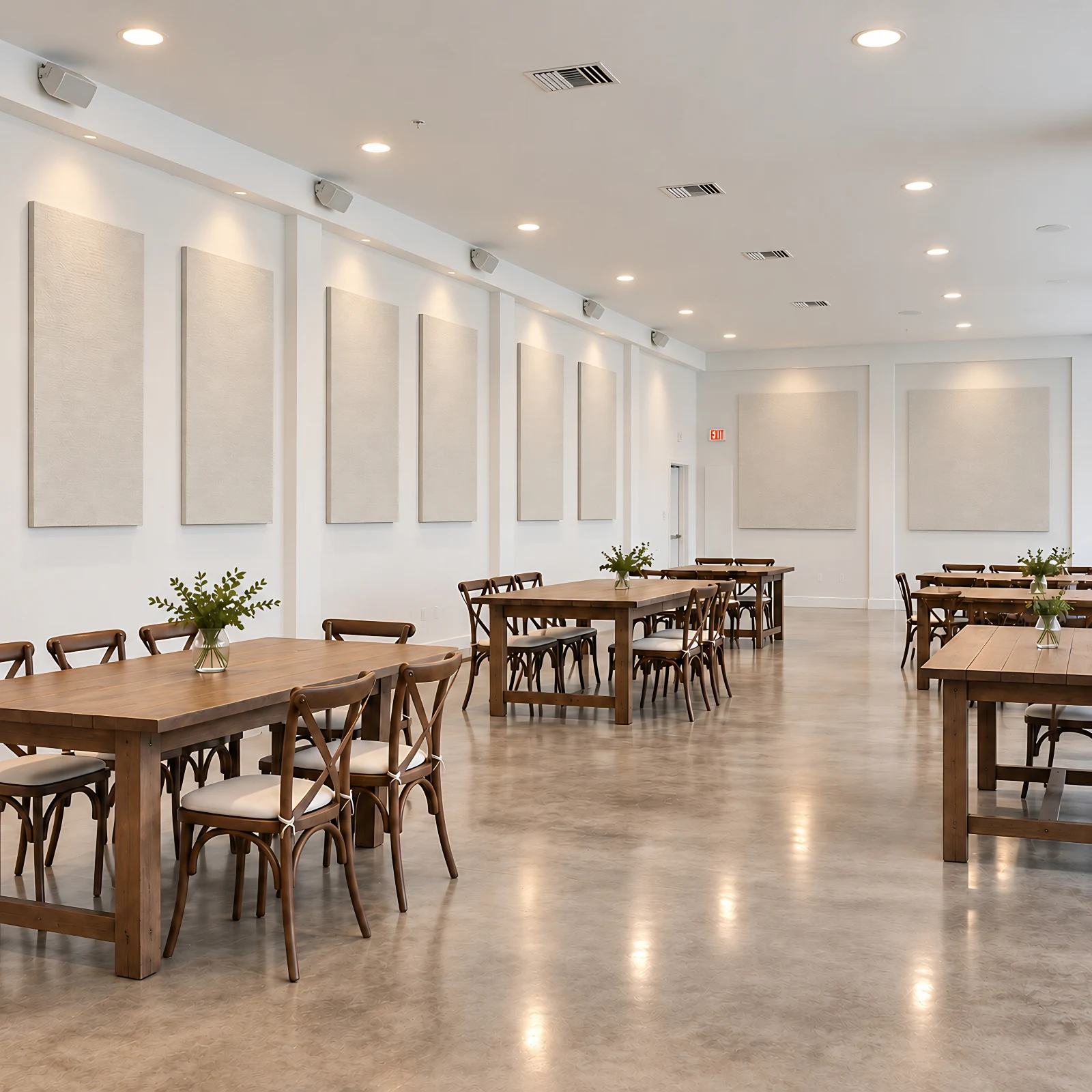
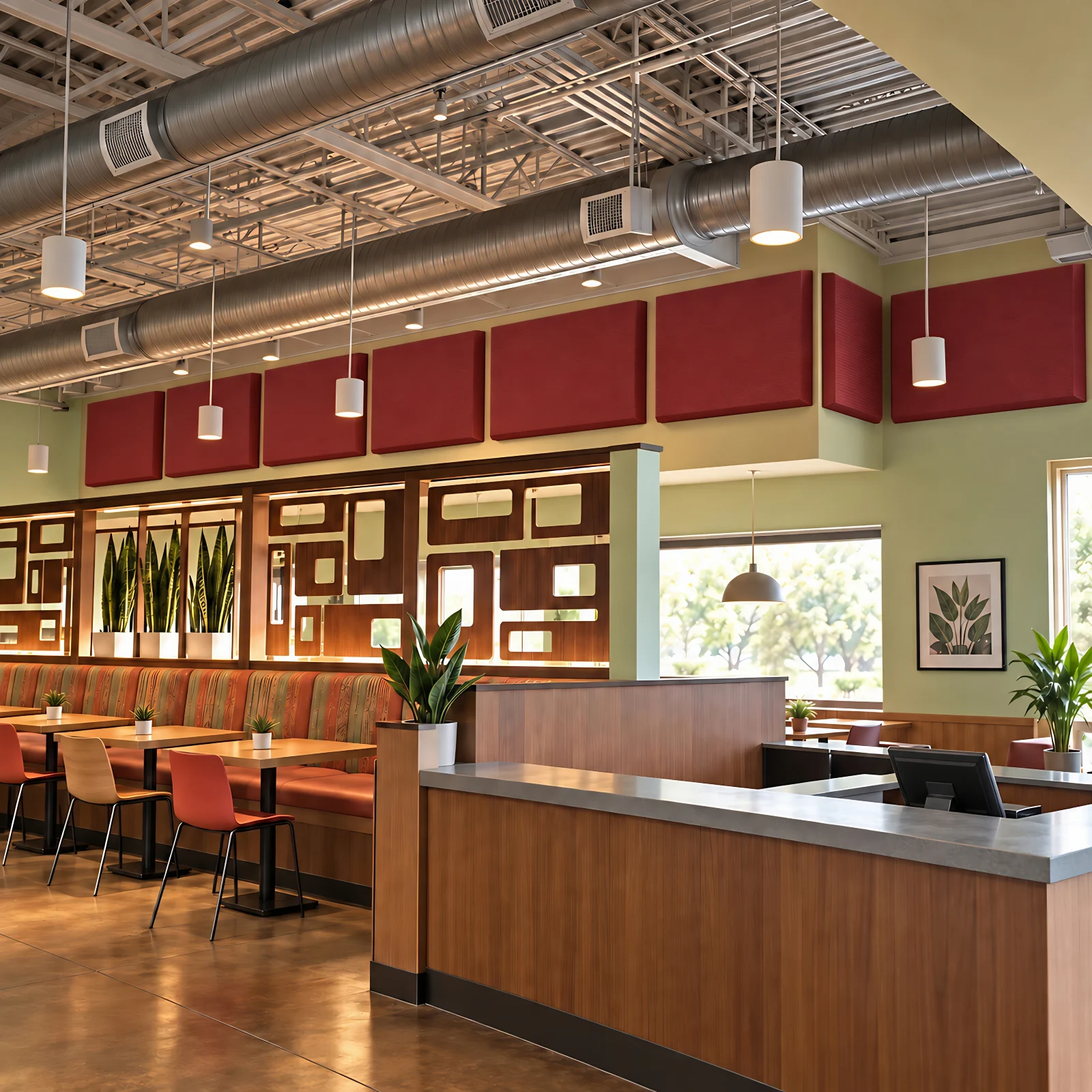
- Restaurants and bars – every table talking over the last one, on hard floors and bare walls.
- Worship centers – long reverberation times and speech that has to carry to the back row.
- Offices and conference rooms – glass, whiteboards and hard ceilings, with calls happening in all of it.
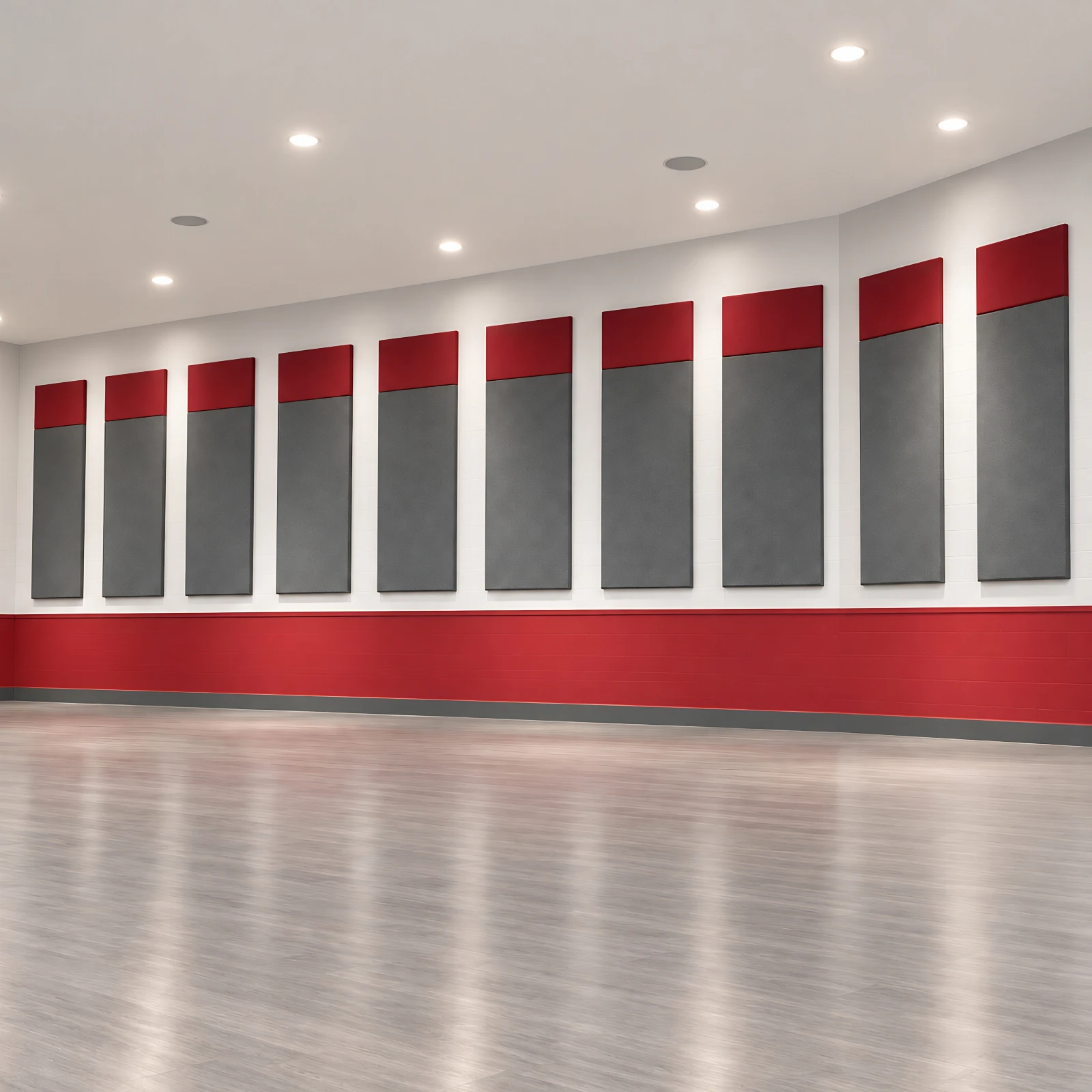
- Gyms and multipurpose rooms – the loudest rooms in most buildings.
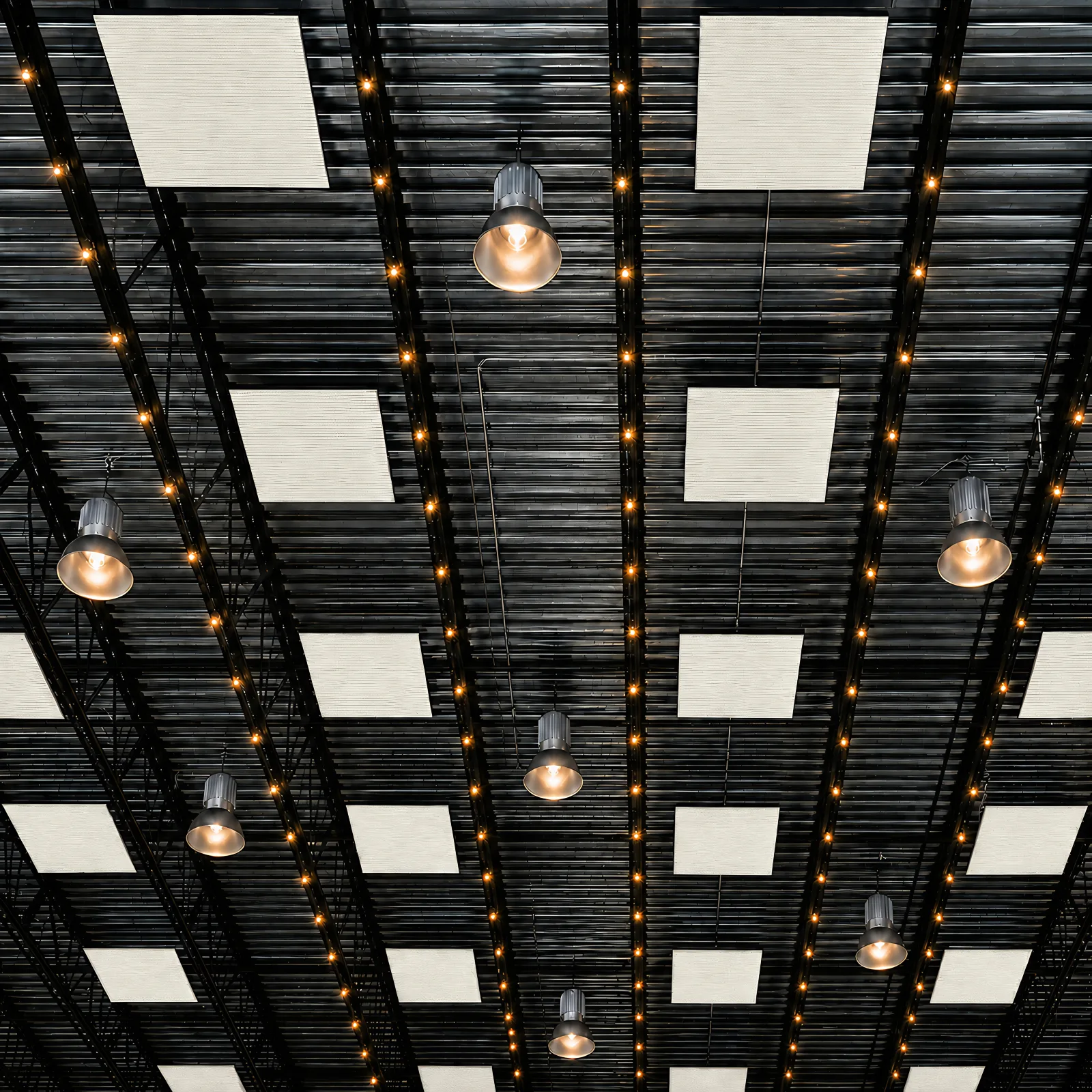
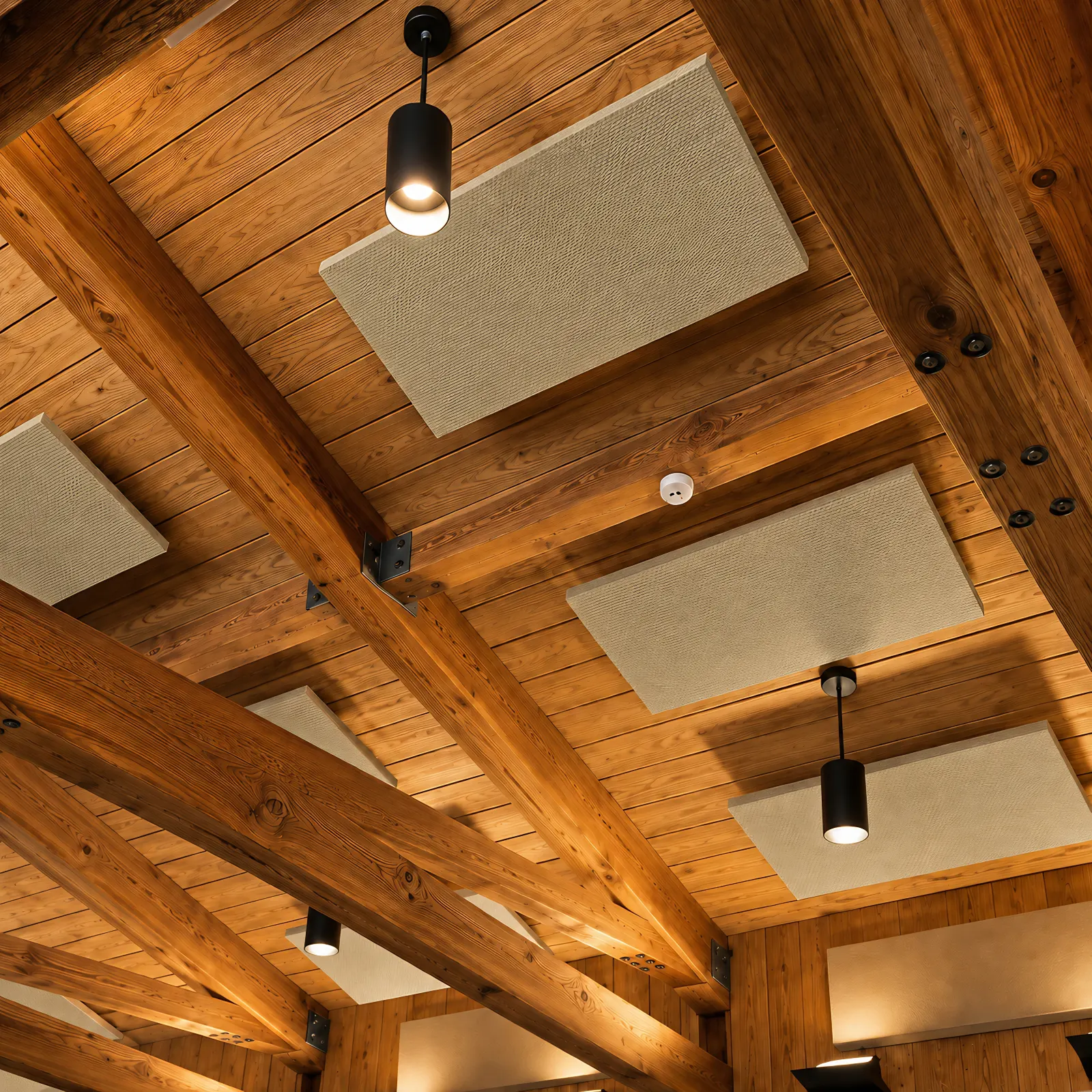
Treat the walls where the reflections are strongest first – the surfaces either side of the talker, and the wall facing them. If the ceiling is the biggest hard surface in the room, hang acoustic ceiling clouds instead and come back to the walls afterwards.

How Many Acoustic Wall Panels Do You Need?
- Speech spaces – classrooms, offices, restaurants: cover 15 to 25% of the floor area.
- Music, high ceilings or a lot of glass: 25 to 35%.
- Worked example: a 30′ x 20′ dining room is 600 sq ft, so it wants 90 to 150 sq ft of panel – eleven to nineteen 2′ x 4′ panels, or six to ten 4′ x 4′ if you would rather cover it in fewer, cheaper-per-sq-ft pieces.
- Spread them out. Sound has to reach a panel to be absorbed, and gaps expose the panel edges, which absorb too. Scattered panels beat one solid wall of them.
- Start at ear height. The reflections that matter arrive between roughly 3 and 7 feet off the floor.
Send us your dimensions and what the room is used for and we will work it out with you.
What Makes Our Sound Dampening Wall Panels Different
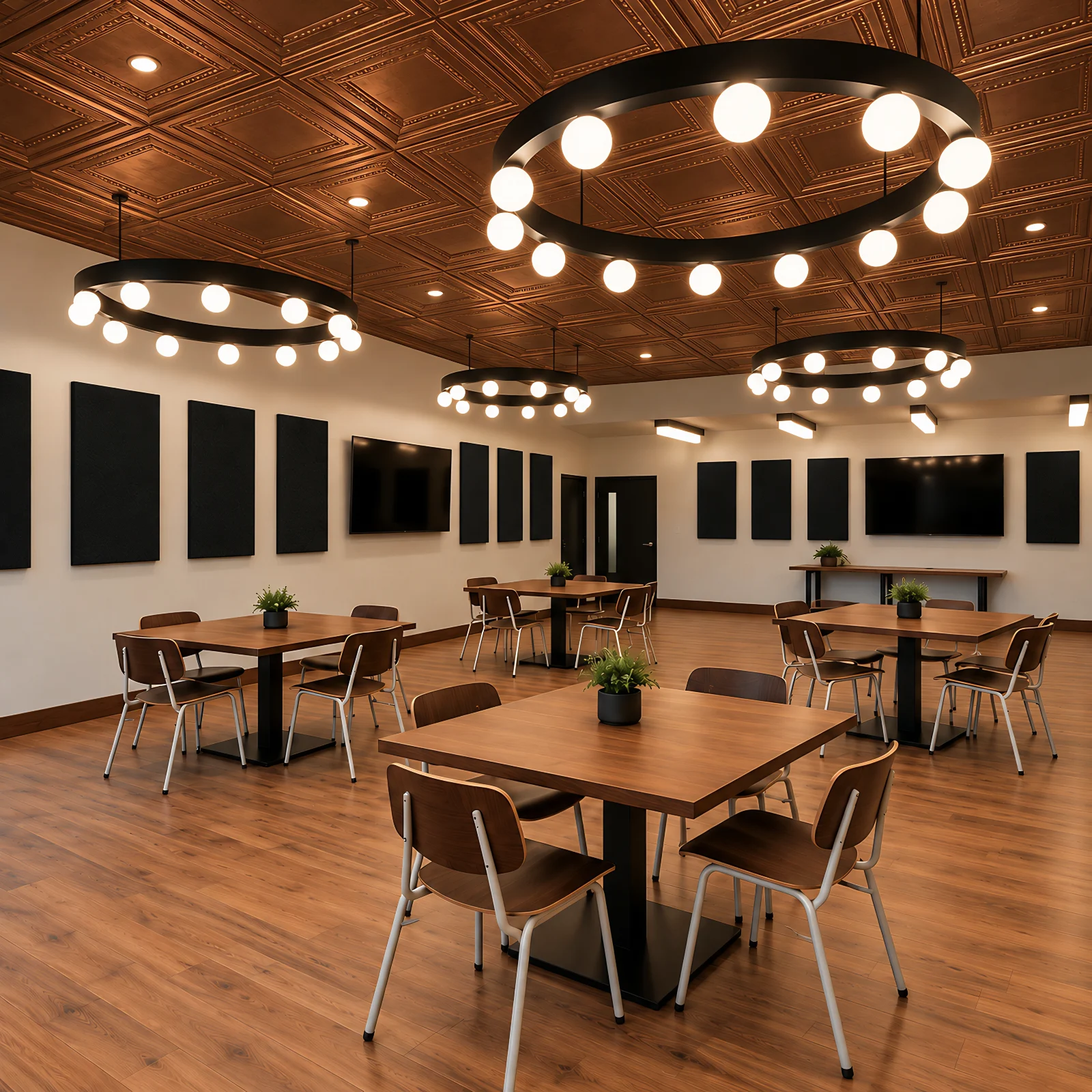
- 2″ of 6 pcf fiberglass, NRC 1.05 – against 1.2″ polyester felt at NRC 0.85. The extra thickness and density are what buy you the low end.
- Impaling clips included. Screw the clips to the wall, press the panel on, done – 15 minutes, no frame and no trim.
- Fabric wrapped on every face with no exposed fiberglass at the edges or the back.
- 24 fabric colors, not five, and every one costs the same.
- Handmade in the USA with recycled content in the core.
Frequently Asked Questions
- What sizes do acoustic wall panels come in?
- Five, all 2″ thick: 2′ x 2′ (4 lb), 2′ x 4′ (8 lb), 2′ x 6′ (12 lb), 4′ x 4′ (16 lb) and 4′ x 6′ (24 lb). Weights are the fiberglass core.
- How many acoustic panels do I need?
- Cover 15 to 25% of the room’s floor area for speech spaces, 25 to 35% for music, high ceilings or a lot of glass. A 600 sq ft dining room wants roughly 90 to 150 sq ft of panel.
- What does NRC 1.05 mean?
- Noise Reduction Coefficient is the share of the sound hitting a panel that does not come back, rounded to the nearest 0.05. At 1.05 these panels absorb effectively everything that reaches them – a rating can pass 1.00 because a panel absorbs around its edges too, so it takes in slightly more sound than its flat area alone would suggest. NRC does not measure soundproofing: it is about echo inside a room, not noise passing through a wall.
- What colors can I get?
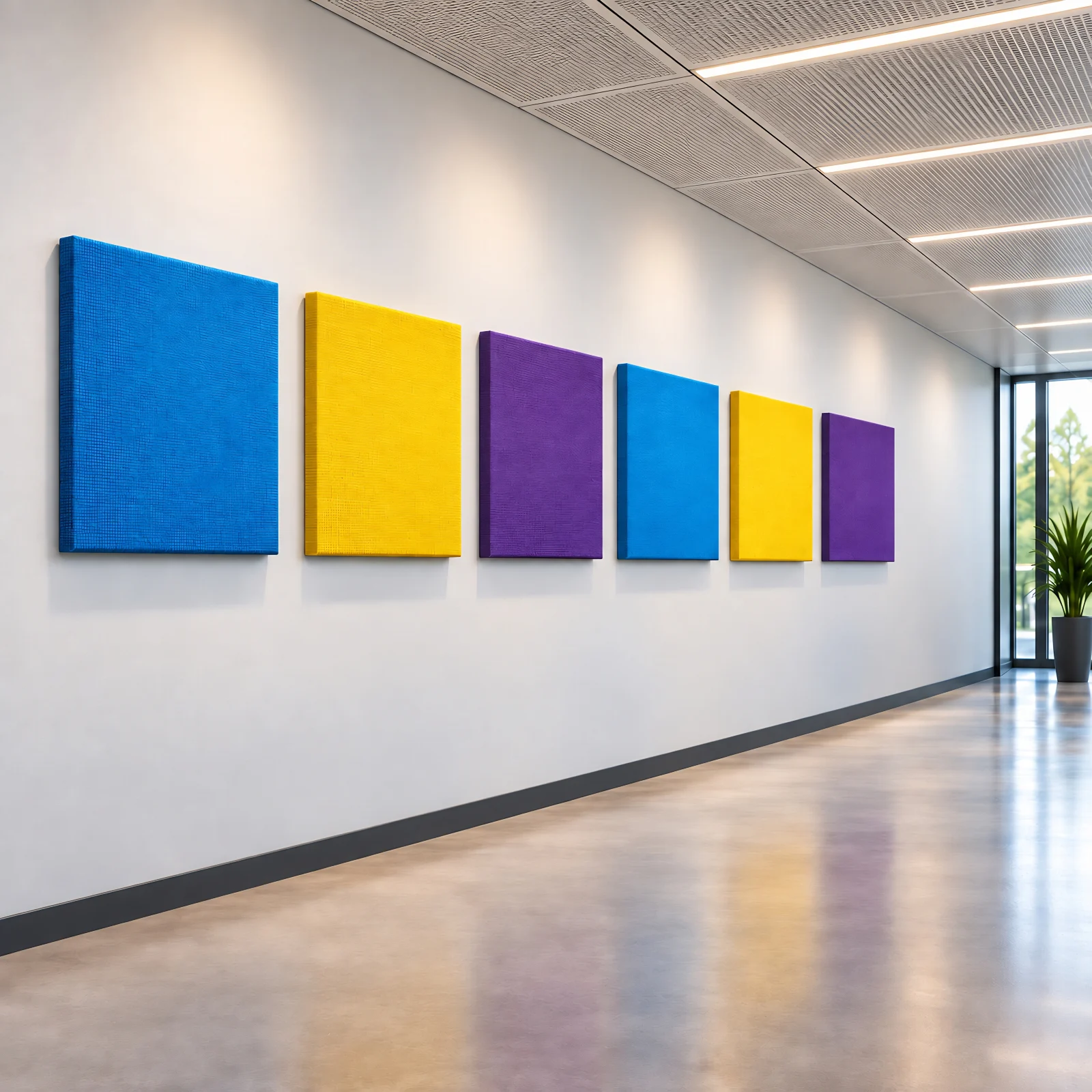
- 24 acoustically transparent fabrics, from off-whites and greys through to blues, greens and reds. Every color costs the same.
- How do the panels mount to the wall?
- Impaling clips are supplied with every order. The clips screw to the wall and the panel presses onto their angled spikes – no frame, no backing board, and 15 minutes for a typical room. They come off the same way if you need to move one.
- Are these panels fire rated?
- Yes. Class A, tested to ASTM E84 – the highest rating the standard awards.
- Will acoustic panels stop noise coming through the wall?
- No, and nothing thin and light will. Absorption panels fix echo and reverberation inside a room. To stop sound passing between rooms you need mass in the wall itself – that is what MLV sound barrier is for. Plenty of rooms need both.
- Where should acoustic panels for walls go?
- Start at ear height on the surfaces either side of the talker and on the wall facing them – the reflections that matter arrive between roughly 3 and 7 feet off the floor. Spread them out rather than filling one wall: sound has to reach a panel to be absorbed, and the gaps expose the panel edges, which absorb too. If the ceiling is the biggest hard surface in the room, treat it first with acoustic ceiling clouds and come back to the walls afterwards.
- What is the difference between sound absorbing and sound dampening panels?
- In everyday use the two mean the same thing, and both describe what these do: absorb sound inside a room so it stops bouncing off the walls. Strictly, dampening means draining vibration out of a structure, which is a different job done with a viscoelastic layer between two rigid ones. Neither term covers stopping noise from passing between rooms – that needs mass in the wall itself, as above.
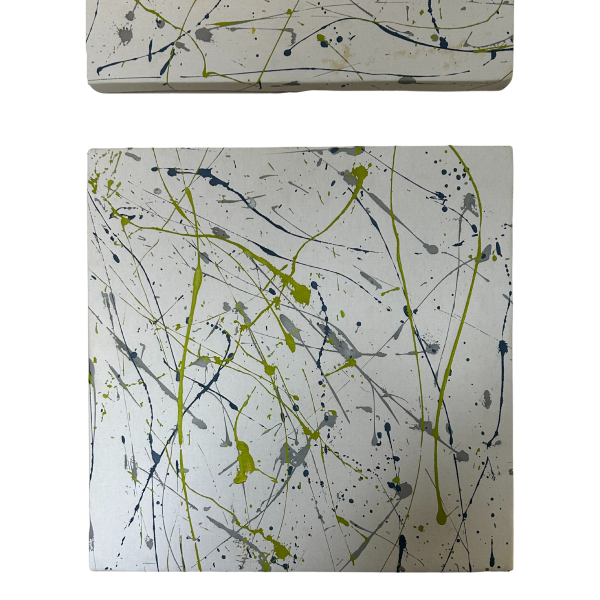
 24 Wall Panel Colors to Choose From

Reviews
There are no reviews yet.