Table of Contents
Soundproofing vs Acoustic Treatment in a Radio Studio
A microphone hears everything in the room: the truck outside, the HVAC, the phone call in the next office, and the host’s own voice coming back off the walls. Fixing that takes two different jobs, and most radio studio problems come from mixing them up.
Soundproofing (isolation) stops sound passing through walls, doors, floors and ceilings. It takes mass, airtight seals and separation between surfaces. Acoustic treatment (absorption) controls echo inside the room so the voice sounds close and clean. It takes soft, porous panels. An acoustic panel does almost nothing to keep street noise out, and a heavy sealed wall does nothing about echo. A working radio studio needs both.
Quick answer Seal and add mass first: mass loaded vinyl in the walls, acoustical caulk at every gap, and proper seals on the door. Then treat the booth with 2″ fiberglass wall panels and a ceiling cloud over the desk.
What a Radio Studio Needs to Sound Professional
A radio studio is a speech room with a microphone a few inches from the talker. That sets three targets:
- A quiet background. Broadcast studios are usually designed to NC 15–25, well below a typical office. Anything the room lets in, the mic picks up between words.
- Short reverberation. Voice booths are typically tuned to a reverberation time (RT60) of around 0.3 seconds or less. In the iHeart Media Clearwater buildout by our sister company Commercial Acoustics, more than 30 studios were treated to 0.5 seconds or below.
- No bleed between rooms. The on-air booth, the control room and the next studio all run at the same time. A guest laughing in Studio B cannot show up on Studio A’s mic.
Radio Studio Soundproofing Products Compared
| Problem | What fixes it | Our product |
|---|---|---|
| Street, office or next-studio noise through the walls | Mass in the wall, insulation in the cavity | Wall Blokker mass loaded vinyl |
| Leaks at wall edges, trim and outlets | An airtight seal | Acoustical caulk |
| Noise under and around the door | Solid-core door, perimeter seals, drop sweep | — |
| Echo and room sound on the mic | Absorption on the walls | Sound Absorbing Wall Panels |
| Reflections off the ceiling above the desk | Absorption overhead | Acoustic Ceiling Cloud Panels |
| Footsteps through the floor | Isolation underlayment under the finished floor | — |
| Noise through an exterior window | A window insert or heavy sealed curtain | — |
Soundproofing Radio Studio Walls
Walls block sound with three things: mass, an airtight seal and, for the best rooms, separation between the two sides.
- Mass. A layer of Wall Blokker (1 lb/sf mass loaded vinyl) under the drywall adds 6–12 STC points, about what three or four extra layers of drywall would. On metal-stud office walls, Wall Blokker Lite is tested for 6–11 points. For the wall between two studios, Wall Blokker Pro adds another 3–5 points. Tape every seam with MLV seam tape so the barrier stays continuous.
- Cavity insulation. Filling the stud bays with sound-rated batts stops the hollow wall from ringing like a drum.
- Seals. Run acoustical caulk along every wall edge, top and bottom, and put an acoustic putty pad behind every electrical box. A heavy wall with open gaps performs like a light one.
- Separation. Resilient channel or isolation clips keep the drywall from touching the studs directly. For a commercial station sharing walls with other tenants, the gold standard is a room within a room: a second, independent wall with its own ceiling, not touching the building structure.
If you are fitting out a rented office and can’t open the walls, the most you can do is seal the gaps, fix the door and treat the room. That is often enough for talk radio in a quiet building. It is not enough next to an elevator shaft or a loading dock.
Soundproofing Studio Doors, Windows and HVAC
A well-built wall is only as good as the weakest thing in it, and in a studio that is almost always the door.
Soundproof Studio Doors
Use a solid-core door, never hollow-core. Then close the gaps: adjustable perimeter seals around the frame and an automatic sweep at the bottom, which drops onto the threshold as the door closes. Silicone seals outlast foam and vinyl ones and can be re-adjusted as they wear. Busy stations often put two doors in series with a small vestibule between them, so one is always shut.
Soundproofing the Window Between Booth and Control Room
The host and the producer need to see each other, so most stations put a window between the booth and the control room. For it to block sound, use two panes of different thickness in separate frames with a wide air gap between them. The different thicknesses stop both panes resonating at the same frequency. One pane is often tilted slightly so it doesn’t send reflections straight back at the mic.
Soundproofing Exterior Studio Windows
Street-facing glass is a common leak in smaller stations. If you can’t replace the window, a second pane fitted inside the frame helps most. A heavy, sealed soundproof curtain is the lighter-duty fallback.
Quiet HVAC for a Radio Studio
Air handling is the noise most studios forget. A mic will pick up a supply grille that no one in the room notices. Keep air velocity low with larger ducts and grilles, use lined ductwork with a few bends between rooms so the duct doesn’t carry sound from studio to studio, and wrap noisy drain pipes in the ceiling with acoustic lagging.
Acoustic Treatment for the On-Air Booth
Once the room is quiet, treatment is what makes a voice sound close and polished instead of like it was recorded in a kitchen.
Acoustic Wall Panels for a Radio Booth
Sound Absorbing Wall Panels use a 2″, 6 pcf fiberglass core with an NRC of 1.05, wrapped in acoustically transparent fabric. Put them where the voice reflects first: the walls either side of the host, and the wall facing the mic. Treat opposite walls, never just one, or sound will bounce back and forth between the bare parallel surfaces and cause flutter echo. The iHeart studios staggered 1″ and 2″ fiberglass on facing walls to cover the full voice range.
Acoustic Ceiling Clouds for a Radio Studio
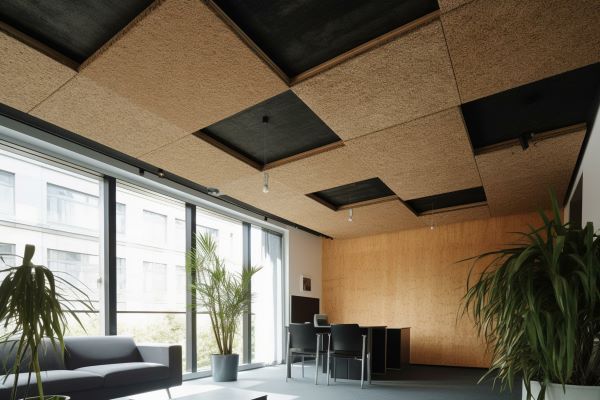
A hard ceiling above the desk bounces the host’s voice straight back down into the mic. Acoustic Ceiling Cloud Panels hang below the ceiling, so they absorb on the front, back and edges. Ceilings aren’t better than walls in general, but in a small booth the ceiling is usually the largest untreated surface left.
Fabric Wall Systems and Acoustic Foam
Larger stations often use floor-to-ceiling stretched fabric walls over fiberglass, as iHeart did, for a seamless look. It is a contractor-installed system. For most booths, fabric-wrapped wall panels do the same job for far less.
Acoustic foam costs less and works on the upper voice range, but it absorbs less than fiberglass panels and does little for the low end of a male voice. In a commercial building, check the foam’s fire rating before you put it on the walls. Our guide to the types of acoustic wall panels compares foam, fiberglass, felt and wood side by side.
How Much of the Booth to Cover with Panels
As a starting point, cover about a quarter to a third of the wall area in a talk booth, plus the ceiling above the desk. Small booths need a higher share, because every surface is close to the mic. Too much absorption makes a room feel dead and uncomfortable to talk in for three hours, so add panels in stages and listen back.
On-Air Booth vs Control Room
A radio room is rarely one room. The on-air booth is where the mics are: it needs the most isolation and the shortest reverberation, and it can sound quite dead. The control room is where the producer mixes on speakers, so it needs a more balanced sound. Treat the first reflection points on the side walls and ceiling, put bass-absorbing panels in the corners, and consider diffusers on the rear wall so the room doesn’t sound unnaturally dry. The wall between the two carries the window, so it needs the heaviest construction in the suite.
Radio Studio Floors: Carpet vs Underlayment
Carpet reduces echo and chair and footstep noise inside the booth, which is why most studios use it. It does very little to stop sound passing through the floor.
If the studio sits above occupied space, or you want a hard floor, put an isolation layer under it. An acoustic underlayment rated IIC 50 or better, laid under wood, laminate or vinyl plank, cuts footfall noise into the space below. For studios above a busy floor, a floated floor on isolation pads is the next step up.
Planning a Radio Studio Build
Order matters more than budget. Work in this sequence:
- Pick the right room. Away from the street, elevators, restrooms and mechanical rooms. An interior room with no exterior wall saves more money than any product.
- Plan the HVAC early. Ducts and grilles are hard to change after the drywall is up.
- Build the walls. Mass, insulation, seals, and separation if the budget allows.
- Fix the doors and windows. Solid-core doors, perimeter seals, sweeps, and a double-pane interior window.
- Floor next, before furniture goes in.
- Treat the room last, once you can hear what it actually does. Panels at first reflections, a cloud over the desk, then adjust.
A single home or small-market voice booth in an existing room can be done with seals, a door upgrade and panels. A multi-studio station, like the iHeart build, is designed as isolated rooms from day one.
Frequently Asked Questions
How do you soundproof a radio studio?
Start by stopping outside noise: add mass to the walls with mass loaded vinyl, fill the cavities with insulation, seal every gap with acoustical caulk, and fit the door with perimeter seals and an automatic sweep. Then control echo inside with fiberglass wall panels at the first reflection points and a ceiling cloud above the desk.
Do acoustic panels soundproof a radio studio?
No. Acoustic panels absorb echo inside the room, which makes the voice sound cleaner on the mic, but sound passes through them almost unchanged. To keep outside noise out of the studio you need mass, airtight seals and separation in the walls, doors and floor.
Is foam or fiberglass better for a radio booth?
Fiberglass. A 2″ fabric-wrapped fiberglass panel absorbs more sound than foam of the same thickness, especially in the lower voice range, and fabric-wrapped fiberglass panels are typically Class A fire rated. Foam is cheaper and fine for a small home booth, but check the fire rating before using it in a commercial building.
How many acoustic panels does a radio booth need?
Start with about a quarter to a third of the wall area covered, placed on both side walls and the wall facing the mic, plus the ceiling above the desk. Very small booths need more coverage. Add panels in stages and record a test after each step, since too much absorption makes a room sound dead.
Can I soundproof a radio studio on a budget?
Yes, if you spend in the right order. Choose the quietest interior room, seal gaps with acoustical caulk, upgrade to a solid-core door with seals and a sweep, then add a few panels at the first reflection points. Those steps fix most home and small-station booths before any wall construction is needed.