
Table of Contents
What Makes a Soundproofing Material Actually Eco-Friendly
Most lists of eco-friendly soundproofing materials have the same problem: wool, cork and denim show up with a line about being “natural” and no word on how well they actually work. Half of them absorb echo and do almost nothing to stop sound getting through a wall. Buy the wrong one and you have spent money on a green product that did not fix the noise.
This guide sorts the options by the job they do, gives the rating that matters for each, and is honest about where the greenest choice is simply using less material.
Quick answer Inside walls and ceilings: recycled cotton batts. Echo in a room: recycled-content or natural-fiber panels. Blocking sound between rooms: seal the gaps first, then add the thinnest barrier that works. Floors: recycled rubber underlayment.
Which Eco-Friendly Soundproofing Material Do You Need?
“Soundproofing” gets used for three different problems, and each has its own rating. A material can be excellent at one and useless at another.
| Problem | Job | Rating to look for | What does it |
|---|---|---|---|
| Room sounds echoey, voices are hard to follow | Absorb | NRC (0 to about 1.1; higher is better) | Soft, porous fiber: cotton, wool, fiberglass, PET felt |
| You can hear the neighbors or the next room | Block | STC (higher is better) | Mass, airtight seals and decoupling |
| Footsteps and thuds from the floor above | Isolate impact | IIC (higher is better) | Resilient underlayment: rubber, cork, polymer mats |
Nearly every natural material on the market is an absorber. That is useful, but a 2″ wool panel on a shared wall will not stop you hearing the TV next door.
Eco-Friendly Soundproofing Materials Compared
| Material | Typical rating | What makes it green | Trade-off |
|---|---|---|---|
| Recycled Cotton Batts | NRC 0.95 | 80% recycled cotton, no formaldehyde | Costs more than standard fiberglass batts |
| Recycled Denim Batts | NRC about 0.95–1.15 | Post-industrial denim scraps | Heavier and slower to cut than fiberglass |
| Sheep’s Wool Batts | NRC about 0.8–1.0 | Renewable, naturally flame resistant | Usually treated against moths; high price |
| Hemp Batts | NRC similar to wool | Fast-growing crop, low-input farming | Limited stock in the US |
| Fabric-Wrapped Panels | NRC 1.05 | Recycled content in the core, made in USA | Fiberglass core, not a natural fiber |
| PET Felt Panels | NRC about 0.2–0.4 at 9–12 mm | Made from recycled plastic bottles | Thin panels absorb far less than 2″ panels |
| Wood Wool Panels | NRC about 0.4–0.8 | Renewable wood fiber, very long life | Cement binder adds embodied carbon; heavy |
| Cork Sheets | NRC about 0.1–0.3 on walls | Harvested from bark without felling the tree | Weak absorber at the thickness sold for walls |
| Recycled Rubber Underlayment | Delta-IIC 26 | Made from crumb rubber | For wood and laminate; not under gypcrete |
| Recycled Polymer Mat | IIC 50+ assemblies | Recycled polymer-composite layer | Not for ceramic tile or thin LVT |
| EVA-Based Barrier | STC 26 sheet; adds 6–12 STC to a wall | EVA base rather than PVC; only 1/8″ thick | Not a natural material, see below |
Natural & Recycled Soundproofing Insulation for Walls
Filling the empty stud cavity is the cheapest acoustic upgrade in any wall, and it is where eco-friendly materials perform as well as conventional ones. An empty cavity rings like a drum. A filled one soaks up that energy before it reaches the other side.
Recycled Cotton Insulation
QuietFil Wall Batting is made from 80% recycled natural cotton fiber, carries a Class A flammability rating and contains no formaldehyde. It rates NRC 0.95 and R-13, so the same batt handles sound and heat. It does not itch, which matters if you are installing it yourself, and it cuts with a utility knife and friction-fits between studs.
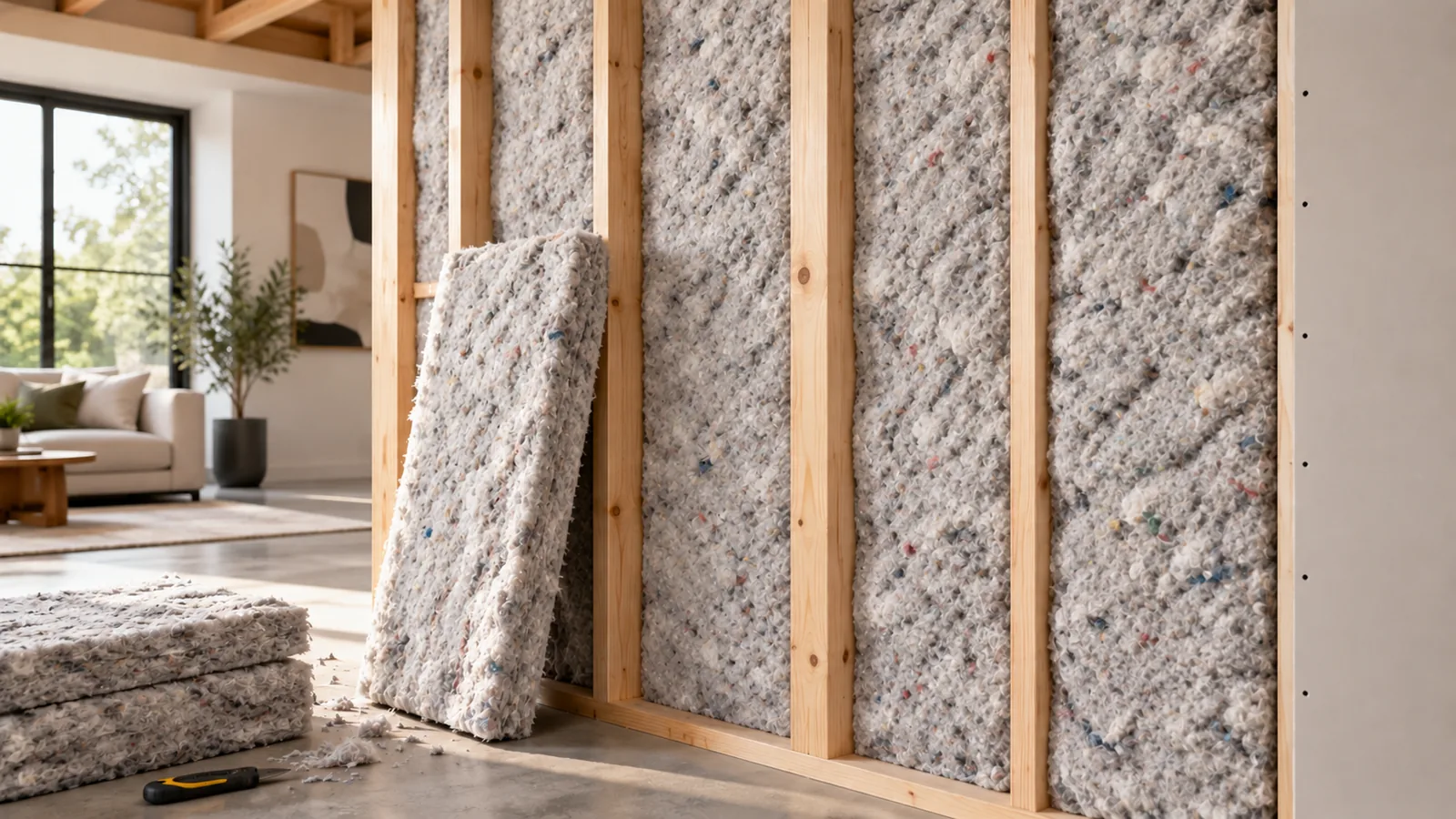
Best for Interior walls, ceilings between floors, and anyone who wants to avoid handling fiberglass.
Recycled Denim Insulation
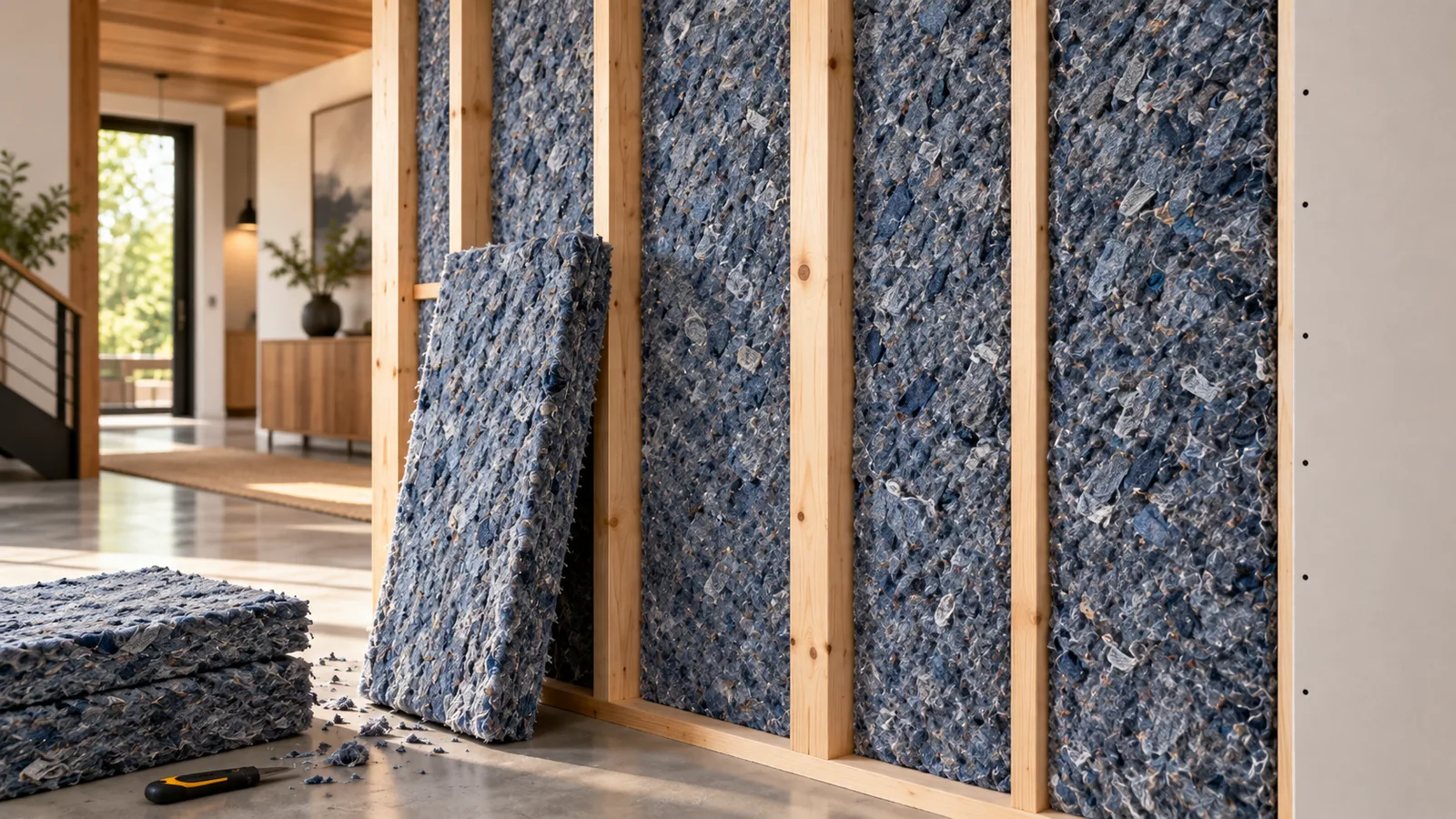
Denim insulation is the same idea using offcuts from jeans manufacturing. Acoustic performance is close to cotton batts. It is usually treated with borates for fire and pest resistance, which are low-toxicity, and it is noticeably heavier and harder to cut cleanly.
Sheep’s Wool Insulation
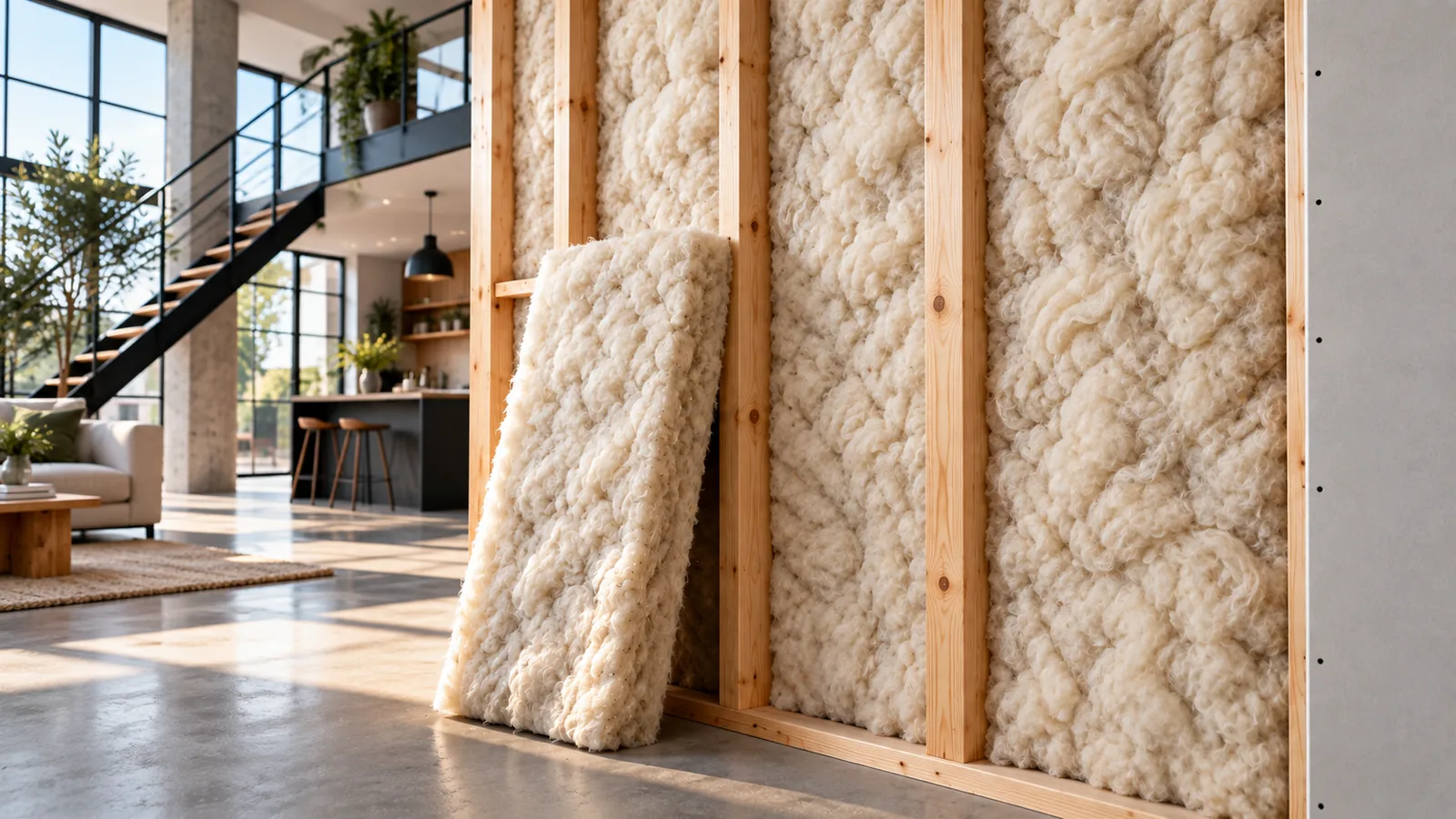
Wool is renewable, resists ignition without any added treatment, and handles moisture better than anything else in this section – it can take on water and release it again without losing loft or growing mould, which matters in a basement or an exterior wall. Absorption in a cavity is close to denim. Most wool batts are treated against moths, so ask which treatment was used, and expect to pay noticeably more than for cotton.
Hemp Insulation
Hemp batts absorb about as well as wool and come from a crop that grows fast on little pesticide or irrigation, which is the strongest farming story of any material here. The catch is supply: most hemp insulation sold in the US is imported, stock runs thin, and lead times can stretch to weeks – worth confirming availability before it is specified.
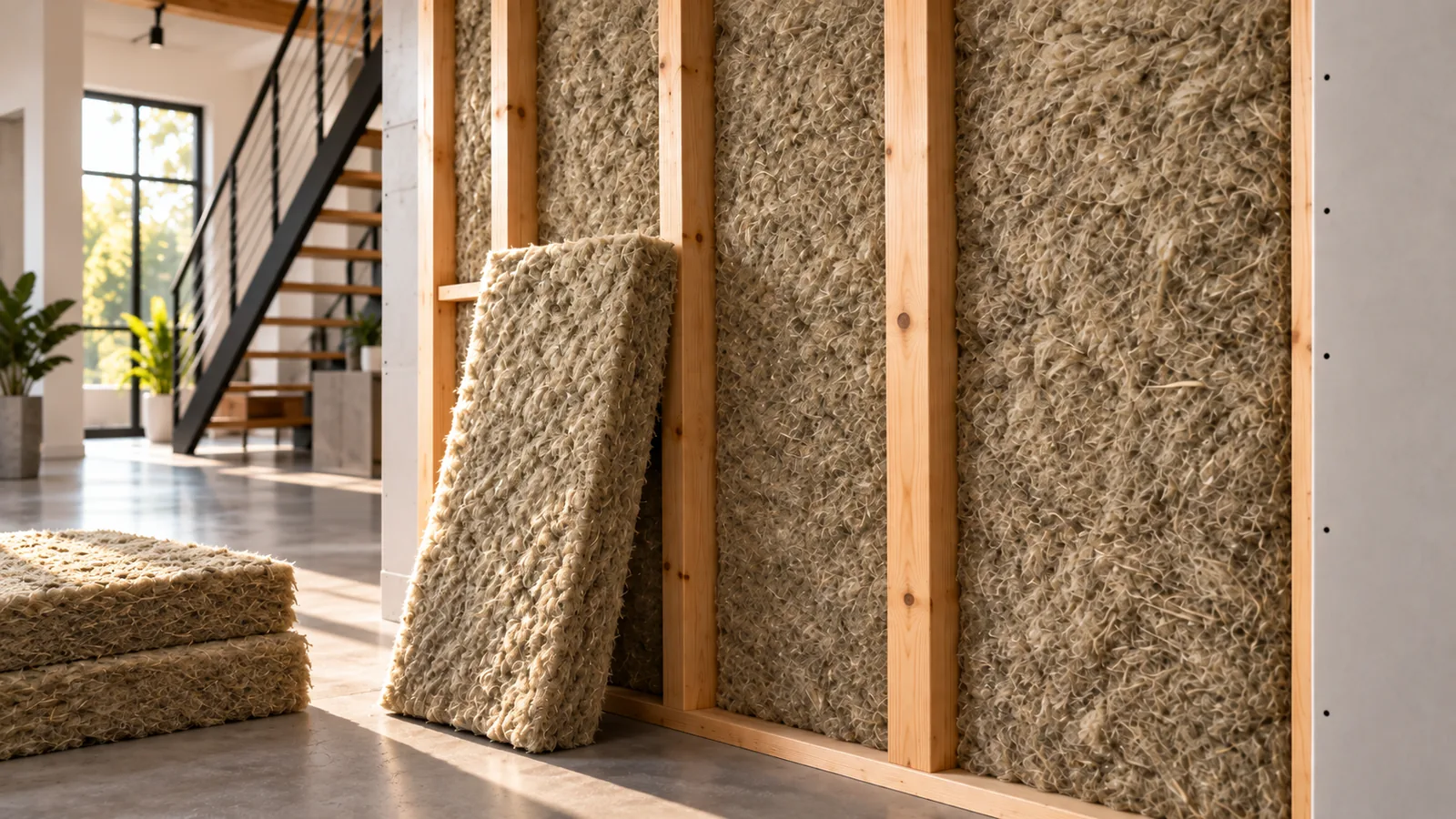
About hempcrete: it is a wall system poured or blocked in place, often around a foot thick, not a product you add to an existing room. Its porous structure absorbs well. Its blocking comes from sheer thickness, so it is a decision for new construction rather than a soundproofing fix.
Eco-Friendly Acoustic Panels for Echo
Panels fix the problem inside a room: echo, harsh reflections and speech that turns to mush. Thickness matters more than material. A 2″ panel absorbs several times more than a 1/2″ one, so a thin “eco” panel can need three times the wall coverage to do the same job. That is more material, not less.
Recycled-Content Fabric-Wrapped Acoustic Panels
Our Sound Absorbing Wall Panels use a 2″ 6 pcf core with recycled content, wrapped by hand in the USA. They rate NRC 1.05 and Class A under ASTM E84. The core is fiberglass, so they are not a natural product. The case for them is performance: fewer panels do the job, and they last decades. The same core is used in ceiling clouds and ceiling baffles for rooms with no free wall space.
PET Felt Acoustic Panels
Made from recycled bottles, PET felt is light, cleanable and comes in many colors and cut shapes. Most PET wall tiles are 9–12 mm thick, which limits them to high frequencies. Choose thicker panels, or mount them off the wall with an air gap, if the room genuinely needs to calm down.
Wood Wool Acoustic Panels
Wood fiber bound with cement, wood wool is tough enough for gyms, schools and restaurants and lasts as long as the building. It absorbs well when mounted with an air gap behind it. The cement binder is its weak point on carbon.
Cork Acoustic Panels and Tiles
Cork is one of the most sustainable materials in construction, but thin cork wall tiles absorb very little sound. Use cork where it is strong: under floors.
For more on panel types, see types of acoustic wall panels.
Non-Toxic Sound Absorbing Panels: What to Check
“Natural” and “non-toxic” are not the same claim. A panel sits in the room you breathe in for years, so check these five things on the spec sheet:
- Emissions certification. GREENGUARD Gold (UL 2818) is the most common test for low chemical emissions in schools and homes.
- Binder. Ask whether the core uses a formaldehyde-free binder. Many fiber products now do.
- Fire rating. Class A under ASTM E84 is the safe choice for anything mounted in a living space.
- Fire treatment. Ask how the fabric or fiber meets its fire rating. Borates are low-toxicity; some older halogenated flame retardants are not.
- Sealed edges. A fully wrapped or hardened edge stops loose fibers from shedding into the room.
Eco-Friendly Ways to Block Sound Between Rooms
Here is the honest part most eco-friendly guides skip: blocking sound takes mass, and there is no natural lightweight material that does it. Wool, cotton and cork are too light and porous to stop sound passing through on their own. The greenest approach is to use as little new material as possible, in this order:
- Seal the leaks first. Gaps around outlets, door frames and baseboards let through more sound than the wall itself. Acoustical caulk costs a few dollars a tube and uses almost no material.
- Fill the cavity with recycled cotton so the wall stops ringing.
- Decouple the new drywall from the studs with resilient clips or channel, so vibration cannot travel straight through.
- Add a thin barrier only if you still need it.
Traditional mass loaded vinyl is PVC-based. Wall Blokker is EVA-based instead, and at 1/8″ and 1 lb/sf it adds 6–12 STC points to a finished wall. It is not a green material. What it offers is a big gain from a thin layer rather than doubling up on drywall. For a lighter job, Wall Blokker Lite is 0.6 lb/sf.
Windows A heavy acoustic curtain is the lowest-waste fix for a noisy window: no construction, and it comes down when you move.
Recycled & Natural Soundproof Floor Underlayments
Footfall noise is where recycled and natural materials do best, because the job is cushioning rather than mass.
- Recycled rubber. AcoustiStep is made from crumb rubber and adds 26 points of IIC under wood and laminate, from 2 mm to 10 mm thick.
- Recycled polymer. Floor Blokker pairs a recycled polymer-composite layer with a thin EVA barrier, for floors that need to meet the STC/IIC 50 building code requirement.
- Cork. A good natural option under floating floors, typically 6–12 mm. Performance varies widely by density, so get the tested IIC figure for the specific product and floor build.
An Eco-Friendly Soundproof Wall, Layer by Layer
For a shared wall in a home, this build uses recycled or low-impact materials wherever they perform, and adds new mass only where nothing else will do:
| Layer | Material | Why |
|---|---|---|
| 1. Seal | Acoustical caulk at every gap and outlet | Biggest improvement per dollar |
| 2. Cavity | QuietFil recycled cotton, R-13 | Stops the cavity ringing; insulates too |
| 3. Decouple | Resilient clips or channel | Breaks the vibration path through the studs |
| 4. Barrier (optional) | Wall Blokker, EVA-based | Adds 6–12 STC from a 1/8″ layer |
| 5. Finish | Drywall | Mass and a sealed surface |
| 6. Room side | 2″ panels on the worst reflections | Controls echo; does not block |
How to Spot Greenwashing in Soundproofing Products
- No percentage. “Contains recycled material” can mean 2%. A real claim names the number.
- No test standard. An absorption rating should cite ASTM C423 and a fire rating ASTM E84. A number with no standard is marketing.
- Thin and cheap. An eco panel so thin you need three times as many is not saving material.
- Labels worth trusting: GREENGUARD Gold for emissions, Declare labels for ingredient disclosure, Environmental Product Declarations (EPDs) for lifecycle impact, and FSC for wood and cork.
Frequently Asked Questions
What is the most eco-friendly soundproofing material?
For absorbing sound inside walls, recycled cotton and denim batts are the strongest all-round choice: high recycled content, NRC around 0.95 and no formaldehyde. For blocking sound, there is no fully natural option, so the greenest approach is sealing gaps and decoupling before adding any new mass.
Does wool or cork actually soundproof a room?
Wool absorbs sound very well but does little to stop it passing through a wall. Thin cork tiles on a wall absorb very little. Cork works best as a floor underlayment for footstep noise.
Is mass loaded vinyl toxic?
Traditional MLV is made from PVC, often with plasticizers. EVA-based barriers such as Wall Blokker avoid PVC. Once installed behind drywall the barrier is sealed in the wall, but if you want to avoid PVC entirely, choose an EVA-based product.
Is fiberglass eco-friendly?
Fiberglass is made largely from sand and often includes recycled glass, and a dense panel lasts for decades. It is not a natural fiber, and binder chemistry varies by manufacturer, so check for recycled content and a formaldehyde-free binder.
Are recycled PET acoustic panels effective?
Yes for high frequencies, but most PET tiles are only 9–12 mm thick, which limits how much they absorb. Thicker panels or an air gap behind them perform much better.
What is the difference between non-toxic and eco-friendly soundproofing?
Eco-friendly is about how the material is sourced, made and disposed of. Non-toxic is about what it releases into the room. A natural material can still be treated with chemicals, so look for an emissions certification such as GREENGUARD Gold as well as recycled or renewable content.