
Table of Contents
Are Study Rooms Soundproof?
Usually not. Most study rooms, whether a spare bedroom at home, a dorm room or a bookable room in a library, are built like any other room: a hollow door with a gap under it, light walls that often stop at the ceiling tiles, and sometimes a whole wall of glass. They cut noise down, but a conversation in the hallway or a TV next door still comes through.
The good news is that the leaks are almost always in the same few places, and the cheapest fixes are also the most effective. Work through them in order.
Quick answer To soundproof a study room, seal the door first with perimeter seals and a door sweep, then deal with the window, the walls and any glass front. Add acoustic panels to cut echo and a white noise machine to cover what’s left. In a dorm or rental, stick to door seals, rugs, heavy curtains and freestanding panels.
Soundproofing a Study Room Door
In most study rooms the door lets in more noise than everything else combined. A typical interior door is hollow inside and has a gap of half an inch or more at the bottom. Sound goes straight through the gap and through the thin door skins.
- Seal the gap at the bottom with a door sweep, or better, an automatic door bottom that drops onto the floor when the door closes.
- Seal the frame with a perimeter gasket on the top and both sides, so the door closes against a seal instead of leaving a crack.
- Swap a hollow-core door for a solid-core one if you can. It weighs several times as much and blocks far more sound for the same size.
Test it by turning off the lights in the room during the day. Any light around the edges of the closed door is a path for sound.
Soundproofing Study Room Walls and Windows
Once the door is sealed, the next leaks are the walls you share with noisy rooms and any window facing a street.
- Seal the gaps first. Run acoustical caulk ($17.99 a tube) along the edges of the drywall and around outlets, switches and pipes on shared walls.
- Add mass to shared walls. A layer of mass loaded vinyl under a new layer of drywall is the most effective single upgrade. Wall Blokker Lite ($169 per 100 sq ft) is 1/16″ thick and made for the metal-stud walls common in schools and offices. For wood studs, use 1 lb/sf mass loaded vinyl ($199). Tape every seam with MLV seam tape.
- Close the space above the ceiling. In offices, schools and libraries, walls often stop at the ceiling tiles and sound goes over the top. The fix is the same as in a medical suite: see medical office soundproofing.
- Windows. A window insert, a second pane that presses into the existing frame, blocks far more street noise than curtains. Caulk the gap between the window frame and the wall.
Soundproofing Glass-Front Study Rooms in Libraries and Schools
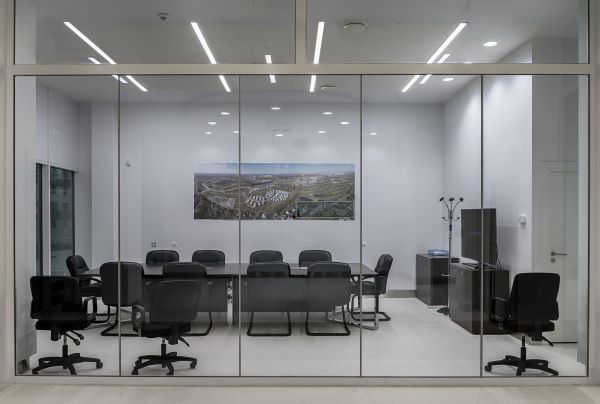
Library and campus study rooms often have a full glass front so staff can see in. Glass is heavy for its thickness, but a single ¼″ pane is still thin, and the joints between panes and around the door usually leak more than the glass itself.
- Use laminated glass for new or replacement panes. The plastic layer between the sheets damps the glass and blocks more speech than a plain pane of the same thickness.
- Double glazing with an air gap is the next step up, and panes of different thicknesses work better than two matching ones.
- Seal every joint. Butt joints between panes, the head and sill channels, and the glass door all need gaskets. A glass door with no seals undoes the rest.
- Treat the room, too. Glass, whiteboards and hard floors make small study rooms echo, which makes people talk louder. A few acoustic panels on the solid walls help both problems.
How to Soundproof a Dorm Room
Dorms add two problems: neighbors on every side and housing rules that usually ban nails, screws and anything permanent. These fixes come out at the end of the year without damage:
- A stick-on door sweep and weatherstrip around the door frame. This makes the biggest difference for hallway noise.
- A thick rug on a dense pad. It cuts footsteps for the room below and echo inside yours.
- Heavy curtains over the window and, if the closet is on a shared wall, keep it full of clothes as a buffer.
- Move the bed and desk away from the wall you share with the loudest neighbor.
- Acoustic panels, if they’re allowed. Our sound absorbing wall panels (from $109) mount with impaling clips that screw to the wall, so ask housing first, or stand a panel on the desk or a shelf. They cut echo; they don’t stop your neighbor’s music coming through the wall.
How to Make a Quiet Study Space in a Noisy House
If you can’t change the room much, choose it well and cover what gets through.
- Pick the quietest room, away from the kitchen, the TV and the street, ideally one that doesn’t share a wall with them.
- Cut the echo. A bare room with a hard floor makes every sound louder. A rug, a full bookshelf and a couple of acoustic panels or ceiling clouds (from $119) make the room calmer to sit in.
- Cover what’s left with steady sound. A white noise machine or fan makes voices and TV from the next room hard to make out, which is what actually breaks concentration.
- Use noise-cancelling headphones for low, steady noise like traffic or an air conditioner. They work less well on voices, which is where white noise helps.
Study Room Soundproofing Costs
Spend in this order. The first rows cost little and fix most study rooms; the last rows are for rooms you own and can open up.
| Fix | What it stops | Cost |
|---|---|---|
| Door sweep and perimeter seals | Hallway noise through door gaps | $ |
| White noise machine | Voices you can still hear | $ |
| Caulk around outlets and edges | Leaks through shared walls | $ — $17.99 a tube |
| Rug, heavy curtains, acoustic panels | Echo inside the room | $$ — panels from $109 |
| Solid-core door or window insert | Noise through the door or window itself | $$$ |
| MLV in shared walls, laminated glass | Voices and TV through walls and glass | $$$$ — $169–199 per 100 sq ft of MLV, plus drywall |
Frequently Asked Questions
Are study rooms soundproof?
Most are not. Library, dorm and home study rooms usually have gaps around the door, light walls and sometimes a glass front, so conversations and hallway noise still come through. They reduce noise rather than block it.
How do you soundproof a study room?
Start with the door: a sweep or automatic door bottom and perimeter seals. Then add a window insert, caulk the gaps in shared walls, and add mass loaded vinyl to those walls if you can open them. Acoustic panels and a white noise machine deal with echo and whatever still gets through.
How do you soundproof a dorm room without damage?
Use stick-on door sweeps and weatherstripping, a thick rug on a dense pad, heavy curtains, and furniture placed away from shared walls. Wall-mounted acoustic panels usually need screws, so check with housing first or stand them on a desk or shelf.
How do you ignore noise when studying?
Cover it with steady sound. A white noise machine or fan makes nearby voices hard to make out, and noise-cancelling headphones handle low, steady noise like traffic. Choosing a room away from the TV and kitchen, and sealing its door, reduces how much you need to cover.
Do acoustic panels soundproof a study room?
No. Acoustic panels absorb echo inside the room, which makes it calmer and easier to concentrate in, but sound passes through them and through the wall behind. To keep noise out you need seals, mass and better doors and windows.