Table of Contents
What Is a Sound Diffuser?
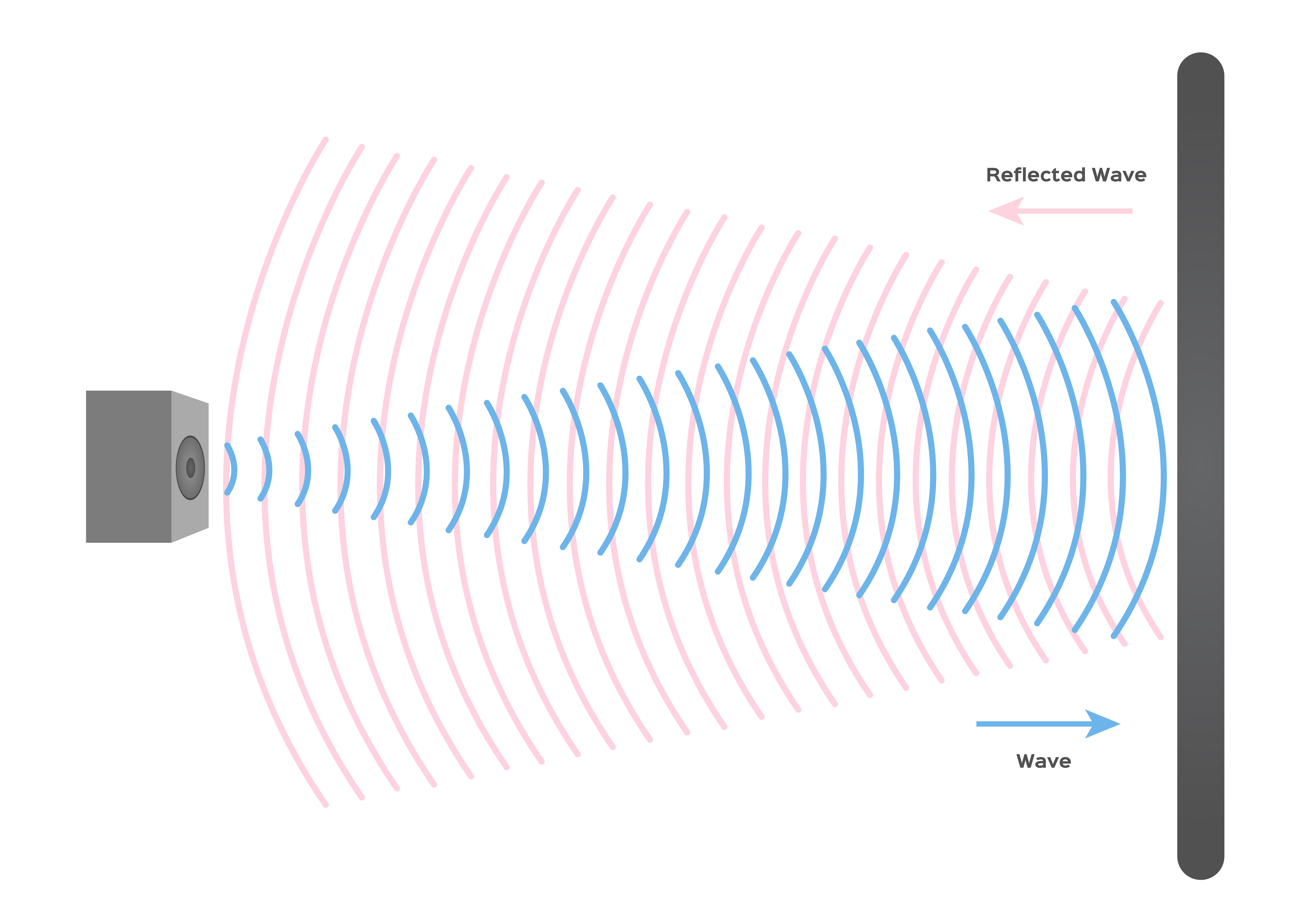
A sound diffuser is a panel with a shaped surface, curved, angled or stepped, that scatters sound in many directions instead of reflecting it straight back. A flat wall returns one strong reflection, which you hear as echo or a harsh “slap”. A diffuser breaks that reflection into many weaker ones spread across the room.
The key difference from an acoustic panel: a diffuser keeps the sound energy in the room. It doesn’t absorb it. The room stays lively and natural, just without the echoes. That is why diffusers are used where music is played or recorded, and rarely in offices or classrooms.
Quick answer A sound diffuser scatters sound so a room loses its echo without sounding dead. Use absorbing panels first, at the reflection points near the listener, then add diffusers on the rear wall and upper side walls of rooms used for music. Diffusers don’t soundproof and don’t make a room quieter.
Sound Diffuser vs Absorber
Absorbers and diffusers both deal with reflections, but in opposite ways. Most rooms built for music need both.
| Acoustic panel (absorber) | Sound diffuser | |
|---|---|---|
| What it does | Soaks up sound and turns it into a tiny amount of heat | Scatters sound in many directions |
| Effect on the room | Quieter, drier, shorter echo | Same energy, but spread evenly with no distinct echo |
| Best for | Speech, loud rooms, first reflection points | Music, rear walls, larger rooms that shouldn’t sound dead |
| Too much of it | A dead, muffled room | Little downside, but it won’t fix a room that’s simply too loud |
| Soundproofing? | No | No |
Types of Acoustic Diffusers
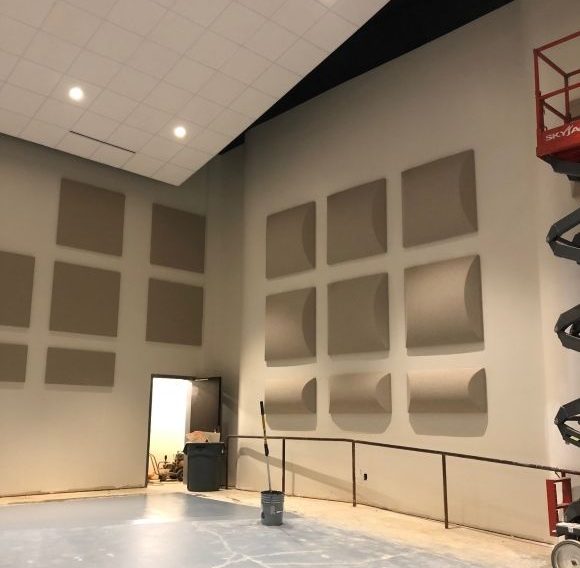
- Barrel diffusers (also called polycylindrical) have a single curved face. They spread sound across a wide arc in one direction, so you choose which way by mounting them vertically or horizontally. Our barrel sound diffuser panels come in four sizes from 2 × 2 ft to 4 × 6 ft, from $112.
- Pyramid diffusers have four angled faces and scatter sound in every direction, so they work the same whichever way they’re mounted. Our pyramid sound diffuser panels come in the same four sizes, from $112.
- Quadratic (QRD or “skyline”) diffusers are grids of wells or blocks at calculated depths, used mostly in recording studios and control rooms.
Both of our diffusers come with a clean white plastic face or wrapped in FR701 fabric in 44 colors, so they can match your acoustic panels. A fiberglass backing option adds some absorption behind the panel, for rooms that need to lose a little energy as well as spread it out.
Where to Put Sound Diffusers on a Wall
- The rear wall, behind the listeners, the drummer or the conductor. This is the most common spot: it breaks up the reflection that would come straight back to the front of the room.
- Upper side walls, above head height, in larger rooms.
- Not at the first reflection points close to the listener. Those spots, on the side walls between the speakers or performers and the listener, usually get absorbing panels.
- Give them distance. Scattered sound needs a few feet or more to spread out before it reaches anyone, so diffusers work poorly right beside a seat or mix position.
For the absorbing side of the same room, see our sound absorbing wall panels, and for a full music room plan, how to soundproof a music room.
Acoustic Ceiling Diffusers
Diffusers can also go on the ceiling, over a choir, a drum kit or a mix position, where a flat, hard ceiling sends sound straight back down. Pyramid diffusers suit ceilings well because they scatter evenly in every direction. Most ceiling installations drop them into a grid or fix them to the ceiling like a panel.
One note if you searched “ceiling diffuser”: in HVAC, the same term means the air vent that spreads air from a duct. Those are a different product. An “acoustic” air diffuser is simply a quieter air vent, not an acoustic treatment.
When to Use a Sound Diffuser
Diffusers earn their place in rooms where the sound itself matters:
- Music rooms and band rooms, which lose their life if they’re fully absorbed.
- Churches and worship spaces with live music and choirs.
- Recording studios and home studios, on the rear wall behind the mix position.
- Home theaters, on the rear wall and upper side walls to spread surround sound.
They are the wrong first purchase for a room that is simply too loud, like an office, restaurant or cafeteria. Those need absorption. At Hyde Park United Methodist Church in Tampa, our sister company Commercial Acoustics combined 33 fabric-wrapped wall panels with 26 sound diffusers, so the worship band and the spoken word both came across clearly without the room sounding flat.
Frequently Asked Questions
What is a sound diffuser?
A panel with a shaped surface that scatters sound in many directions instead of reflecting it straight back. It breaks up echo and harsh reflections while keeping the sound energy in the room, so the space stays lively rather than dead.
Is a sound diffuser better than an absorber?
Neither is better; they do different jobs. Absorbers remove sound and make a room quieter and drier. Diffusers spread sound out so a room keeps its life without echo. Most music rooms use absorbers at the first reflection points and diffusers on the rear wall.
Where should sound diffusers go in a room?
On the rear wall behind the listeners or performers, and on the upper side walls above head height. Keep them a few feet or more from where people sit, and use absorbing panels, not diffusers, at the first reflection points.
Do sound diffusers soundproof a room?
No. Diffusers change how sound behaves inside a room; they don’t stop it passing through walls. Keeping sound in or out takes mass, airtight seals and decoupled walls.
What is a barrel diffuser?
A diffuser with a single curved face, also called a polycylindrical diffuser. It spreads sound across a wide arc in one direction, so it is mounted vertically to spread sound side to side or horizontally to spread it up and down.