
Table of Contents
Soundproofing Materials vs Sound Absorbing Materials
There is no single best soundproofing material, because “soundproofing” covers two different jobs. Blocking stops sound passing through a wall, floor or ceiling, and takes heavy, airtight materials like mass loaded vinyl and drywall. Absorbing stops sound echoing inside a room, and takes soft, porous materials like acoustic panels. A material that is excellent at one is usually useless at the other.
So the right question is: are you trying to keep noise out of (or in) a room, or make the room itself less echoey? Most people asking for the best soundproofing material want the first, and that is where most of the money goes.
Quick answer To block noise through a wall, the most effective materials, in order of value, are acoustical caulk to seal the gaps, mass loaded vinyl for mass, insulation in the cavity, and resilient channel to decouple the drywall. To reduce echo inside a room, use fabric-wrapped acoustic panels. Foam and curtains don’t soundproof.
Soundproofing Materials Compared
Typical results on a standard stud wall. Actual gains depend on the wall you start with and how carefully it is built.
| Material | What it does | Typical effect | Best for |
|---|---|---|---|
| Acoustical caulk | Seals gaps | Stops leaks that undo everything else | Every project, first |
| Mass loaded vinyl (MLV) | Blocks (adds mass) | +10 or more STC at 1/8″ thick | Walls, ceilings, floors where space is tight |
| Extra layer of drywall | Blocks (adds mass) | A few STC points per layer | Cheap mass where thickness doesn’t matter |
| Insulation in the cavity | Absorbs inside the wall | A few STC points | Any open wall or ceiling |
| Resilient channel or clips | Decouples the drywall | Large gains, especially for bass | Music, home theaters, footsteps |
| Damping compound between drywall layers | Damps vibration | Helps mid and low frequencies | Two-layer drywall walls |
| Floor underlayment | Isolates the floor | Higher IIC (footsteps) | Floors over living space |
| Acoustic panels | Absorbs echo | NRC up to 1.05, no STC gain | Echo inside the room |
| Foam, curtains, blankets | Light absorption | Little to no blocking | Softening echo only |
Best Soundproofing Material for Walls
If you can put only one thing on a wall to block noise, make it a layer of mass loaded vinyl under new drywall, with every gap sealed. In order:
- Seal the gaps. Acoustical caulk ($17.99 a tube) along drywall edges and around outlets, switches and pipes. A wall with gaps can lose most of its rating.
- Add mass. 1 lb/sf mass loaded vinyl is 1/8″ thick and adds 10 or more STC points to a stud wall, about the same as three or four extra layers of drywall, at $199 per 100 sq ft. Wall Blokker ($219) is tested in dozens of wall assemblies; Wall Blokker Lite ($169) suits metal studs; Wall Blokker PRO ($299) is the heaviest, for wood studs and party walls. Tape every seam with MLV seam tape.
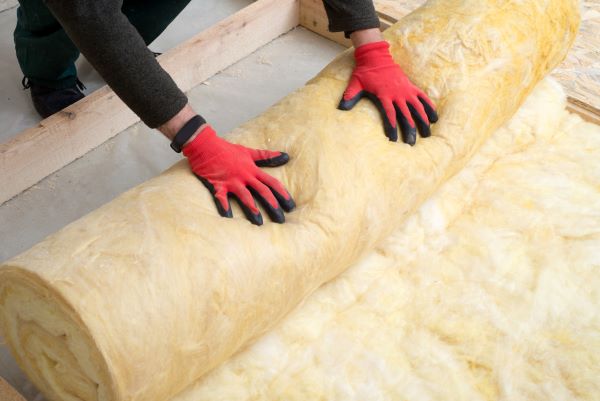
- Fill the cavity with mineral wool or fiberglass insulation if the wall is open.
- Decouple with resilient channel or isolation clips if bass or music is the problem.
At the La Quinta in Orlando, our sister company Commercial Acoustics used Wall Blokker PRO on wood-stud guest room walls to reach STC 55+, in place of the specified gypsum sound board and at a lower installed cost.
Best Sound Deadening and Sound Dampening Material
“Sound deadening” and “sound dampening” get used for three different things, and the best material depends on which one you mean:
- Stopping a surface from vibrating, such as a thin wall, a door or a car panel. A heavy, limp layer like mass loaded vinyl, or a damping compound between two layers of drywall, does this best.
- Cutting noise through a wall. This is soundproofing: mass, sealing and decoupling, as above.
- Taking the echo out of a room. This is absorption. Sound absorbing wall panels (2″ fiberglass, NRC 1.05, from $109) are the most effective sound dampening material for walls, and ceiling clouds (from $119) do the same overhead.
For the full range of absorbing panels, from fabric to wood slat and felt, see types of acoustic wall panels.
Best Soundproofing Materials for Ceilings and Floors
- Footsteps from above: an isolation underlayment under the floor upstairs. Floor Blokker is a 1/4″ mat with an MLV layer, rated for IIC 50+, at $240 per 100 sq ft.
- Voices and TV from above: insulation between the joists, a layer of MLV, and the ceiling drywall hung on resilient channel.
- Noise to the room below: the same underlayment, plus rugs on thick pads if you can’t replace the floor.
Thin and DIY Soundproofing Materials
The thinnest effective soundproofing material is mass loaded vinyl: 1/8″ thick, or 1/16″ for Wall Blokker Lite, so it fits behind new drywall without losing floor space. Most of what works can be done yourself:
- Caulk and outlet pads on shared walls. An afternoon’s work.
- Door seals and an automatic door bottom. The door is the biggest leak in most rooms.
- MLV over an existing wall, screwed through the drywall into the studs, seams taped, then a new layer of drywall on top.
- Window inserts that press into the frame and block far more than curtains.
Materials That Don’t Soundproof
- Egg crate and acoustic foam are light and open-celled. Sound passes straight through. They soften echo a little.
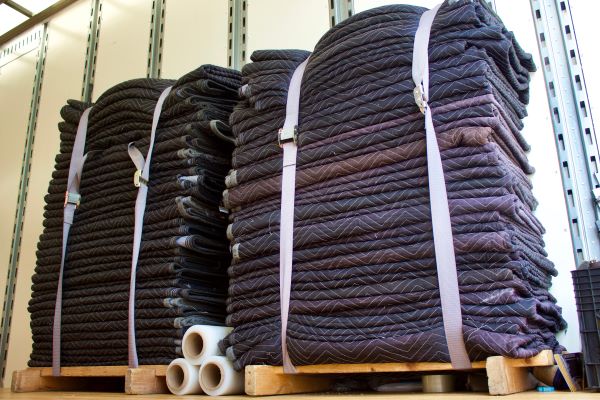
- Soundproof curtains and moving blankets are too light and too leaky at the edges to block much. They help with echo and light.
- Bookshelves and furniture break up echo but add little mass to the wall.
If you’re choosing on environmental grounds, see eco-friendly soundproofing materials, and for fences and yards, the best outdoor soundproofing material.
Frequently Asked Questions
What is the best soundproofing material?
It depends on the job. To block noise through a wall, mass loaded vinyl with sealed gaps is the most effective material for its thickness. To cut echo inside a room, fabric-wrapped acoustic panels work best. Foam and curtains do little for either.
What can I put on my wall to block noise?
A layer of mass loaded vinyl, screwed through the existing drywall into the studs with the seams taped, then covered with a new layer of drywall. Seal the edges and outlets with acoustical caulk. Panels hung on the wall reduce echo but don’t block noise.
What is the best sound deadening material?
For a vibrating surface like a thin wall or door, a heavy, limp layer such as mass loaded vinyl, or a damping compound between drywall layers. For echo in a room, 2″ fabric-wrapped acoustic panels with an NRC around 1.0.
Is mass loaded vinyl better than drywall for soundproofing?
For the space it takes, yes. A 1/8″ layer of 1 lb/sf mass loaded vinyl adds about as much sound blocking as three or four extra layers of drywall. The best walls use both: MLV under a new drywall layer.
What is the thinnest soundproofing material?
Mass loaded vinyl. Standard 1 lb/sf MLV is 1/8″ thick, and Wall Blokker Lite is 1/16″, so either fits behind new drywall without noticeably thickening the wall.