
Table of Contents
Why Upstairs Noise Comes Through Your Ceiling
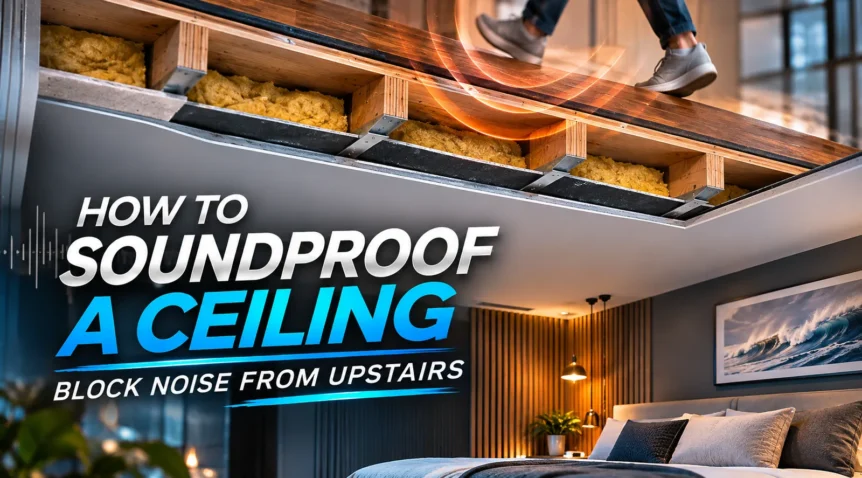
Noise from upstairs reaches you two ways. Voices, TV, and music travel through the air and push on the ceiling until it vibrates. Footsteps and dropped objects hit the floor above and shake the framing, and the ceiling carries that vibration straight down to you.
A ceiling treatment handles the first kind well. It helps with the second kind, but not as much, and I would rather say that up front than let you spend a weekend on drywall and be disappointed by the thumping.
Quick answer Fill the joist space with insulation, add a layer of mass loaded vinyl, hang new drywall on resilient channel or isolation clips, and seal every gap and light fixture. That cuts voices and TV a lot and footsteps somewhat. Acoustic panels will not block upstairs noise.
Airborne vs. Impact Noise: Which Do You Have?
Work out which one is bothering you first, because the fix is different.
| What you hear | Type | What helps from below | Best fix |
|---|---|---|---|
| Voices, TV, music | Airborne | Mass, insulation, sealed gaps | A built-up ceiling from below |
| Footsteps, thumps, dropped objects | Impact | A decoupled ceiling reduces it | Underlayment or a rug and pad on the floor above |
| Low rumble or bass | Both | Mass plus decoupling | Both fixes, and some noise will remain |
For the long version of the footstep problem, see structure-borne noise and airborne noise.
How to Soundproof a Ceiling Step by Step
There are two ways in. If you can open the ceiling, you get the best result. If you cannot, you build a new layer under the existing one and lose a few inches of ceiling height.
- Check what is there. Is it drywall on joists, is the cavity empty or insulated, and what runs through it: wiring, ducts, plumbing? Do this before anything else.
- Fill the joist space with insulation if you have opened it. It absorbs sound bouncing around inside the cavity. On its own it does a modest job, so treat it as one layer, not the whole fix.
- Add the mass. Hang mass loaded vinyl over the joists, or over the existing drywall if you are building a new layer under it. At 1 pound per square foot it is heavy overhead, and a 100 square foot roll weighs about 100 pounds. Get a second person and fix it into the joists, not just the drywall.
- Decouple the new drywall. Hang it on resilient channel or isolation clips so it is not rigidly connected to the framing. That cuts the path vibration takes into the room.
- Seal every gap. Sound is air pressure, so it leaks through any crack. Run acoustical caulk around the edges and around vents and penetrations. Recessed lights are holes in your ceiling, so deal with them too, and check your local code on fire-rated covers first.
The same mass-and-seal logic applies to walls. How to install mass loaded vinyl covers the fixing and seam details, which are the same overhead.
Resilient Channel vs. Isolation Clips for a Ceiling
Both do the same job, which is hanging the drywall so it floats a little instead of being screwed tight to the joists. They aren’t equally forgiving, though.
Resilient channel is a thin metal strip that runs across the joists. It’s cheap and easy to find. The catch is that it only works if every drywall screw goes into the channel and none of them reach the joist behind it. One long screw in the wrong spot connects the drywall straight to the framing again, and installers miss this all the time because you can’t see it once the board is up.
Isolation clips screw to the joists and hold furring channel, and the drywall screws into that channel. They take more parts and more time, but there’s much less to get wrong, and they handle low bass better. If you’re hiring this out or doing it once, I would pick clips.
Ceiling Soundproofing Mistakes That Undo the Work
Most disappointing ceiling jobs fail at the edges, not in the middle. If the new drywall is pushed tight against the walls, vibration travels into the wall framing and around your whole build. Leave about a 1/4 inch gap at the perimeter and fill it with caulk instead.
Fixtures are the other weak spot. A ceiling fan or a heavy light screwed through the new layer into a joist makes a direct bridge for sound. Mount them to a box that’s isolated, or accept that spot will leak a bit. And don’t leave open can lights in an otherwise sealed ceiling. Each one is a hole, and a few of them can cancel out a lot of careful work.
If You Can’t Rebuild the Ceiling
Renters and condo owners often cannot touch the ceiling, and the floor above is not theirs either. You still have moves.
- Ask the neighbor above about thick rugs with pads. It is the cheapest footstep fix there is.
- If the upstairs floor is being replaced, an underlayment makes the biggest difference of anything on this page. Many condo associations already require one. The best soundproof underlayment for floors compares them.
- Use white noise to mask what is left. It will not block anything, but it can take the edge off voices.
The wider set of options for renters and shared buildings is in how to block noise from neighbors.
Do Soundproof Ceiling Panels Work?
Not the way the name suggests. Most panels sold for ceilings are acoustic panels, and they absorb sound inside your room instead of blocking what comes from the room above. They are the right tool if your own room sounds echoey. They will not stop the upstairs TV.
If you want both, block first and treat the echo after. Acoustic ceiling cloud panels hang below the structure and calm the echo once the ceiling itself has been dealt with.
How Much Quieter a Soundproofed Ceiling Gets
It depends on what you start with and how well you seal it, so I will not promise a number. Every 10 STC points is roughly half as loud, and a full build with insulation, mass, decoupling, and sealed gaps is a big step for voices and TV. Footsteps will still thud, because impact noise travels through the framing and a ceiling can only do so much about it. The STC ratings guide explains how the numbers stack up.
Check Before You Build a Ceiling
A few things can stop this project, so settle them first. In an apartment or condo, find out who is allowed to alter the ceiling. If the ceiling is part of a fire-rated assembly, adding layers can change that rating, and your local code decides what is allowed. Look at what runs through the cavity before you cut or fasten anything. And measure your ceiling height, because the build-under method costs you a few inches.
How do you soundproof a ceiling from upstairs noise?
Add insulation to the joist space, a layer of mass loaded vinyl, and new drywall on resilient channel or isolation clips, then seal every gap and light fixture. That blocks voices and TV well and reduces footsteps somewhat.
Can you soundproof a ceiling without removing drywall?
Partly. You can build a new layer under the existing ceiling, with mass loaded vinyl and decoupled drywall, and lose a few inches of height. You cannot add cavity insulation without opening the ceiling.
Do acoustic panels block noise from upstairs?
No. Acoustic panels and ceiling clouds absorb echo inside your room. Blocking noise from the room above takes mass, decoupling, and sealed gaps in the ceiling itself.
Does insulation in the ceiling reduce upstairs noise?
A little. Insulation absorbs sound inside the joist space, but on its own it does a modest job. It works best combined with mass and a decoupled layer of drywall.
What stops footsteps from the apartment above?
The best fix is on the floor above, with an underlayment or a thick rug and pad. From below, a decoupled ceiling with insulation helps, but it will not match fixing the floor itself.