
Table of Contents
How to Reduce Noise Pollution
Traffic, aircraft, construction, leaf blowers and loud neighbors all add up, and most of us have stopped noticing how much of it we live with. Our bodies still notice, especially at night.
You usually can’t turn the noise off, but you have more control than you might think. Every fix does one of three things: it quiets the source, blocks the path between the source and you, or protects you where you are.
Quick answer The best ways to reduce noise pollution are to quiet it at the source, block its path, and protect yourself. At home, seal gaps around windows and doors, add mass to walls, and hang a barrier on your fence. In your community, use quieter equipment, limit loud work to daytime hours, and support local noise rules. For short-term relief, use white noise, earplugs or headphones.
What Is Noise Pollution?
Noise pollution is unwanted or harmful sound that affects people’s health or quality of life. Common sources are road traffic, aircraft, trains, construction, industry and neighbors. These are the most useful guideline levels:
| Source of guidance | Level | What it applies to |
|---|---|---|
| EPA | 70 dB, 24-hour average | Preventing measurable hearing loss over a lifetime |
| EPA | 55 dB outdoors | Preventing interference and annoyance outside |
| EPA | 45 dB indoors | Preventing interference and annoyance in homes, hospitals and schools |
| WHO | 53 dB average; 45 dB at night | Road traffic |
| WHO | 45 dB average; 40 dB at night | Aircraft |
These are long-term averages, not limits on any single sound. The EPA’s levels date from 1974 and are a basis for judgment, not a legal standard. The WHO figures come from its 2018 guidelines for Europe. For a local legal limit, check your city’s noise ordinance.
How Noise Pollution Affects Your Health
Noise does more than annoy people. A Harvard research brief links it to these problems:
- Poor sleep. Noise outside the bedroom at around 45–60 dB can disturb sleep, with knock-on effects on mental health and injury risk.
- Heart health. Long-term exposure to road and aircraft noise is linked to a higher risk of heart disease.
- Children’s learning. Transportation noise is also linked to effects on children’s thinking and memory.
- Hearing damage. This is the risk at much louder levels, above about 85–100 dB, and it mostly comes from noise at work.
10 Best Ways to Reduce Noise Pollution at Home
Most homes won’t need all of these, so start with what fits your noise and budget:
- Seal the gaps. Sound travels wherever air does. Run acoustical caulk around window frames, outlets and any holes where pipes or wires come through the wall.
- Seal your doors. A door sweep and perimeter seals close the gaps around the door. Exterior doors should be solid, not hollow.
- Sleep on the quiet side. If you can, move the bed to a room or wall that faces away from the road. It’s free, and night is when noise affects you most.
- Upgrade your windows. Windows are usually the weakest part of an outside wall. Window inserts or laminated glass will do far more than curtains.
- Add mass to walls. Wall Blokker™ or mass loaded vinyl behind a new layer of drywall blocks noise from neighbors and the street. See how to soundproof existing walls and how to block noise from neighbors.
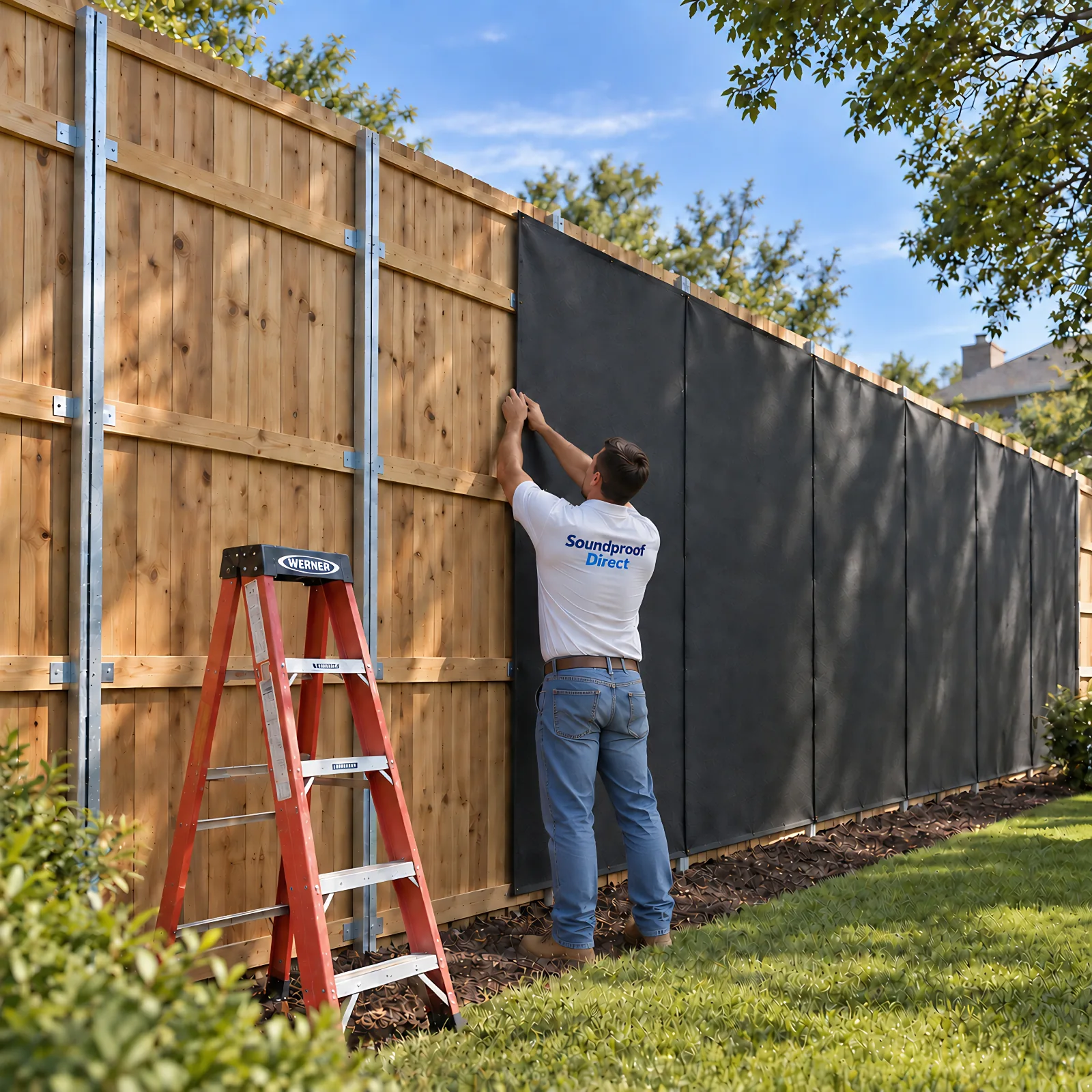
- Add a barrier to your fence. A regular wood fence has gaps and little mass. Fence Blokker™ hangs on the fence you already own. A barrier that breaks your line of sight to the noise gives about 5 dB, and more as it gets taller. See how to soundproof a fence.
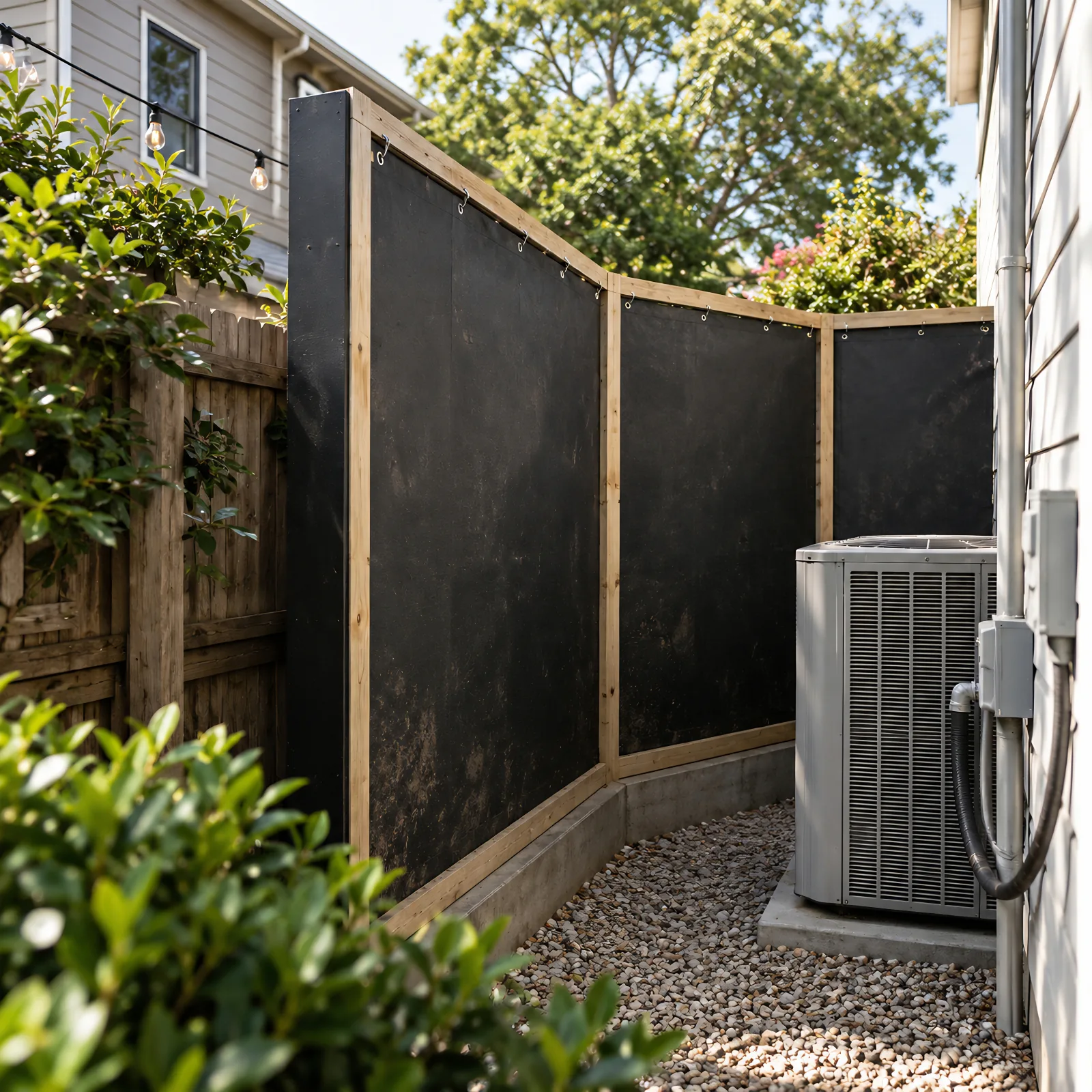
- Screen noisy equipment. A barrier around an AC unit or pool pump can help the neighbors as well as you. Leave the clearance the maker requires, since the equipment needs airflow.
- Soften your rooms. Rugs, soft furniture and acoustic wall panels cut echo, so a room feels calmer. They don’t block noise from outside.
- Use white noise. A steady, low sound covers the sudden noises that wake you up. It hides noise but doesn’t remove it. See how sound masking works.
- Protect yourself. Earplugs or noise-canceling headphones are the fastest fix of all when you can’t change anything else.
Real project: a measured 12 dB at the property line Tampa Yacht and Country Club had live wedding bands on a patio beside homes, and a stricter city noise ordinance to meet. Our sister company Commercial Acoustics hung Fence Blokker™ panels on the perimeter fence and tent overhang, then turned the stage and capped the speakers. On a wedding night they measured 15 dB less behind the fence and 12 dB less at the property line.
For more on outdoor options, see the best outdoor soundproofing material.
How to Prevent Noise Pollution in Your Community
The most effective way to prevent noise is to stop it before it starts. Everyone can help with that:
- Choose quieter equipment. Battery-powered mowers and leaf blowers are usually much quieter than gas ones.
- Maintain what you own. Fix worn mufflers and rattling machinery, and don’t modify an exhaust to make it louder.
- Be considerate about timing. Save loud yard work and power tools for daytime hours, and keep music indoors late at night.
- Drive less, and drive quietly. Lower speeds, less honking and fewer car trips all reduce traffic noise.
- Support local action. Cities can set noise ordinances, plan roads and zoning around homes, and build highway barriers. If noise breaks a local rule, talk to your neighbor first, then report it to the city.
Ways to Reduce Noise Pollution at Work
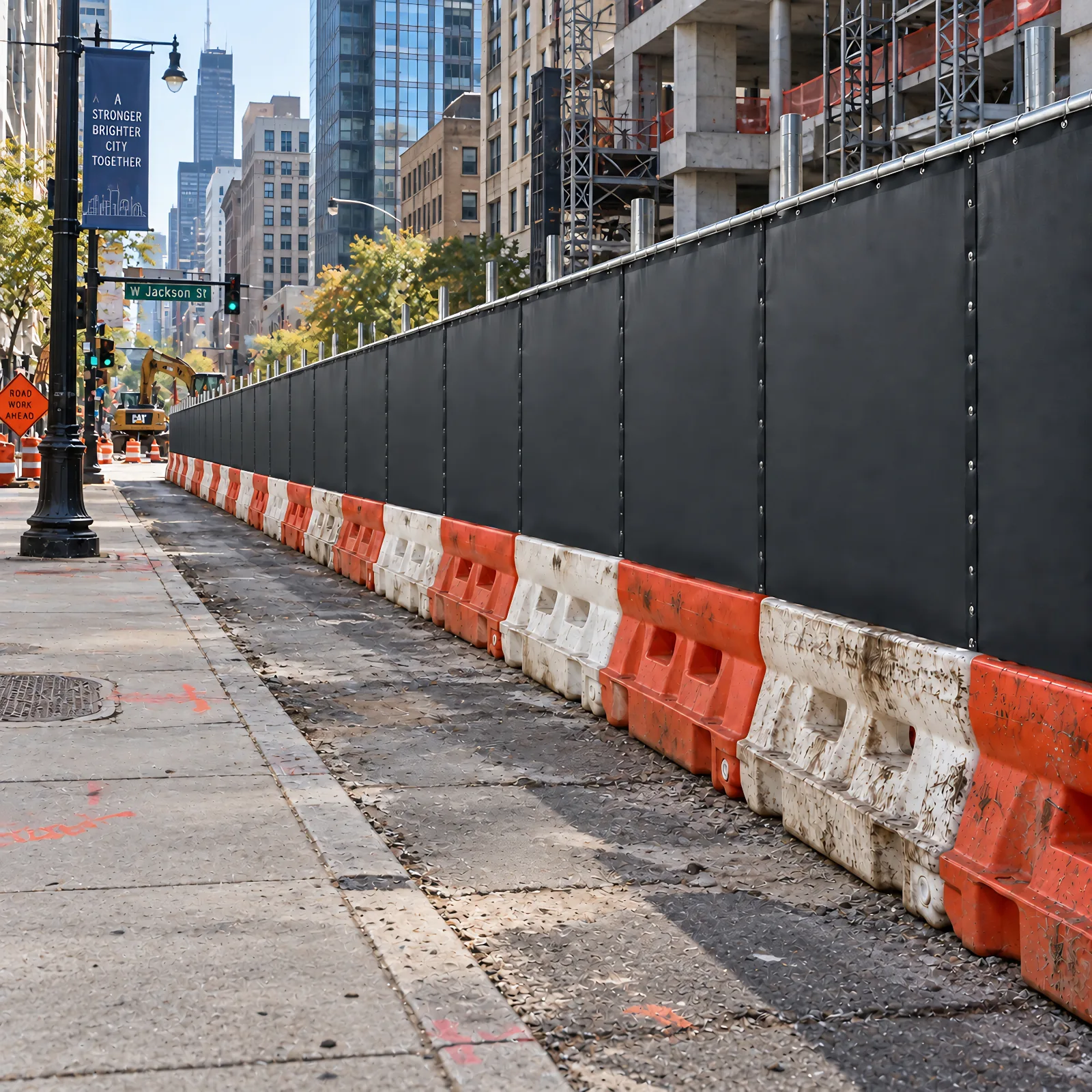
- Factories and job sites: buy quieter machines, keep them maintained, enclose or screen the loudest ones, and provide hearing protection. Temporary barriers like Fence Blokker™ can shield neighbors from construction.
- Offices: acoustic panels cut echo, and sound masking covers nearby conversation. Put printers and phone-heavy teams away from people who need to concentrate.
What Doesn’t Reduce Noise Pollution
- Trees and hedges by themselves. Plants look good and can make noise less noticeable, but they block very little. Virginia DOT says vegetation must be at least 100 ft thick, 20 ft high and fully dense to cut noise by just 5 dBA, and the Federal Highway Administration doesn’t accept it as noise abatement on highway projects.
- Foam and egg cartons. These are too light to stop sound from coming through a wall. At best, foam reduces echo inside a room.
- Soundproof paint. It’s too thin to add meaningful mass. See does soundproof paint work?
- Curtains alone. Regular curtains soften a room, but block little traffic noise.
Frequently Asked Questions
What are the best ways to reduce noise pollution?
Quiet the source, block the path, and protect yourself. At home, that means sealing gaps, upgrading windows, adding mass to walls and using a fence barrier. Quieter equipment and local noise rules help at the community level, and earplugs or white noise give quick relief.
How can we prevent noise pollution in a community?
Use quieter equipment, keep vehicles and machines maintained, limit loud work to daytime hours, and drive less. Cities can help by setting noise ordinances and planning roads and zoning away from homes.
What level of noise is considered harmful?
The EPA identified a 24-hour average of 70 dB as the level that prevents measurable hearing loss over a lifetime, and 45 dB indoors to prevent interference and annoyance. Noise below the hearing-damage range can still disturb sleep.
Do trees reduce noise pollution?
Only a little, unless the planting is very deep. Virginia DOT says vegetation must be at least 100 ft thick, 20 ft high and fully dense to cut noise by 5 dBA. A solid barrier that breaks your line of sight gives about the same reduction in far less space.
What is the cheapest way to reduce noise pollution at home?
Move your bed away from the noisy side of the house, which is free. After that, earplugs, acoustical caulk around window frames, and a door sweep cost very little and can make a noticeable difference.