
Table of Contents
Are Hotel Rooms Soundproof?
Not fully. Hotel rooms are built to cut noise down to a level most guests can sleep through, not to block it completely. Building codes set a minimum for the walls and floors between guest rooms, and most hotel brands set a higher standard of their own. A room built to the code minimum still lets a loud TV, a slammed door or footsteps from above come through.
When guests complain, the noise almost always comes from one of five places: the shared wall with the next room, the floor above, the corridor door, the window, or the PTAC heating and cooling unit under it. Each one needs a different fix.
Quick answer To soundproof hotel rooms, add a mass loaded vinyl layer such as Wall Blokker PRO to the walls between rooms, put a sound underlayment under the floors, and seal every outlet and gap. Fit corridor doors with perimeter seals and automatic door bottoms, and upgrade the windows and PTAC sleeves on rooms facing a highway.
Hotel Room STC and IIC Targets
Two ratings describe hotel room soundproofing. STC (Sound Transmission Class) measures how well a wall or floor blocks airborne sound like voices and TV. IIC (Impact Insulation Class) measures how well a floor blocks footsteps and impacts. Higher is better for both.
| Assembly | Building code minimum | Typical brand standard |
|---|---|---|
| Wall between guest rooms | STC 50 (45 field tested) | STC 55, higher in luxury rooms |
| Wall to the corridor | STC 50 | STC 50+ |
| Floor/ceiling between floors | STC 50 and IIC 50 | STC 55–60, IIC 50+ |
Brand standards vary by flag and are set in each brand’s design guide, so check yours before specifying assemblies. A wall that tests at STC 55 in a lab usually measures a few points lower once built, so design with some margin.
How to Soundproof Hotel Room Walls
The wall between two guest rooms carries most noise complaints. Wood-frame hotels have the hardest time: wood studs flex more than steel, and a single-stud wood wall typically runs several STC points behind the same wall in metal studs.
- Add a mass loaded vinyl layer. Wall Blokker PRO is 1.1 lb/sf with a fused scrim, adds 3–5 STC points more than a standard barrier, and costs $299 per 100 sq ft. Wall Blokker ($219) suits metal-stud walls. Tape every seam with MLV seam tape.
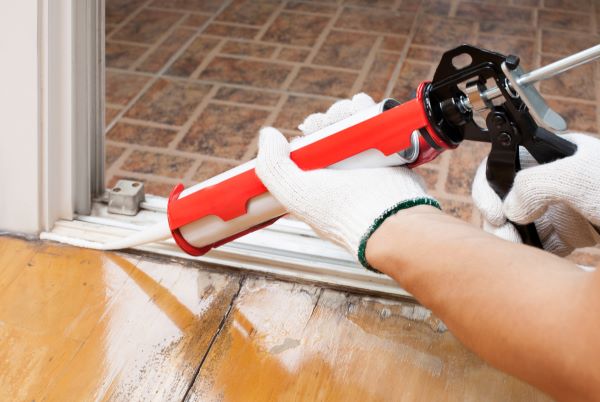
- Don’t put outlets back to back. Offset them by at least one stud bay, and seal every box and penetration with acoustical caulk.
- Take the wall to the structure above, and seal the top and bottom plates. A gap at the top of a demising wall undoes the rest of it.
- Place headboards on the demising wall carefully. Headboards bolted through the wall carry vibration into the next room. Mount them on the room side only.
At the La Quinta in Orlando, a 101-room, four-story wood-frame hotel, our sister company Commercial Acoustics replaced the specified gypsum sound board with Wall Blokker PRO across more than 60,000 sq ft of walls and floors. The guest-room walls met the brand’s STC 55+ target, at a lower installed cost than the original spec.
Soundproof Flooring for Hotel Rooms
More hotels are replacing carpet with hard flooring, which makes footsteps from the room above one of the fastest-growing complaints. The fix is an underlayment under the new floor, rated for IIC.
- Floor Blokker is a 1/4″ isolation mat with a mass loaded vinyl layer, rated for IIC 50+ under hardwood and laminate, at $240 per 100 sq ft. It isn’t made for ceramic tile or vinyl plank thinner than 5 mm.
- AcoustiStep underlayment is a rubber mat from $68, in several thicknesses for different IIC targets.
- Work from below when you can’t touch the floor above. Insulation, a mass loaded vinyl layer and a ceiling hung on resilient channel cut noise from the room above. Commercial Acoustics reached STC 60 on a Hyatt penthouse ceiling under a rooftop bar this way, installing Wall Blokker Pro from below. The same approach is covered in more detail in soundproofing between floors in an Airbnb.
Hotel Room Doors and Corridor Noise
Corridor doors let in luggage carts, housekeeping and late arrivals. Connecting doors between rooms are often the weakest point of all.
- Seal the corridor door with a perimeter gasket and an automatic door bottom that drops as the door closes.
- Fit closers that don’t slam. A door slamming shut down the hall is one of the most common complaints, and adjusting the closer speed fixes it.
- Connecting rooms need two doors, one on each side, both solid core and fully gasketed, with an air space between them.
- Keep ice machines, vending and elevators away from guest-room walls, or give those alcoves solid doors.
Hotel Windows, PTAC Units and Highway Noise
Hotels near airports and highways need the outside wall treated too. Windows are usually the weak point, followed by the PTAC unit sleeve cut through the wall below them.
- Laminated or insulated glass with panes of different thicknesses blocks far more traffic noise than standard double glazing. Window inserts are a retrofit option that doesn’t replace the frame.
- Seal the PTAC sleeve to the wall on all sides, and check the exterior grille. An unsealed sleeve is effectively a hole in the wall.
- Caulk the window frame to the rough opening. Gaps hidden behind trim leak more than the glass itself.
Soundproofing Motel Rooms
Motels have their own problems: room doors that open straight onto the parking lot, thin walls between rooms, and a PTAC unit in every exterior wall. Start with the door, since it faces cars, arrivals and voices outside: a solid-core door, a full perimeter seal and a threshold that closes the gap. Then seal the PTAC sleeves, and add mass loaded vinyl to the walls between rooms at the next renovation.
How to Reduce Noise in a Hotel Room
If you’re a guest rather than the owner, you can’t change the walls, but you can choose the room and cover what gets through:
- Ask for a high floor away from the elevator, ice machine, stairwell and street, and not above the bar or pool.
- Avoid connecting rooms. The connecting door is usually the thinnest part of the wall.
- Use white noise from an app, a fan or the PTAC fan setting to cover voices and hallway noise.
- Block the gap under the door with a rolled towel, and bring earplugs.
Frequently Asked Questions
Are hotel rooms soundproof?
Not fully. Hotel walls and floors are built to reduce noise, usually to at least STC 50 under building codes and STC 55 under many brand standards, but loud TVs, slammed doors and footsteps from above can still come through.
What STC rating do hotel walls need?
Building codes require STC 50 (45 when field tested) for walls and floors between guest rooms. Most hotel brands require STC 55 for walls between rooms, and higher for luxury suites. Check your brand’s design guide for the exact figure.
How do hotels soundproof their rooms?
With walls that include a mass layer such as mass loaded vinyl, insulation and sealed outlets; floors with a sound underlayment; corridor doors with seals and automatic door bottoms; and insulated or laminated windows on noisy sides of the building.
What is the best soundproof flooring for hotel rooms?
A hard floor over a rated sound underlayment. Floor Blokker is rated for IIC 50+ under hardwood and laminate, and rubber underlayments like AcoustiStep come in thicknesses for different IIC targets. Carpet on a pad also works well for footsteps.
How can I reduce noise in my hotel room?
Ask for a high floor away from the elevator, ice machine and street, avoid connecting rooms, use white noise from a fan or app, and block the gap under the door with a towel.