
Table of Contents
How to Soundproof a Meditation Room
A meditation room asks for something most rooms never have to deliver: quiet you can sit in for twenty minutes without noticing anything. A door closing, a neighbor’s TV or a furnace kicking on is enough to pull you out of it, whether you’re sitting in a spare bedroom or leading a class.
Three different problems get called “noise” in these spaces: echo inside the room, sound leaking in from outside, and a room so quiet that every small sound stands out. Each has its own fix, and the same goes for a home yoga space. Most of the early fixes are cheap and you can do them yourself.
Quick answer To soundproof a meditation room or home yoga space, start by sealing the door with a sweep and perimeter seals and caulking any gaps. If noise still comes through a wall, add mass with mass loaded vinyl and a new layer of drywall. Use rugs or acoustic panels for echo. If the room is so quiet that small sounds distract you, add low white noise.
Which Sound Problem Is Breaking Your Focus?
Sit in the room with your eyes closed for a few minutes and notice what pulls your attention. Then match it here:
| What you notice | The problem | The fix |
|---|---|---|
| Voices and TV from the rest of the house | Door leaks | Door sweep and perimeter seals; a solid door |
| Neighbors or the next room, through the wall | Thin wall | Mass loaded vinyl and drywall; sealed gaps |
| Footsteps overhead | Impact noise | Underlayment or rugs on the floor above |
| Traffic and dogs outside | Windows | Sealed frames; a window insert |
| A steady hum or air rush | HVAC | Balanced airflow; a quieter vent |
| Music or a guide’s voice sounds harsh or hollow | Echo | Rugs, acoustic panels or ceiling clouds |
| Your own breathing, or every small creak | Too quiet | Low white noise or a small fountain |
DIY Meditation Room: Cheap Fixes to Try First
Start here, because these are inexpensive and you may not need anything else:
- Pick the quietest room you can. A room away from the street, the kitchen and the laundry solves more than any product. An inside corner of the house with no shared apartment wall is ideal.
- Seal the door. Most interior doors have a gap at the floor that lets sound straight through. A door sweep and perimeter seals close it for little money.
- Caulk the gaps. Use acoustical caulk around window trim, along baseboards and around outlets on any shared wall.
- Soften the room. An area rug, floor cushions, a bookshelf and fabric on the walls all cut echo. They won’t stop noise from outside, but the room will feel calmer.
- Keep speakers off shared walls. If you play music or a guided session, a small speaker on a stand across the room carries less through the wall to whoever is next door.
Soundproofing Meditation Room Walls & Doors
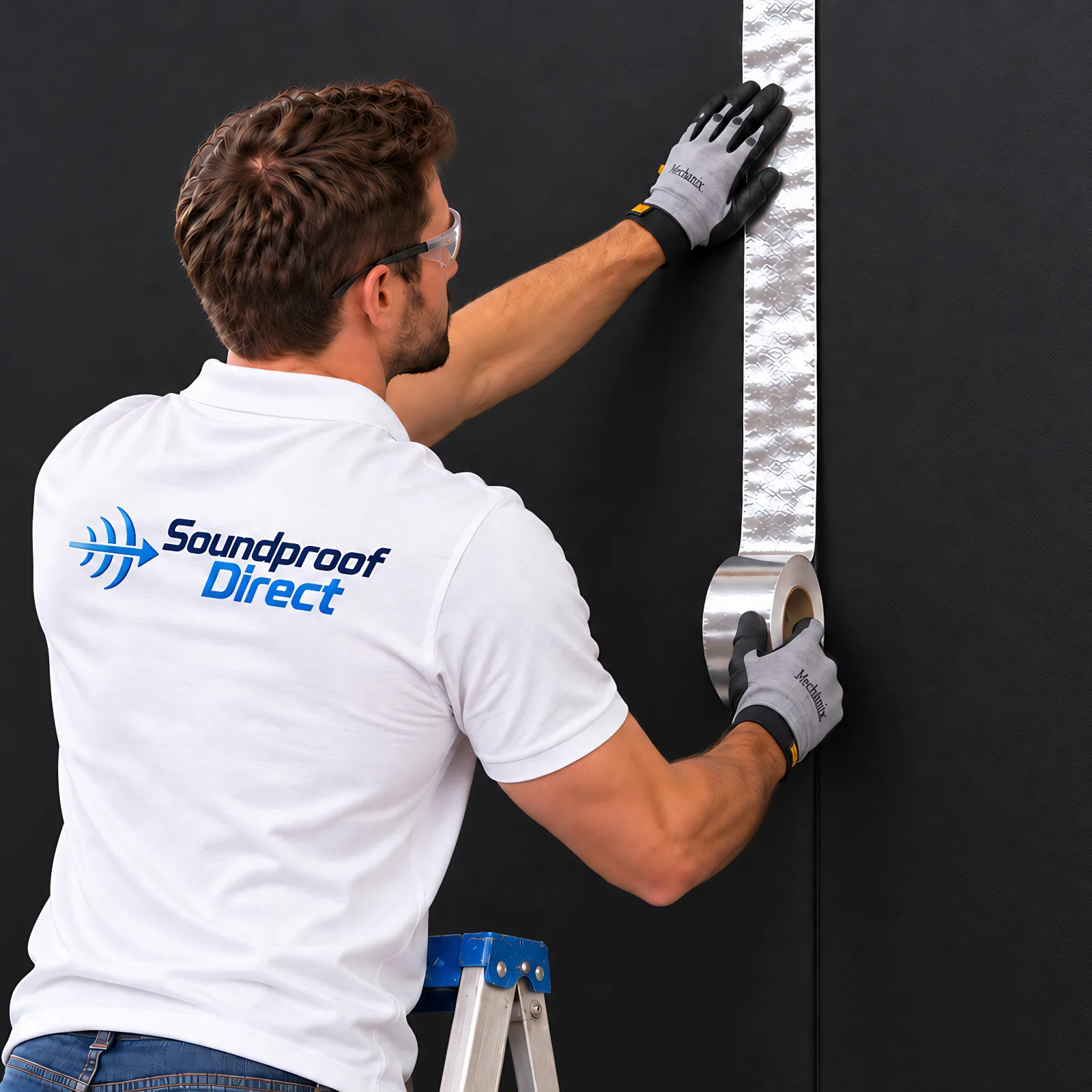
Walls. If voices still come through after the gaps are sealed, the wall needs more mass, and that means drywall work. Wall Blokker™ hung behind a new layer of drywall adds 6 to 12 STC points to a typical stud wall and takes up very little room. Tape the seams with MLV seam tape and caulk the edges. You can also use standard mass loaded vinyl, and it can go right over your existing drywall, so nothing needs tearing out.
Insulation. If the wall is open, fill the cavity with fiberglass or mineral wool before you close it. Insulation absorbs sound inside the wall, but it’s too light to block much by itself, so use it with drywall and mass. For a finished wall, see how to soundproof existing walls, which also covers building a second wall for serious noise.
Doors. A hollow door is the weak point of even a well-built wall. Once the seals are on, the next step is a solid-core door.
Quieting HVAC, Windows, & Floors
- HVAC. You stop hearing air noise during the day, then notice it the moment you sit still. Check that the vent is fully open and not rattling, since a partly closed damper can whistle. For anything louder, ask an HVAC contractor about lowering the airflow or adding a lined duct. Don’t block the vent, because the room still needs fresh air.
- Windows. Seal the frame first. Heavy curtains soften echo and look good, but they block little outside noise. For traffic, use a window insert or laminated glass.
- Floors. In a home yoga space, jumps and dropped blocks travel into the room below. A yoga mat helps very little with this. If you’re replacing the floor, acoustic rubber underlayment goes under it to cut impact noise, and the same goes for the floor above if footsteps are your problem. See the best soundproof underlayment for floors.
Fixing Echo in a Meditation or Yoga Room
Yoga rooms often have hard floors and bare walls, so a guide’s voice bounces around and music sounds harsh. In a small home room, a rug and soft furnishings may be enough. For a larger or emptier room, use one of these:
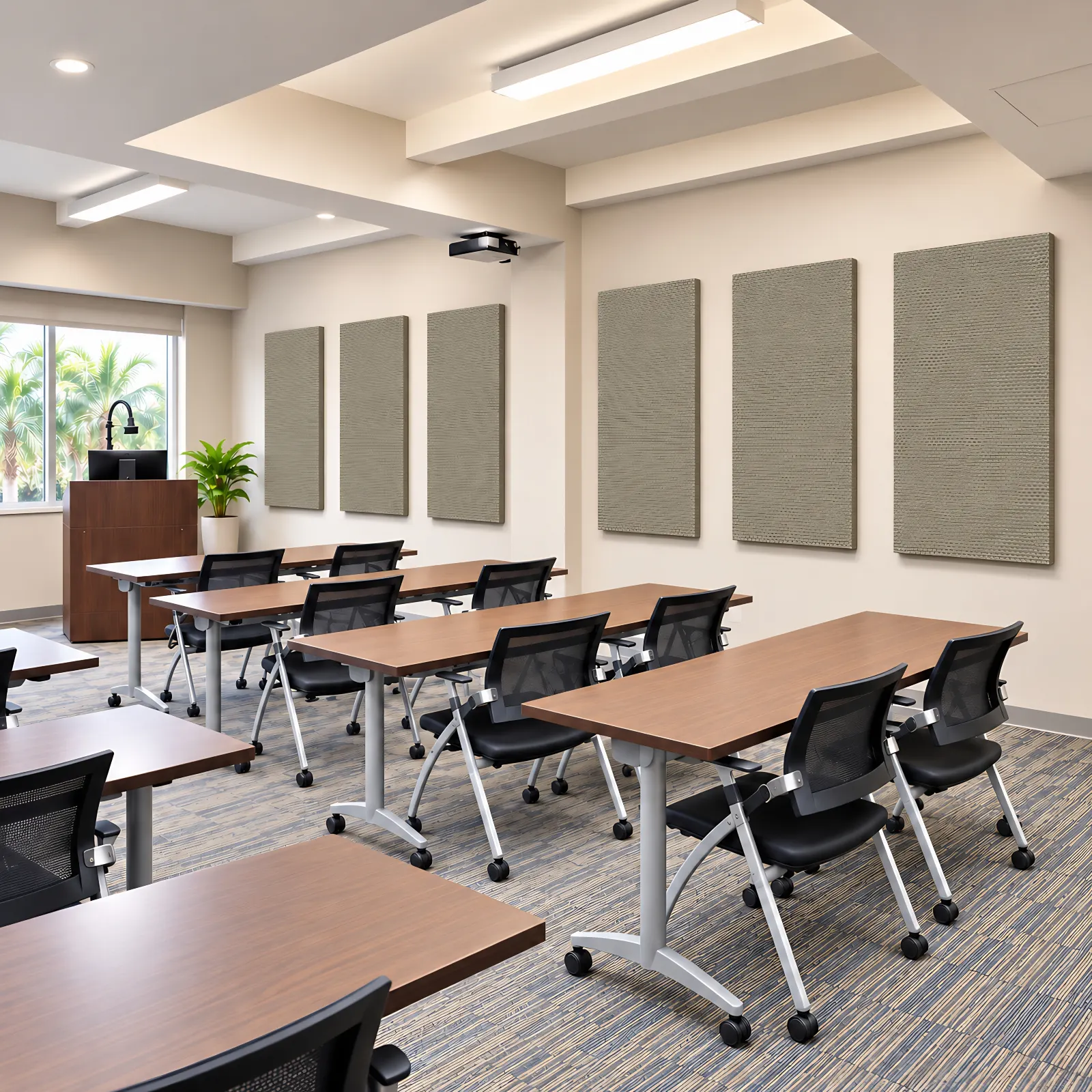
- Sound absorbing wall panels: 2 in fabric-wrapped fiberglass with an NRC of 1.05, in 24 fabric colors, so they can suit a calm room. Plan on panels equal to 15–25% of the floor area. See how to hang acoustic panels.
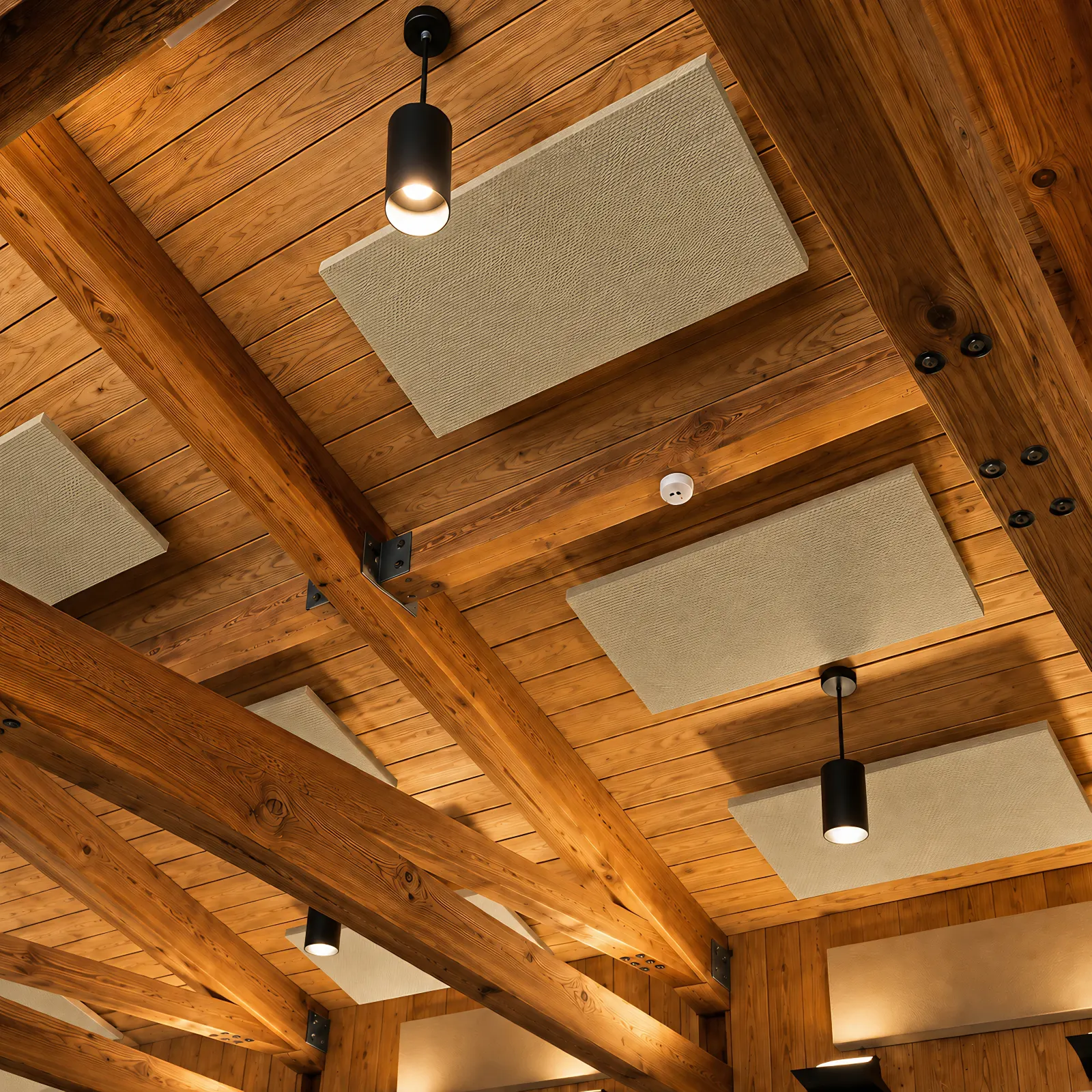
- Acoustic ceiling clouds: the same core, hung from the ceiling. They work well in rooms with mirrors or windows on the walls.
Real project: Taoist Tai Chi Society This practice hall in Dunedin, FL is far bigger than most studios, at over 20,000 sq ft, but its problem is a familiar one: concrete floors and hard walls made instructors hard to understand. Our sister company Commercial Acoustics added ceiling clouds and wall panels, and the reverberation time fell by more than half.
When a Room Is Too Quiet: White Noise & Masking
Soundproofing can overshoot. As a room gets quieter, the sounds that remain stand out more: someone breathing in a class, a stomach growling, a voice in the hallway. Some people find that near-silence harder to settle into than a little background sound.
A low, steady sound fixes this by covering small noises before you notice them. A white noise machine does it, and so does a small water fountain, which also looks at home in a meditation room. Keep the level low enough that you stop noticing it within a minute. If you’re curious how this works, our post on sound masking machines explains it.
Soundproofing a Yoga or Meditation Studio
A commercial studio faces the same problems, but often with a loud neighbor. Many sit in strip plazas, where you don’t get to choose whether the unit next door becomes a spin class or a dog daycare. If you can, check who your neighbors are before you sign a lease.
Commercial Acoustics’ yoga studio guide gives useful targets to plan around:
- Background noise: 35–40 dBA in the room, with HVAC at NC 30.
- Shared walls: STC 50 or higher, or STC 55+ next to a cardio gym or music venue.
- Echo: a reverberation time under 0.8 seconds.
A hollow door undoes a good wall, so use solid-core doors with seals. For large storefront windows, sealed frames and laminated glass will help more than curtains. If you’d like help planning a studio, send us the room size and what’s next door: 855-667-6863. Treatment rooms have similar needs, so see how to soundproof a spa room and how to soundproof a therapy office.
Meditation Room Soundproofing Cost
Here’s what our materials cost for a 10 ft × 12 ft home room, and for a 1,000 sq ft studio:
| Item | Price | 10 ft × 12 ft home room | 1,000 sq ft studio |
|---|---|---|---|
| Acoustical caulk | $17.99 a tube | One tube | A few tubes |
| Door sweep + perimeter seals | Roughly $100 to $300 a door | One door | One per door |
| Wall Blokker™, 100 sq ft roll | $219 a roll | One 12 ft × 8 ft wall: 1 roll, $219, plus drywall | One 30 ft × 10 ft wall: 3 rolls, $657, plus drywall |
| MLV seam tape, 150 ft roll | $24.99 a roll | One roll | One roll |
| Acoustic wall panel, 4 ft × 4 ft × 2 in | $259 each | 2 panels: $518 | 10 to 16 panels: $2,590 to $4,144 |
Prices are before shipping and installation. Drywall and labor are extra. At home, you can often stop after the door seals, caulk and a rug.
Frequently Asked Questions
How do you soundproof a meditation room?
Seal the door and caulk the gaps first, since that’s the cheapest fix. If noise still comes through a wall, add mass loaded vinyl and a new layer of drywall. Use rugs or acoustic panels for echo.
What is the cheapest way to make a DIY meditation room quieter?
Choose the quietest room in the house, then add a door sweep, perimeter seals and a tube of acoustical caulk. A rug and soft furnishings will cut echo for little or no extra cost.
Do soundproof curtains work in a meditation room?
They help with echo, but they block little outside noise. Heavy curtains absorb sound inside the room and make it feel softer. For traffic or neighbors, seal the window frame and consider an insert or laminated glass.
How do you soundproof a yoga room at home?
Treat it like a meditation room, then deal with the floor. Seal the door and gaps, add a rug or panels for echo, and keep speakers off shared walls. If you’re replacing the floor, put rubber underlayment under it to cut impact noise for the room below.
Should a meditation room be completely silent?
Not necessarily. In near-silence, small sounds like breathing or a creaking floor stand out more. Many people find a low, steady sound such as white noise or a small fountain easier to settle into.