
Table of Contents
How to Soundproof a Gym
When a gym gets a noise complaint, the walls usually get the blame. They’re often not the problem. A lot of gym noise travels through the floor slab, so a thicker wall can leave the loudest complaint exactly where it was. Before you buy anything, work out what the neighbors are actually hearing.
Quick answer To soundproof a gym, start with the floor, because dropped weights and machines send vibration through the slab. Use continuous underlayment beneath the flooring, isolation pads under machines, and drop platforms for heavy lifting. Then add mass to shared walls and cap the music level. Acoustic panels only reduce echo inside the gym, so they won’t fix a neighbor’s complaint.
Which Gym Noise Problem Do You Have?
| What people notice | The problem | Start with |
|---|---|---|
| Thuds, or vibration they can feel | Dropped weights in the slab | Floor isolation, drop platforms |
| A repeating knock or hum | Machines fixed to the structure | Isolation pads; no bolts through the underlayment |
| Bass or class music next door | Sound through the wall or over it | Wall mass, sealed gaps, volume cap |
| Members can’t hear the coach | Echo inside the gym | Panels, clouds or baffles |
Location decides a lot of this. Commercial Acoustics notes that a standalone single-tenant gym rarely has a neighbor problem. The trouble starts on an upper floor or in a shared building, particularly next to a spa, a medical office or apartments.
How to Soundproof a Gym Floor & Machines
A gym floor has to soften the hit and keep the vibration out of the slab. Rubber flooring handles the first job better than the second, so layer the fixes:
- Underlayment. Acoustic rubber underlayment comes in up to 10 mm, and sound barrier underlayment adds mass. Both reach Delta IIC 26. Run it across the whole floor, not in patches. That rating comes from a tapping machine, so it won’t predict what a loaded barbell will do. Underlayment helps with heavy drops but won’t solve them alone.
- Drop platforms. Heavy lifting needs engineered platforms that float the lifting zone off the slab. We don’t sell these, and they need design work.
- Machines. Put isolation pads under each machine, including treadmills, which send a steady rumble through the structure. Don’t bolt through the underlayment, and if a machine has to be anchored, ask the maker for a safe isolated option. Fixing rattling cable stacks and loose plates is cheap.
- Placement. Keep free weights and cardio rows away from your most sensitive neighbor. It costs less than almost anything else here.
- Floating floors and slab work. A floating floor is a major project that’s rarely practical in an open gym. Sealing joints or cutting the slab at a tenant line is a question for a structural engineer.
Floor retrofits usually mean pulling up the rubber flooring, so plan them zone by zone. Our CrossFit soundproofing guide goes deeper on barbells, stall mats, drop pads and choosing a location.
Real project: a gym with a slab problem At a second-floor Crunch Fitness in Ohio, the wall by the day spa next door tested at ASTC 53, yet tenants kept complaining. Weights and machines were sending vibration through a 4 in slab. Our sister company Commercial Acoustics recommended full underlayment coverage, machine isolators, drop platforms and sealed joints, plus sound masking in the healthcare suite below.
Soundproofing Gym Walls & Ceilings
Walls matter most for music and class noise. Commercial Acoustics says standard retail walls usually test around STC 45, and it suggests planning on STC 55 or higher for boutique studios with amplified music. You can usually get there without demolition, by adding a barrier over the existing drywall with a new layer of 5/8 in drywall on top:
- Wall Blokker™ Pro: adds 3 to 5 STC points more than a standard barrier, for loud classes and sensitive neighbors.
- Wall Blokker™: adds 6 to 12 STC points to a typical stud wall.
- Wall Blokker™ Lite: adds 6 to 11 points on metal studs.
Tape the seams with MLV seam tape, and seal the edges and outlets with acoustical caulk. How to soundproof existing walls has the steps. Also check that the wall reaches the deck above, because many retail walls stop short and sound goes straight over them.
Ceilings. If tenants are above you, your ceiling needs mass and sealed gaps, usually mass loaded vinyl and drywall fastened to the structure. If tenants are below you, your ceiling won’t help, because the noise leaves through your floor.
Gym Music, Speakers, & Bass
Controlling the music may be the cheapest fix in the whole gym:
- Cap the system level. When each instructor picks a volume, the loudest one becomes the normal one. A central system with a locked limit stops that.
- Lower the bass. Low frequencies are the hardest to block and usually what the neighbors notice.
- Move the speakers. Keep them off shared walls and ceilings, and use isolating mounts.
Real project: wall upgrade plus a volume cap When music and bag noise from a kickboxing studio in Alpharetta, Georgia reached the shops next door, Commercial Acoustics specified Wall Blokker™ Pro under 5/8 in drywall with a target of STC 55, along with a centrally controlled audio system.
How to Soundproof a Home Gym
To soundproof a home gym, start with the room. A garage or a basement slab is far easier than an upstairs room, because there’s no one directly below.
- Floor. Put 10 mm rubber underlayment under your gym flooring. For lifting, build a platform from layered plywood and rubber, and use bumper plates.
- Treadmills and bikes. Use a thick equipment mat or isolation pads, and keep them off a floor over a bedroom.
- Walls. Most home gym walls don’t need work unless you share one. If you do, seal the gaps, then add mass loaded vinyl and drywall.
- Music. Headphones solve this for free.
See our guides to soundproofing a garage and soundproofing a basement. If you rent, start with renter-friendly soundproofing, since dropping heavy weights may not work at all in an upstairs apartment.
Fixing Echo in a Gym or Gymnasium
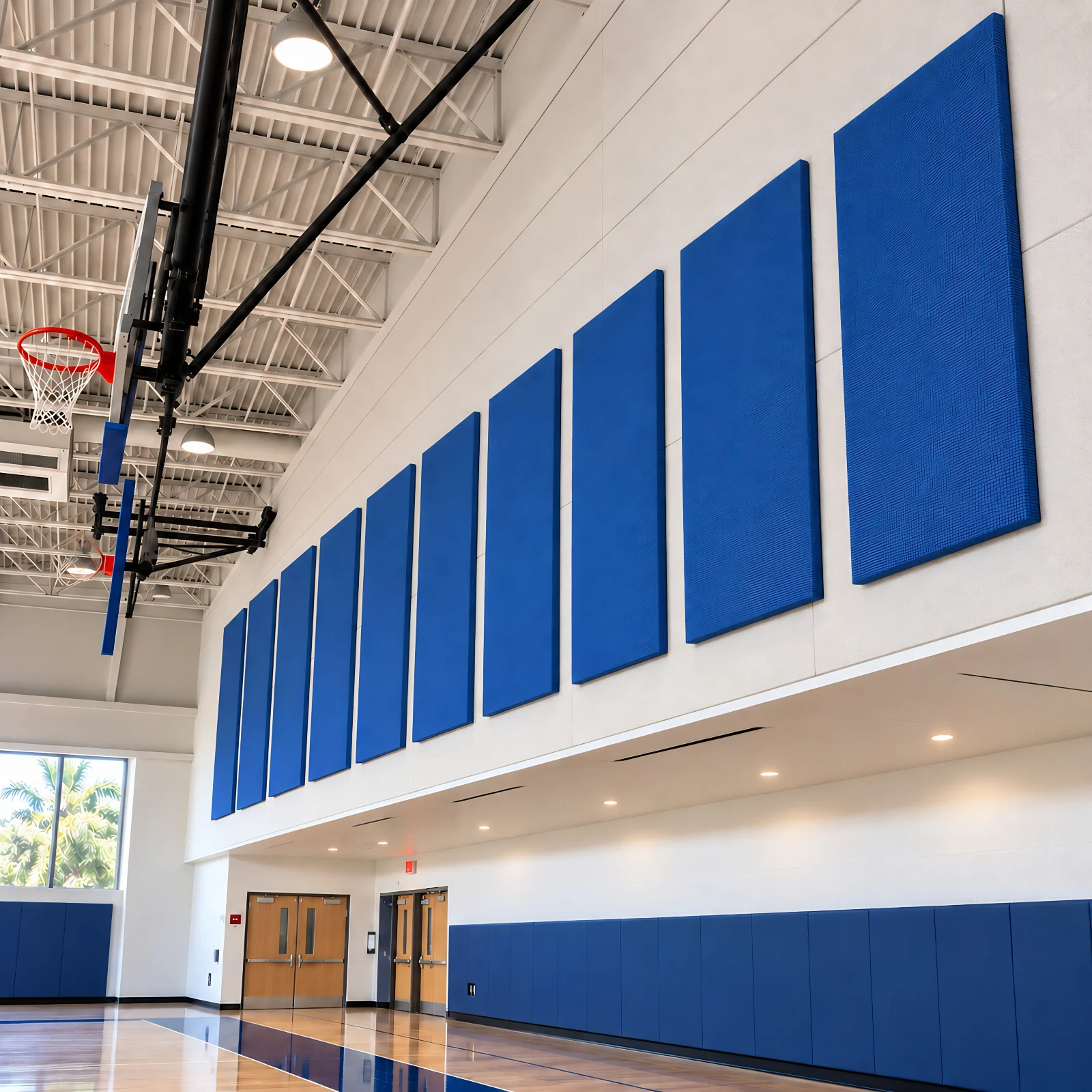
When people search for soundproofing a gymnasium, they often mean echo. School and basketball gyms usually have no one below them, so the complaint is that nobody can understand the coach. That takes absorption, not mass, using wall panels, ceiling baffles or ceiling clouds. Targets vary: one acoustics vendor gives 1.8 to 2.2 seconds of reverberation for a typical gym, while others aim lower. Our guide to gym acoustic panels covers how many you need and where they go.
What Gym Soundproofing Costs
Here’s what our materials cost for an 800 sq ft free weight area and a 50 ft × 12 ft shared wall:
| Item | Price | For this example |
|---|---|---|
| Rubber underlayment, 10 mm, 100 sq ft roll | $219 a roll | 8 rolls, $1,752 |
| Sound barrier underlayment, 100 sq ft roll | $259 a roll | Or 8 rolls, $2,072 |
| Wall Blokker™ Pro, 100 sq ft roll | $299 a roll | 6 rolls, $1,794, plus drywall |
| Wall Blokker™, 100 sq ft roll | $219 a roll | Or 6 rolls, $1,314, plus drywall |
| MLV seam tape and acoustical caulk | $24.99 a roll; $17.99 a tube | One or two rolls; a few tubes |
Prices are before shipping and installation. Gym flooring, drop platforms, machine isolators, drywall and consulting are extra, so get quotes. If you’re in a shared building and already have complaints, get help before you buy, because it’s easy to spend money on the wrong path. You can call us at 855-667-6863.
Frequently Asked Questions
How do you soundproof a gym?
Start with the floor, then the walls and the music. Use continuous underlayment, isolation pads under machines, and drop platforms for heavy lifting. Then add mass to shared walls, seal the gaps, and cap the system volume.
What is the best flooring for gym noise?
Thick rubber flooring over a continuous isolation underlayment is the usual starting point. Heavy lifting also needs engineered drop platforms, since flooring alone rarely solves it.
How do you soundproof a home gym?
Choose the room first, then treat the floor. A garage or basement slab is much easier than an upstairs room. Add rubber underlayment beneath your flooring, build a lifting platform, put pads under treadmills, and use headphones.
Why can neighbors still hear my gym after I added panels?
Panels absorb echo inside the room, but they don’t block sound or stop vibration. Thuds usually travel through the slab, and music goes through or over the wall.